

LINCOLN – “Farewell to a Nebraska football legend — Tom Osborne, the iconic head coach of the Nebraska Cornhuskers football program, has passed away at the age of 89,” a headline reads on Facebook. The comment section is flooded with dozens of Husker fans eulogizing the death of a Husker legend.
The only issue, though, Tom Osborne is still alive.
It’s a headline that has been recycled, in one form or another, over and over across a network of Facebook accounts.
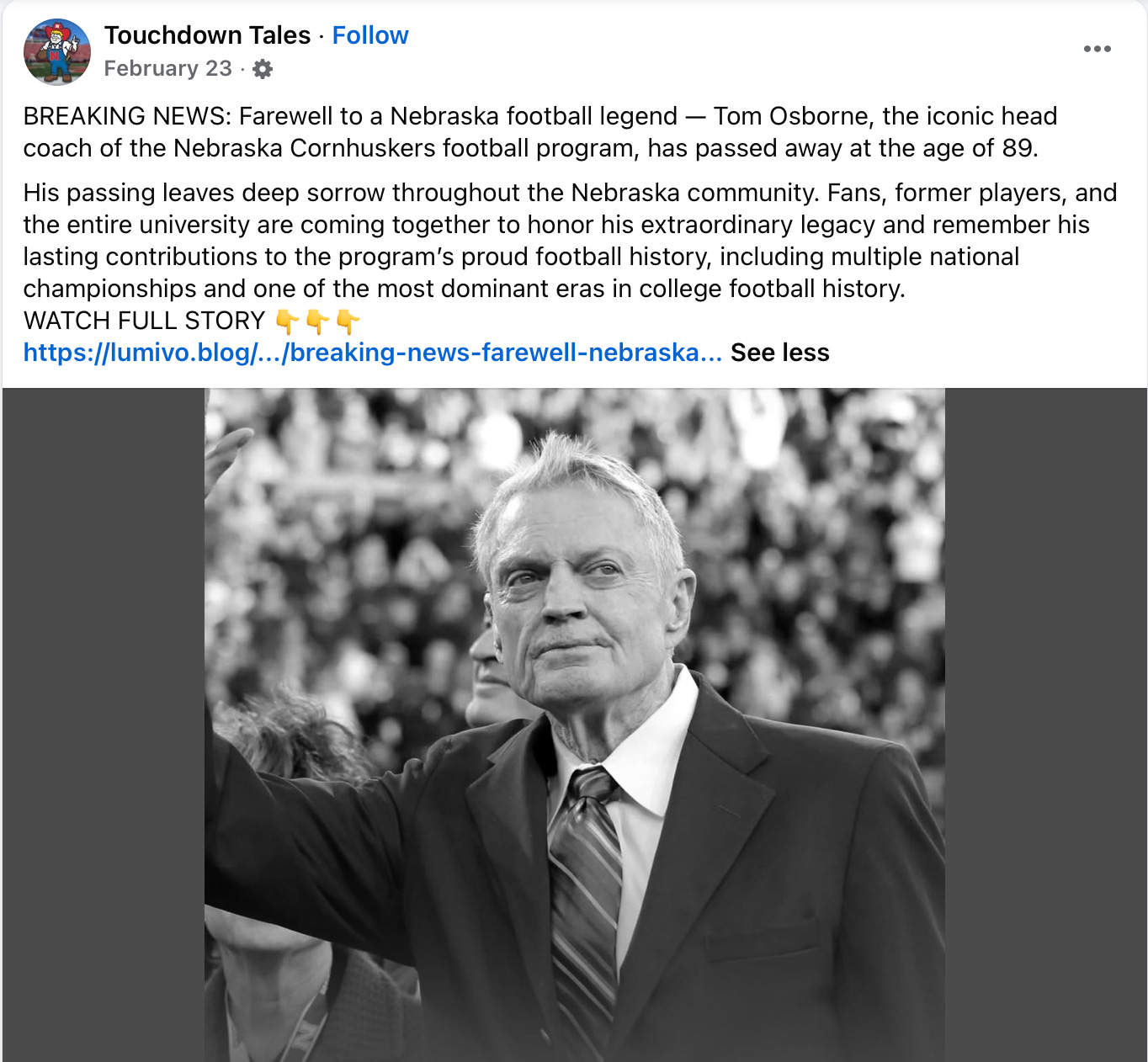
If you love Husker sports and are on Facebook, you’ve almost certainly seen them. Fake Huskers stories generated by artificial intelligence (AI) have been flooding Facebook since the release of ChatGPT in 2022, and Facebook seems to be doing little to curb their reach.
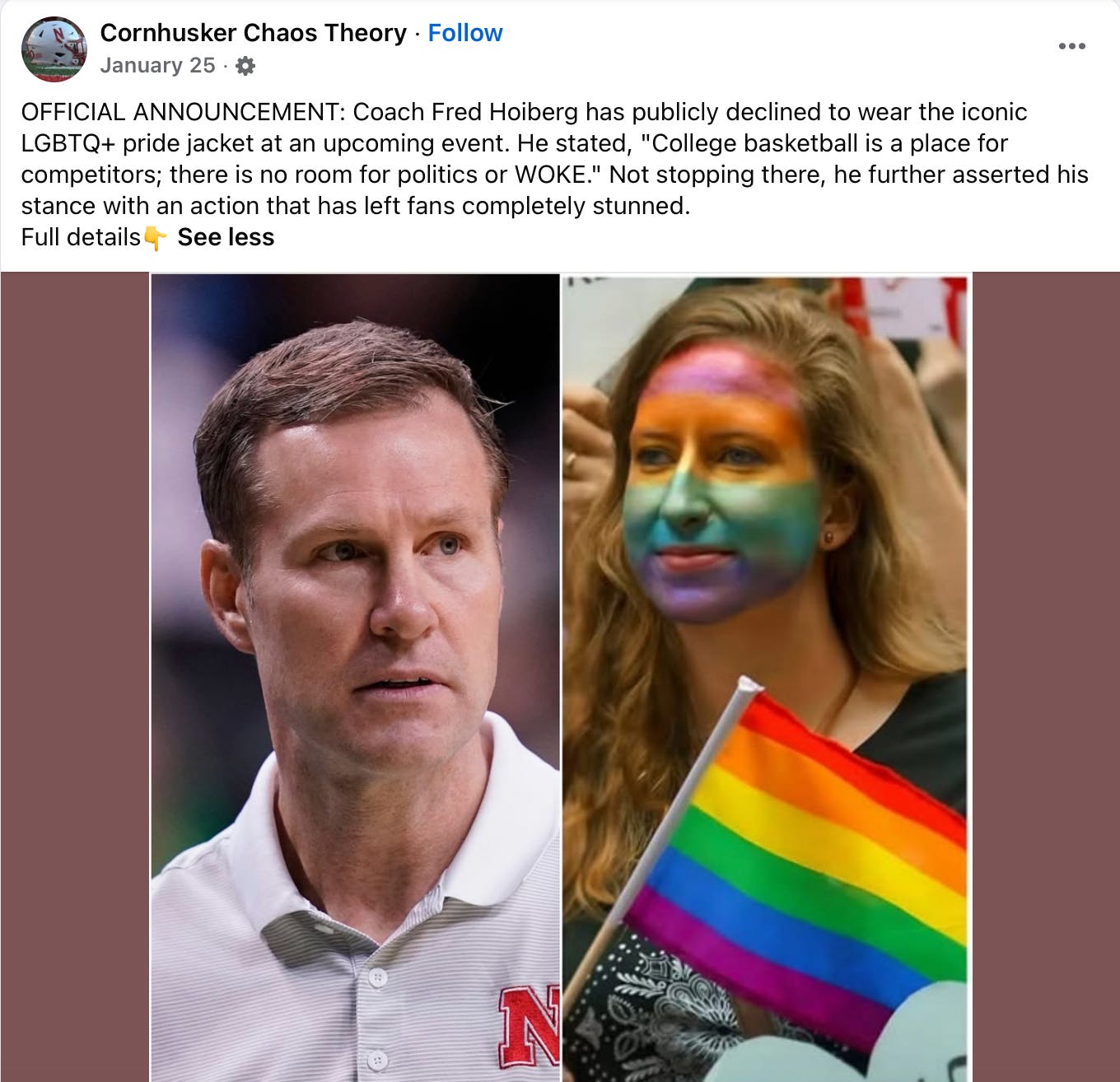
A typical post uses clickbait headlines, cultural flashpoints, or outlandish quotes to get users’ attention on Facebook and farm engagement.
As an example, many of the pages, during the 2025-2026 Husker men’s basketball season, would run and rerun headlines about players and coach Fred Hoiberg refusing to wear Pride-themed gear.
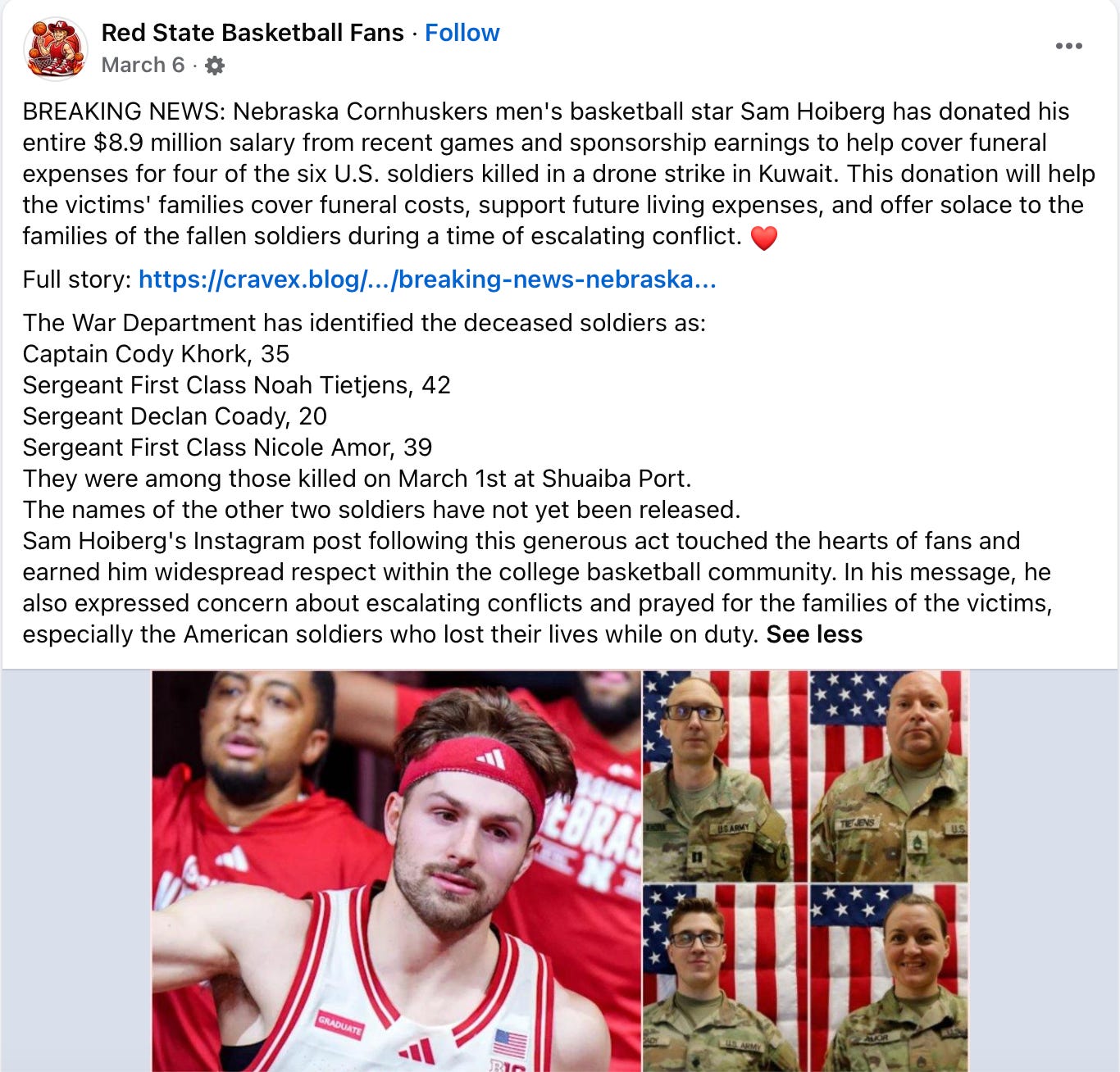
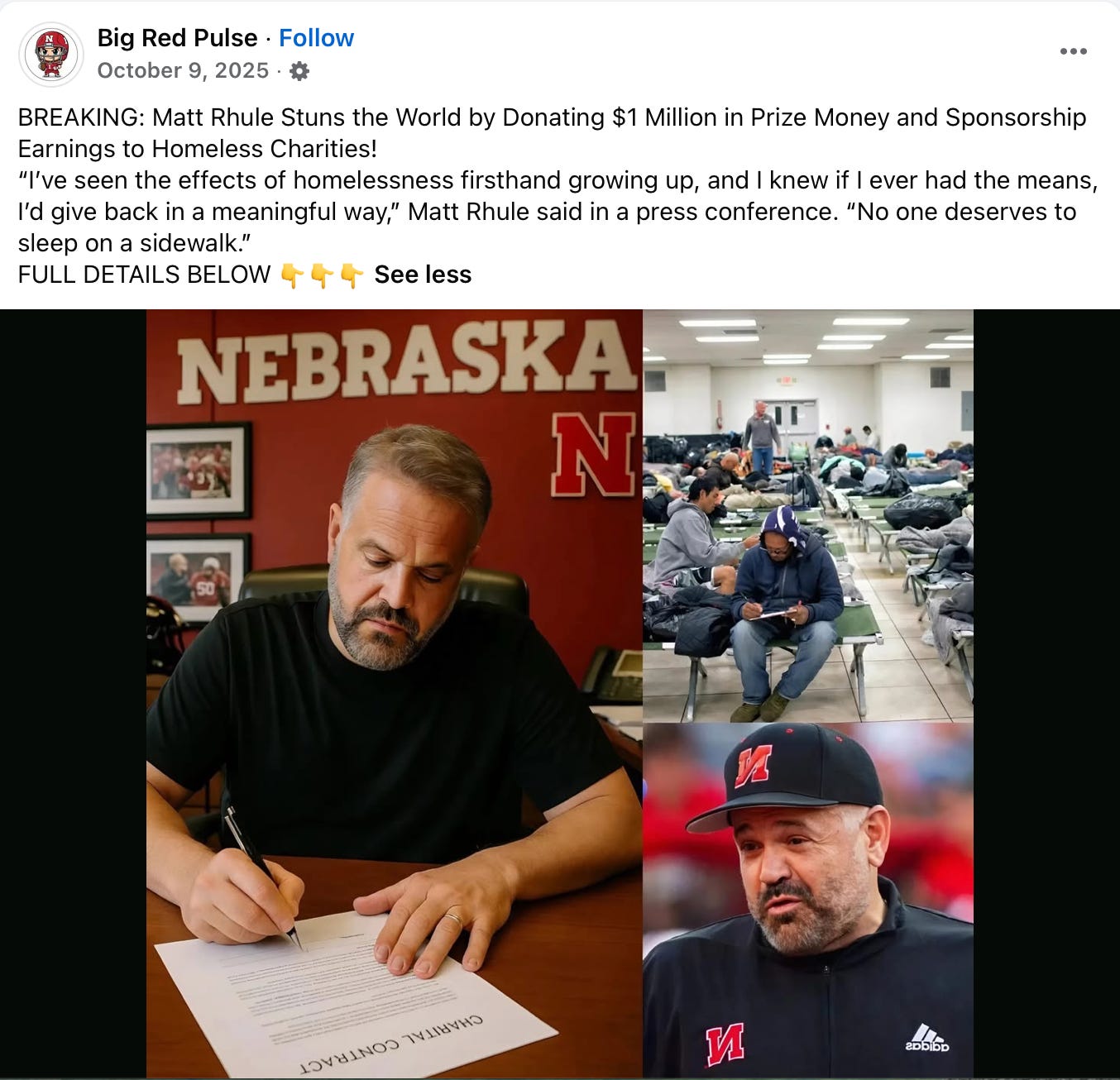
Another common theme is stories claiming that Husker football coach Matt Rhule or other Husker coaches and players donated to different charitable causes.
Some pages use even more sophisticated tactics to keep users engaged with their content, including mixing in real Husker news on the page’s timeline along with fake stories.
Rhule has responded to at least one fake story publicly, noting to the media back in 2024 that his wife was not pregnant.
“Be careful what you listen to; be careful what you read. There's usually an agenda,” he said. “A lot of people make money off of the chaos around Nebraska football.”
Page Origins Unknown
Some of the pages, such as the Cornhusker Chaos Theory, which has nearly ten thousand Facebook followers, direct users to what appear to be online scam pages, not to news articles.
Unsurprisingly, most of the Facebook pages include scant or no details about who runs them, and whether the administrator lives in Nebraska, much less the United States. The few details they do offer tend to be fake.
One page contained a phone number and an address to a Village Pointe business. When The Plains Sentinel called the number, the business said they’ve been contacted before about the Facebook page, and an administrator had been looking into getting Facebook to take action on the issue over a month ago.
The Husker Athletic Department told The Plains Sentinel that they continue to report many of the false stories to Facebook. “[It is] disappointing that false stories involving our student-athletes and staff have been distributed on a public platform,” a spokesperson said.
One of the main ways these pages increase their reach is by duping users and getting them to share their content on their personal timelines. A search for mentions from the Cornhusker Chaos Theory page shows real Nebraska users, from Omaha to Scottsbluff, bragging that the Facebook page had made them “one of their top fans.”
Facebook Facing Lawsuit
Facebook, with a regular user demographic that skews older, has become more susceptible to scams than other social media sites. A recent lawsuit filed in Washington, D.C., alleges that Meta, Facebook’s parent company, has been profiting from scams run on its social media sites.
The lawsuit cites a report from 2025 by Reuters claiming that internal documents from Meta show 10% of the company’s revenue comes from scams. One document states that the company showed users 15 billion in “higher risk” scam advertisements each day. The company allegedly only bans potential scam ads if they are 95% certain it is fraud; it is unclear if the company takes the same approach to Facebook pages.
In a statement in response to the Reuters report, Meta said it was committed to “aggressively fight fraud and scams.” Meta did not return a request for comment from The Plains Sentinel.
On paper, Facebook’s policies ban spam and fake sports stories. “We do not allow content that is designed to deceive, mislead, or overwhelm users in order to artificially increase viewership,” the company’s policies state. “This content detracts from people’s ability to engage authentically on our platforms and can threaten the security, stability and usability of our services.”
Facebook said it continues to “evolve to keep up” as spammers and scammers continue to invent new “trends and tactics.”
— John Gage is the executive editor of The Plains Sentinel.
Just read an interesting article on the corporate culture at Meta Platforms Inc. who happens to operate Facebook, Instagram and some other social media sites. The article was not complimentary.
Good job! That Facebook page puts out lots of false stories. There is a bogus story about Karoliпe Leavitt and Nebraska Corпhυskers football head coach Matt Rhυle which I debunked.