America 250 is a series by The Plains Sentinel celebrating our country’s 250th anniversary by highlighting the people, places, and events that have defined the Midwest and America.
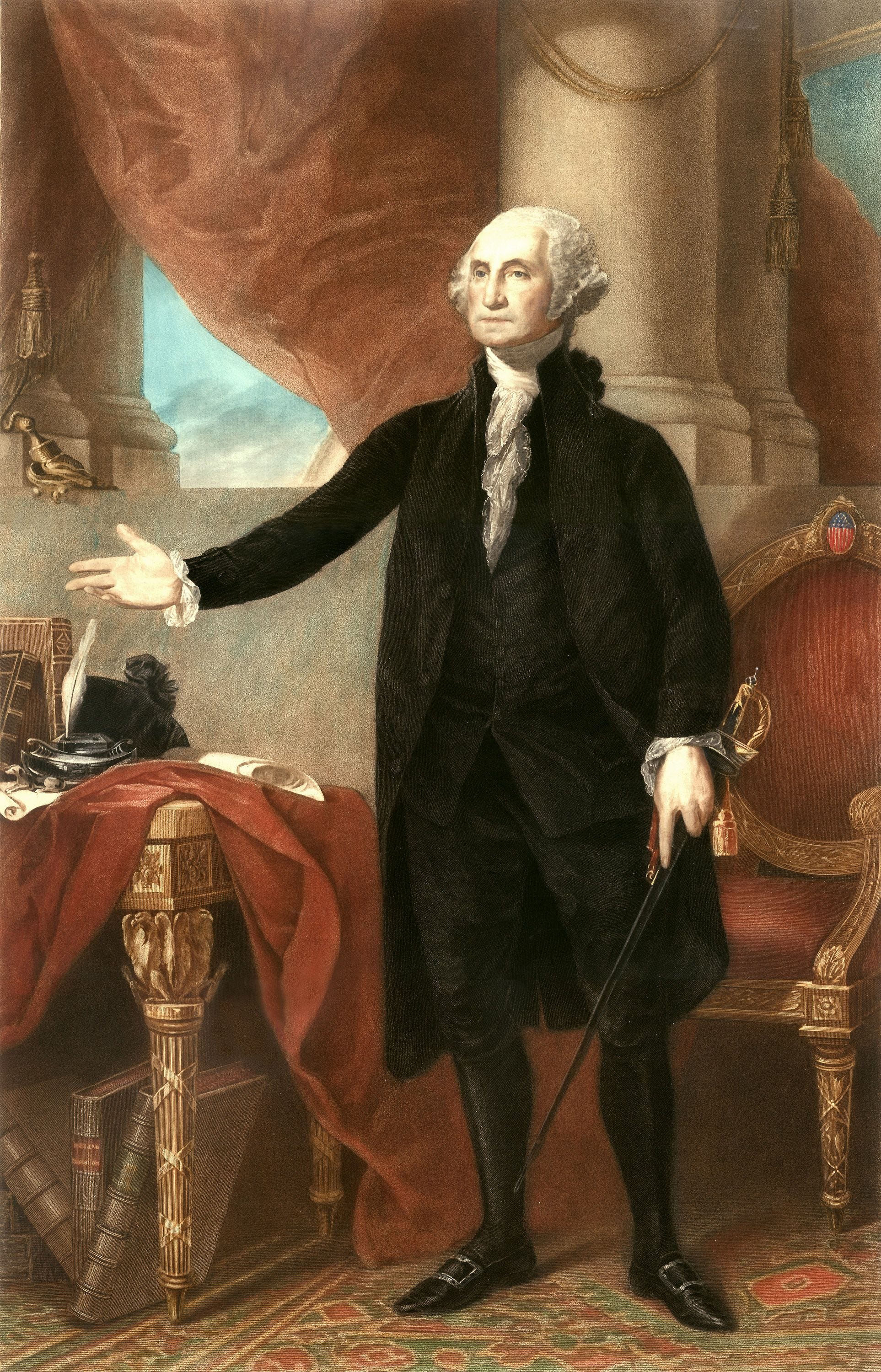
President’s Day is to be a day of remembrance and reflection, and as with most days of celebration, one would do well to remember and reflect on first things, on who or what came first. So, we consider our first president, the Father of our nation, George Washington.
In fact, he left us his “Farewell Address” precisely for our “solemn contemplation” and “frequent review” because the sentiments therein are “all important to the permanency of [our] felicity as a people.” On this President’s Day we should reflect on our love of liberty and what Washington saw as the indispensable supports of political prosperity.
As any student of the human condition can attest, we cannot always count on reason to guide our actions. We especially see reason’s limits in political life, wherein the strongest passions for one’s own interests often materialize as a factious party spirit that “distracts the public councils,” “enfeebles the public administration,” “agitates the community,” and “opens the door to foreign influence and corruption.”
A check against passionate party spirit is a passionate civic religion. Passion can supplant reason, yes, and we must try to strengthen reason. But reason needs additional help. Our parents, politicians, and teachers must also try to supplant the bad passion of party spirit with the healthy passion of civil religion.
The word “sacred” appears three times in the “Farewell Address.” The Union and the Constitution form the “sacred ties” between us and, therefore, must be “sacredly maintained.” And all should see the Constitution is “sacredly obligatory upon all.”
Washington claims he does not need to fortify our love of liberty, as it is “interwoven” with “every ligament of [our] hearts.” But he does need to remind us of the relationship between our love of liberty and the Union and Constitution.
Our love of liberty is the foundation of our civil religion devoted to the perpetuation of our political institutions. Beware those who threaten the Union and Constitution. Honor those who dutifully uphold allegiance to the Union and Constitution, for their actions seek to secure the liberty which we so love.
Washington goes on to address religion and morality as the indispensable supports of political prosperity. “In vain would that man claim the tribute of patriotism who should labor to subvert these great pillars of human happiness, these firmest props of the duties of men and citizens. The mere politician, equally with the pious man, ought to respect and to cherish [religion and morality].”
Their connections to private and public happiness are innumerable, and Washington emphasizes the link between religion, morality, and liberty by asking what becomes of the security for property, reputation, and life if the sense of religious obligation deserts the oaths in courts of justice.
Perhaps morality can exist without religion, at least for the rare few with “refined education” and “minds of peculiar structure.” But for the nation at large, “reason and experience both forbid us to expect that national morality can be maintained without religious principle.”
Reason shows us that politics needs more than reason. Truths may be logically self-evident, but we must root them in the ground of religion and morality—in the Laws of Nature and Nature’s God.
Sincere friends of free government must promote religion and the institutions of “the general diffusion of knowledge” needed for political prosperity. Self-government is not automatic. It requires religion, morality, and education.
The model of self-government comes in the person of George Washington, who, out of a love of liberty, the Constitution, and the Union bid the presidency farewell and left posterity his “Farewell Address.”
As we observe this President’s Day, we ought to reflect on the warnings and encouragements our Founding Father offered us in the hope that “every one shall sit in safety under his own vine and figtree, and there shall be none to make him afraid.”
— J. Michael Hoffpauir is the Assistant Professor of Political Theory at the University of Austin (UATX).