Capital Cash is a series by The Plains Sentinel investigating the intersection of money, influence, and politics in Nebraska, bringing readers stories on some of the most powerful figures and biggest donors in our state who have typically not seen the type of scrutiny from other outlets.
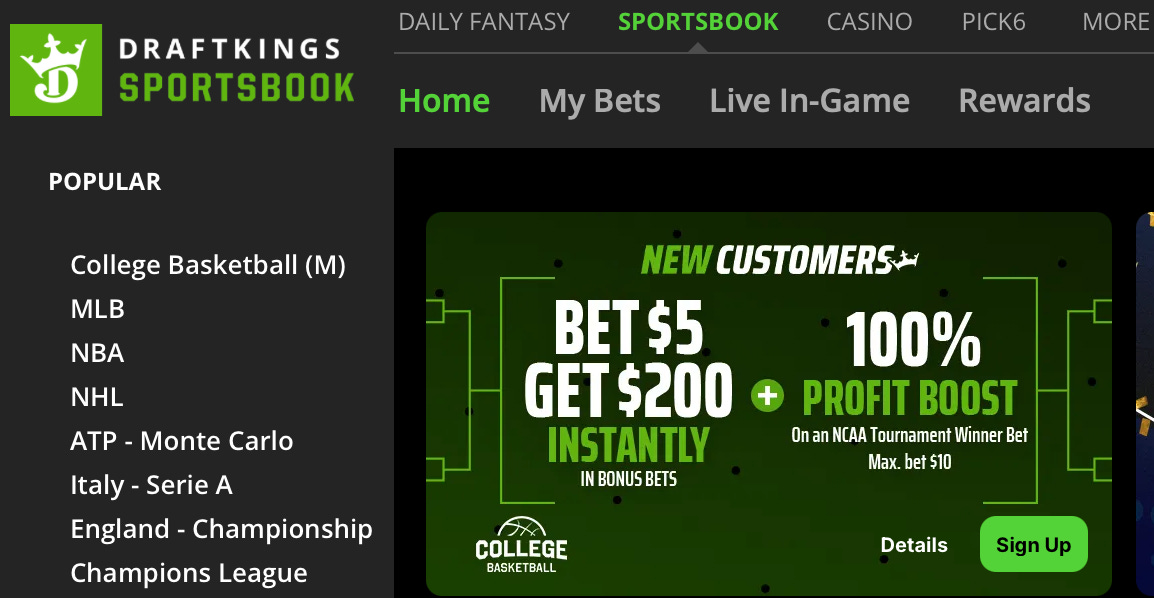
Warhorse Casino is working in concert with at least three major gambling-app companies to sell Nebraskans on two separate but complementary ballot drives to put sportsbook gambling in the palm of the hand, framing the question as one of financing property tax relief and curbing illegal gambling efforts, which they say, deny state tax collectors their cut.
In a phone call with The Plains Sentinel, Warhorse director of government affairs Lynne McNally said her organization was a “strong supporter” of efforts by Tax Relief Nebraska, a Ballot Question Committee registered with the state to promote twin ballot-question petition drives to permit sportsbook wagering via internet app if done in partnership with a brick-and-mortar casino in the state.
The first ballot initiative would amend the state constitution to permit state laws allowing online sports wagering, while the second would enact the enabling statute to allow online sports wagers “through an authorized gaming operator or its contracted platform provider,” according to state campaign finance records.
McNally said that while “[o]ur partners are contributing financially to the effort,” Warhorse is taking a role as “ambassadors” for the effort. McNally confirmed that Warhorse already has a partnership lined up for online sportsbook gambling should the ballot question campaigns succeed.
Proponents Promise Tax Relief
According to state campaign finance records, the parent companies for Fanatics Sportsbook and Draft Kings have contributed $75,000 and $1,162,500, respectively, to Tax Relief Nebraska’s coffers, while FanDuel’s parent company has pledged to chip in $1,162,500.
The Plains Sentinel sent requests for comment to Fanatics, Draft Kings, and Fan Duel for comment, but none were returned by the time of publication. A similar request to BetMGM also went unreturned by the time of publication.
Tax Relief Nebraska reported $1,218,361.19 in expenditures in its February filing for expenses to a variety of polling and strategy groups for consulting work, including Riverfront Strategy Group, an Omaha consulting firm.
Jordan McGrain, a managing director at Riverfront Strategy Group who is also listed in Tax Relief Nebraska’s February 2026 statement of organization as one of three “controlling individuals,” spoke with The Plains Sentinel and defended the effort as a fundamentally democratic expression of Nebraska voters’ will.
“We are implementing this process through a ballot initiative, which is the most democratic way to accomplish anything in Nebraska. These petitions will be signed by Nebraskans and will ultimately be voted on by Nebraskans at the ballot box, and then, you know, when it passes, it will be regulated by Nebraskans,” McGrain said, adding that the legislative route for policy change has proven frustrating, especially when “filibuster requirements are minimal.”
“I am confident that there’s a desire to regulate it, make it legal, safe and secure, and then to receive the tax revenue benefits of that,” McGrain said, adding that “a portion of that does go to gambling addiction services.”
“But, a huge component of this is the money that will be generated for the property tax credit cash fund, and property taxes continue to be a significant issue around the state. It’s something that every voter talks about. The legislature is facing a budget deficit and have been working around the clock to try to address that, when you have a deficit that leaves very little room for property tax relief, and so, you know…. We have to figure out how we’re going to generate new revenue for property tax relief, and I think an extension of sports wagering, via mobile or online, is something that Nebraskans have already voted for and approved of, in-person, seems like a logical next step.”
Critics Call It ‘Predatory’
But gambling industry critics like Nate Grasz of the Nebraska Family Alliance believe it’s the house that always wins when taxpayers go all in on pitches for expanding legal gambling outlets.
“The gambling industry is trying to buy and lie its way into our state constitution. This is corporate predatory gambling disguised as tax relief,” Grasz told The Plains Sentinel via email. “It shouldn’t be called ‘Tax Relief Nebraska’—it’s really ‘Revenue Extraction Nebraska.’
“The legalization of online sports betting dramatically increases acceptance, availability, and advertising, leading to greater participation and losses, which means bigger profits for the privileged few who run the games,” Grasz added.
“The group behind these initiatives can’t talk about how online sports betting would improve our state, because it doesn’t. They can only talk about revenue, but never where it’s going to come from, who it’s going to hurt, or who walks away with the biggest piece of the pie,” Grasz said, adding that it’s taxpayers, not sports betting companies that will end up “pay[ing] for the harm they cause families or for the money they take out of a state’s economy.
“The house always wins, and for the house to win, it’s the people of Nebraska who have to lose,” Grasz said.
“Every year they come back for something else,” lamented Pat Loontjer, president of Gambling with the Good Life, a grassroots organization formed 31 years ago to oppose expanded gaming in Nebraska.
“We know what we’re up against, we beat them for 25 years, but the minute they got permission for the casinos, then we knew this was gonna happen,” Loontjer told The Plains Sentinel, referring to the 2020 ballot question and subsequent enabling legislation that legalized gambling at the state’s licensed racetracks. “It’s just one thing after another; they’re never satisfied.”
Loontjer particularly expressed concern for the potential impact on underage and young gamblers should smartphone wagering be allowed. The minimum age to wager at casinos in Nebraska is 21, and the same minimum would apply under any authorization for off-site gambling.
For their part, McNally and McGrain say illegal gambling isn’t a strong argument against a legal framework for expanded sportsbook wagering.
“The people who are concerned about underage betting should want to this pass,” McNally told The Plains Sentinel, noting the ease with which even minors can circumvent geographical limitations with VPNs.
“To the folks that have moral concerns or objections about addiction that comes with gaming, I certainly understand where they’re coming from, but I think that either willfully or otherwise ignores the fact that it already exists in significant, at a significant level, illegally in the state,” McGrain told The Plains Sentinel.
“You can drive to Iowa, you can drive to a surrounding state and place a bet via mobile device there, you can use a VPN to hide it, and there’s a reason why states are looking to, you know, sort of stop the illegal activity and push towards either legal or, you know, further regulation of what are these illegal online mobile markets. And so, through our effort, what we’re hoping to accomplish here, and planning to accomplish, is to give Nebraskans the opportunity to vote to make online and mobile sports wagering safe, legal, and secure, and to generate much-needed revenue for property tax relief.”
Ken Shepherd is a freelance reporter with The Plains Sentinel. He is a former editor at Fox News Digital and the Washington Times.