
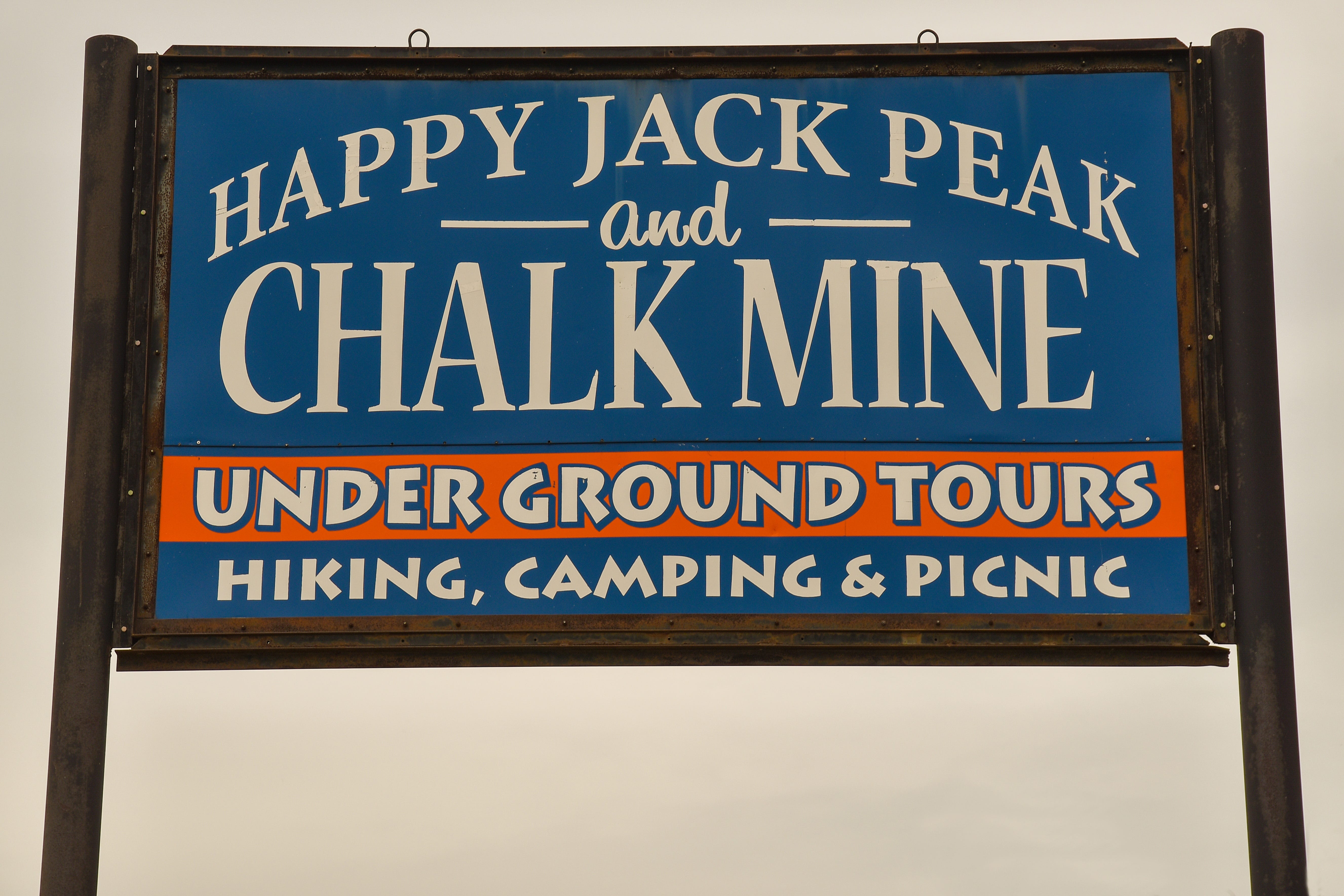
(Photo credits: Alan J. Bartels/Happy Jack Peak and Chalk Mine calls to travelers passing through the North Loup River Valley on Nebraska Highway 11.)
SCOTIA — Nebraska. To those who have not traveled the state extensively, imagined images of vast spans of corn, soybean, and alfalfa fields, or Interstate 80 flat and straight as an airport runway from Omaha to Wyoming, may come to mind. While our state is largely farm country, visitors who venture off the beaten path discover that overall, Nebraska is actually far from flat.
North of Elba and south of North Loup and Scotia – adjacent to Nebraska Highway 11 – horizontal fields meet the serpentine North Loup River on the east and eruptions of yucca-studded hills and wooded canyons on the west. None are more imposing than Happy Jack’s Peak.
Rising from the North Loup River Valley like Africa’s Kilimanjaro, the conical peak has been a landmark for millennia. Today it’s a popular destination for tourists intent on visiting the only publicly-accessible subterranean “chalk” mine in the United States. The mine entrance is at the base of the peak.
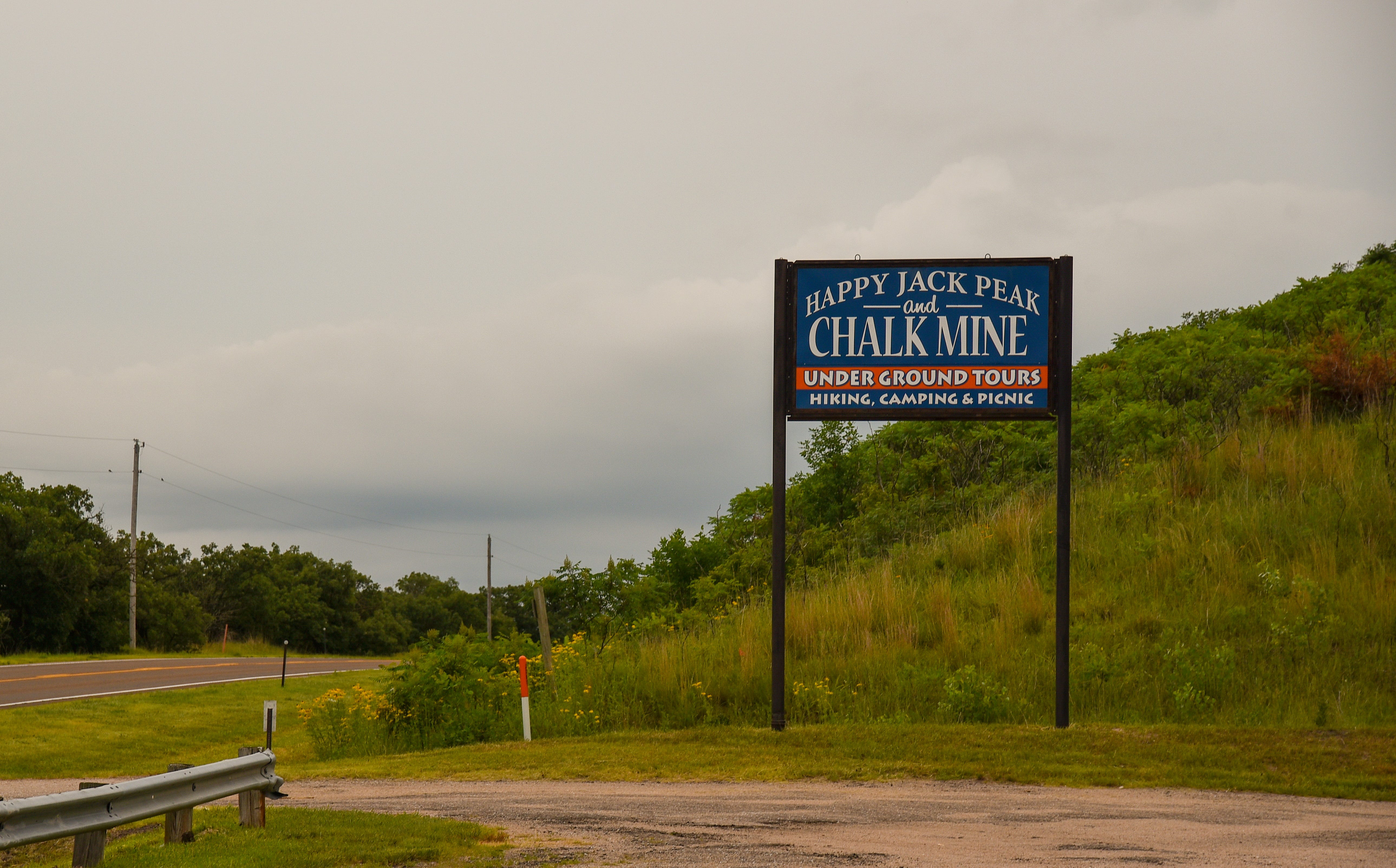
(Happy Jack Peak and Chalk Mine overlooks the North Loup River in southwest Greeley County.)
Experts say that the “chalk” formed as aquatic microorganisms known as diatoms died and settled to the bottom of an ancient lake. Their remains fossilized to form the chalky layer known as diatomaceous earth between six and 10 million years ago. The peak’s pinnacle was formed much more recently, geologically speaking, only within the last 150,000 years. There are approximately two million of the microscopic diatoms in each square inch of chalk. Considering there’s over a mile of tunnels in the mine and the chalk layer is six to eight feet thick, there’s a lot of diatoms in the hills.
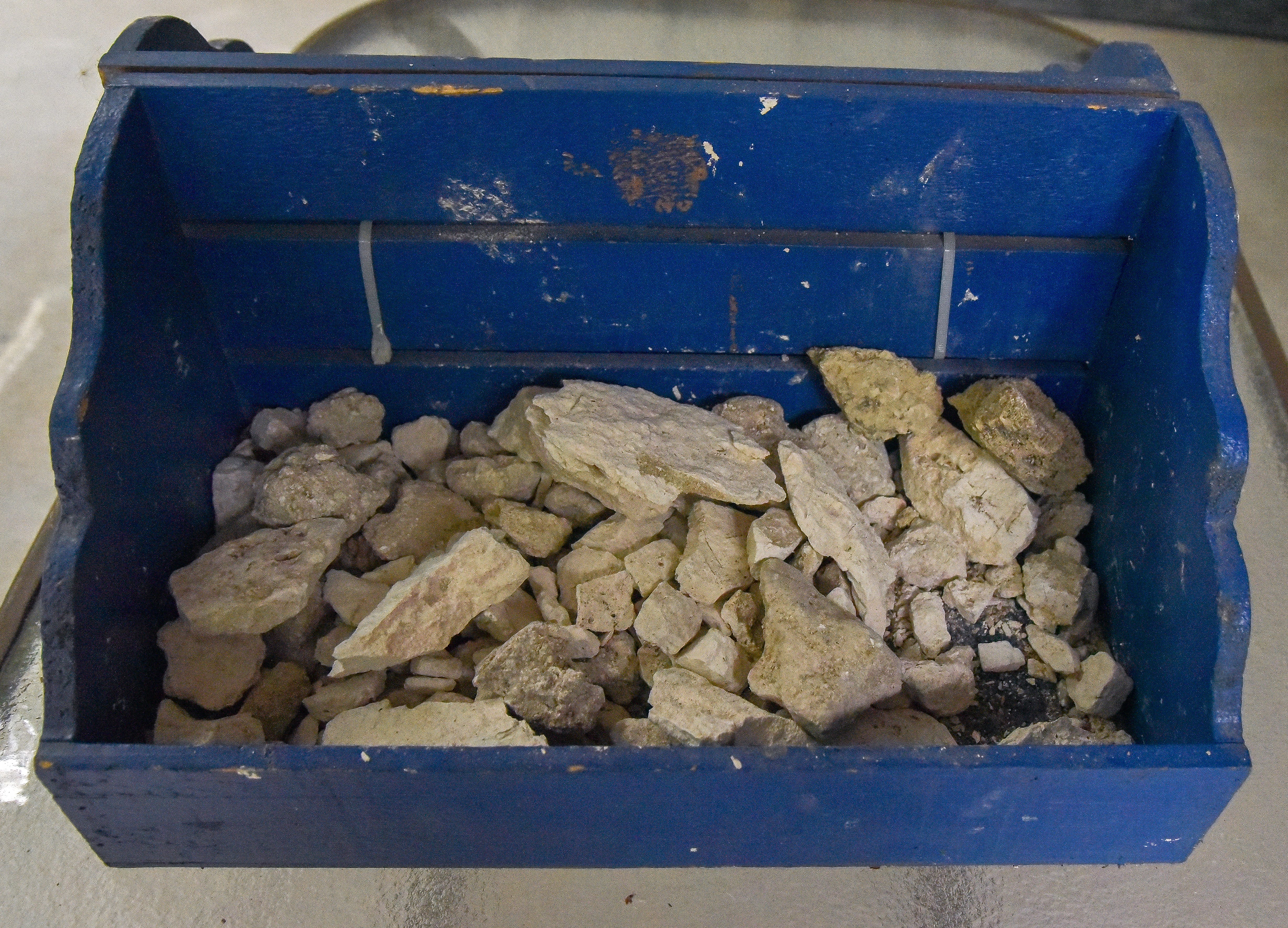
(Chunks of “chalk,” which are actually calcareous diatomite formed by the fossils of microscopic organisms, are common souvenirs for visitors to Happy Jack Peak and Chalk Mine.)
The chalk was discovered in the 1850’s. Mining began in the 1870’s. During my first guided tour through the attraction years ago, then-tour guide Jenae Malmstrom told me, “Mining persisted until the end of World War II, but because the chalk was mined only intermittently, the mine was really only in use for a total of about eighteen years.”
When Ed Wright began mining the chalk in 1877, it was being used as building material. A scant $1.75 was split between Wright and two co-workers in exchange for a hard day’s work.
In nearby Scotia, a structure built in 1877 as a general store and made of Happy Jack chalk still stands along Main Street. It’s a testament to the durability of the material, and a sharp contrast to the mining operation, which only yielded chalk blocks for a few short years.
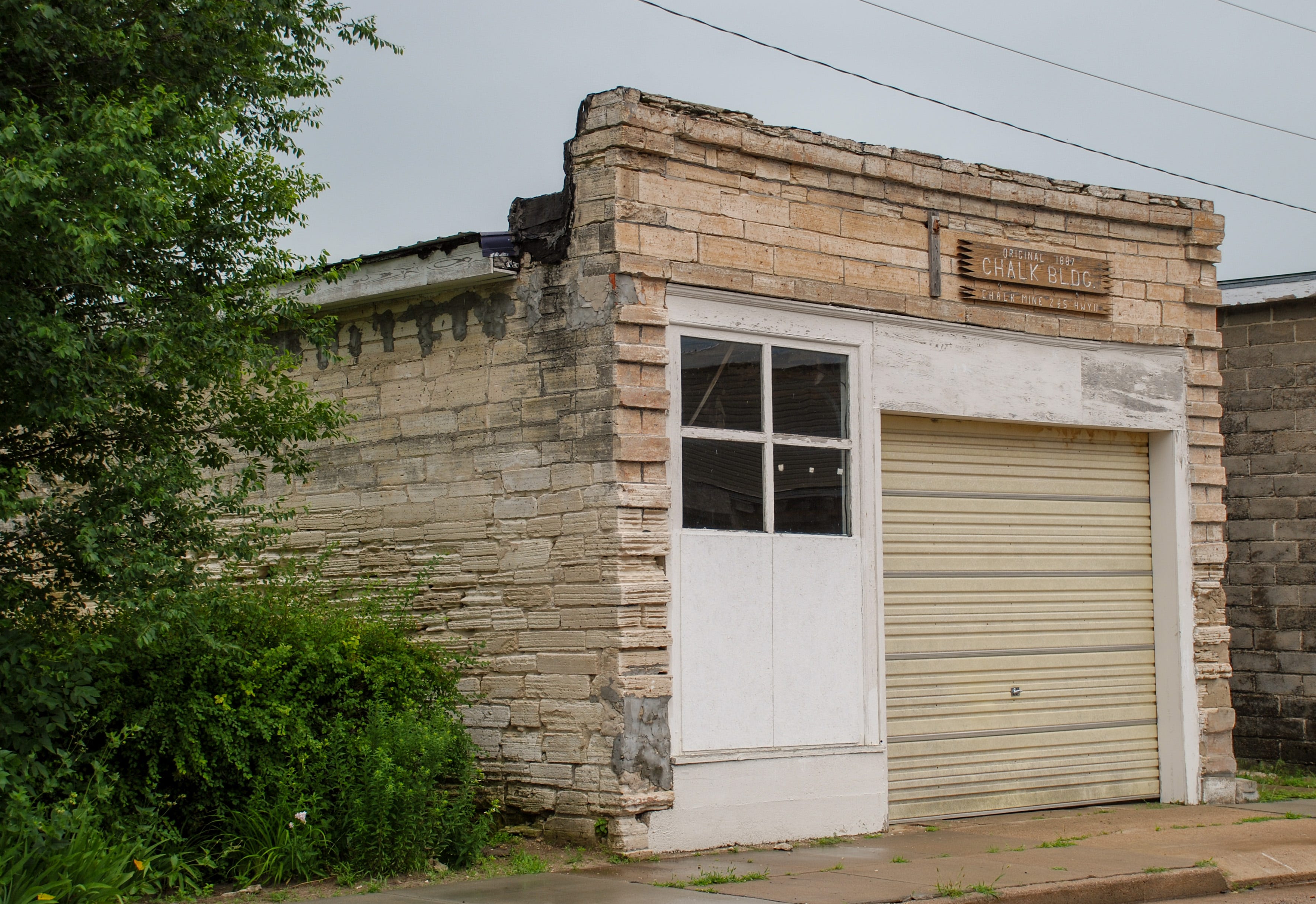
(This building, constructed using blocks mined from the chalk mine near Scotia, has stood on the Main Street of the village since 1887.)
The abandoned mine cranked to life again during the Great Depression when diatomaceous earth was used as an abrasive, as a thickener in paints, and for use in roadbeds, rubber products, and as filler in cement.
Today, the material is used in some toothpastes, household cleaners, and cat litter. Diatomaceous earth has gained ground (pardon the pun) as an eco-friendly insecticide and organic animal feed additive.
The attraction is the only one of its kind in existence, a fact that Scotia, Greeley County, and Nebraska are very proud of. In the U.S. today, diatomaceous earth is mined in California, Nevada, Washington, and Oregon in operations similar to the strip mining used to harvest coal. Those mines are not open to the public.
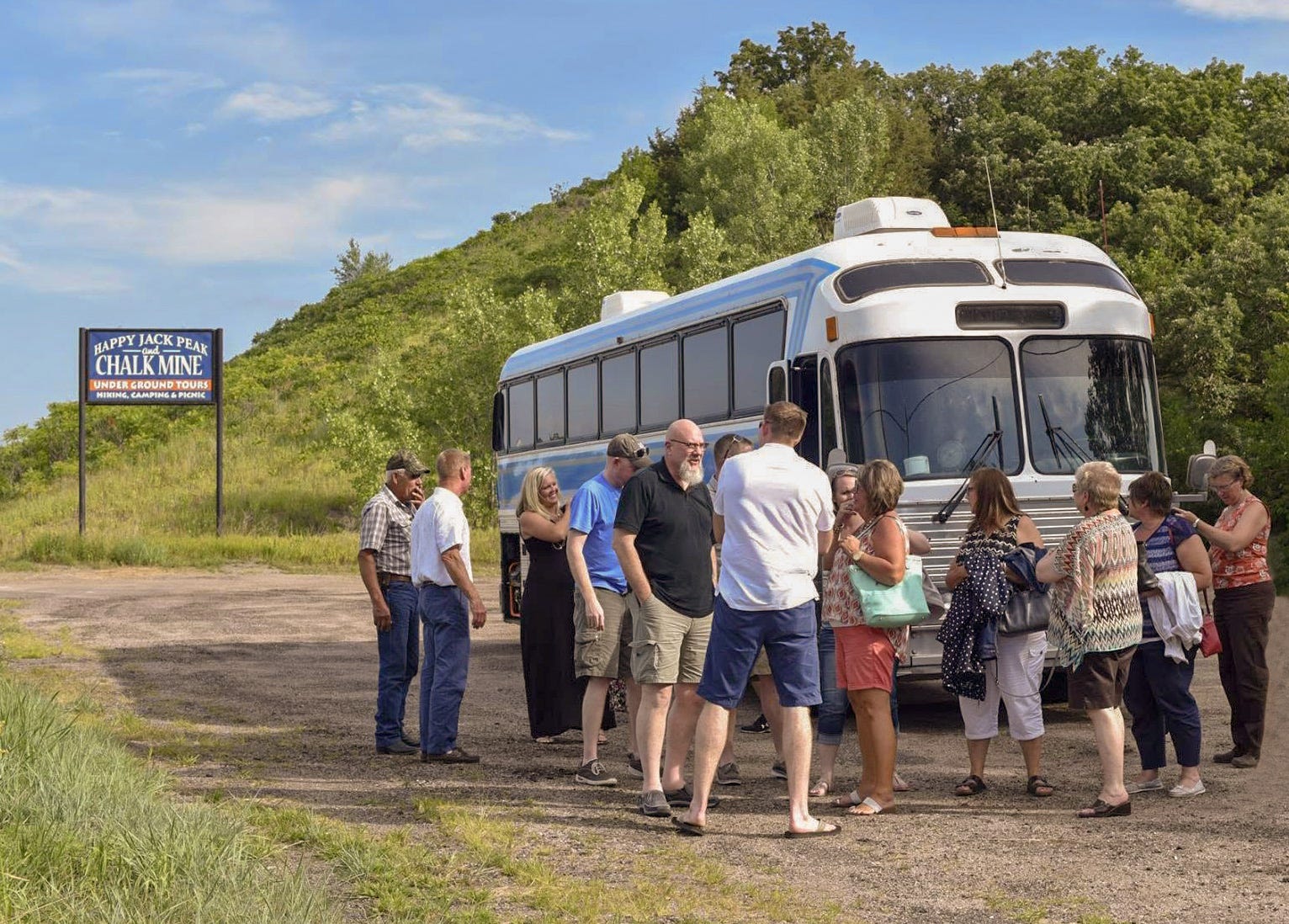
(The prospect of visiting the only publicly-accessible room and pillar chalk mine in North America inspires large number of travelers to detour off of Nebraska Highway 11 to explore the attraction.)
For many years, the place was abandoned. People snuck in at will, had parties, and vandalized the mine. Beginning in 1966, the site sat simply as a state wayside area where people could pull over and stretch their legs. The late Greeley County Sheriff Doyle Keller once told me that the Hell’s Angels would sometimes camp at the mine site for respite as they biked cross-country. Sometimes they stayed for weeks. Though they never caused any real trouble, their presence always got area residents talking.
Other rumors recount a cult performing late-night ceremonies on the site, leaving it littered with the carcasses of dead animals and strange symbols. Local law enforcement officials have been unable to substantiate that tale for me.
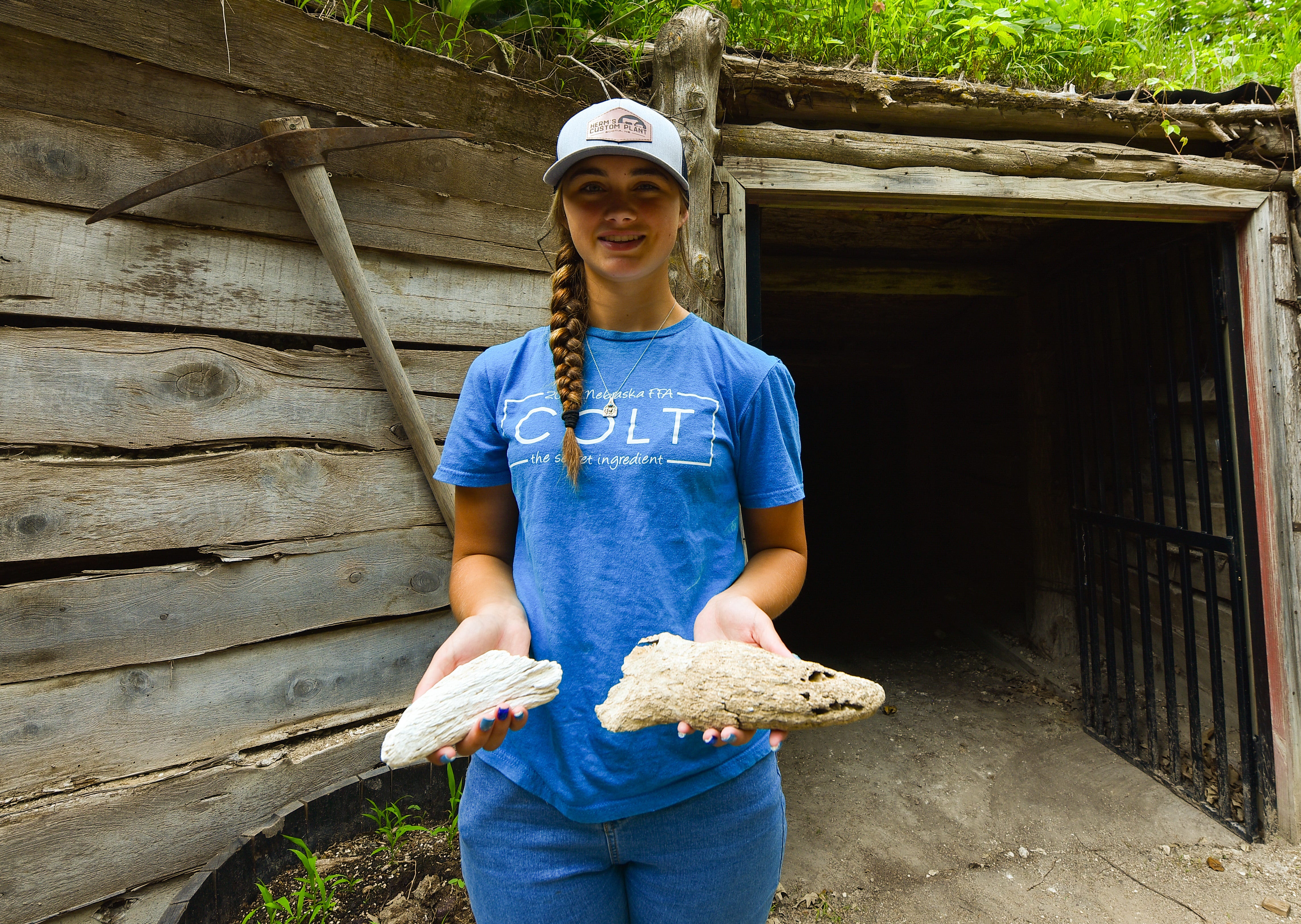
(Ancient bison horns have been found on the rolling lands surrounding Happy Jack Peak and Chalk Mine.)
You can’t keep a cool mine down. Area citizens, realizing that they had a potential tourism “gold mine” nearby, sprang into action in the 1990s. The Happy Jack Chalk Mine Association formed, and after a year of cleaning and improvements, guided public tours began in 1996. “Chalk One Up For Scotia” became a popular slogan.
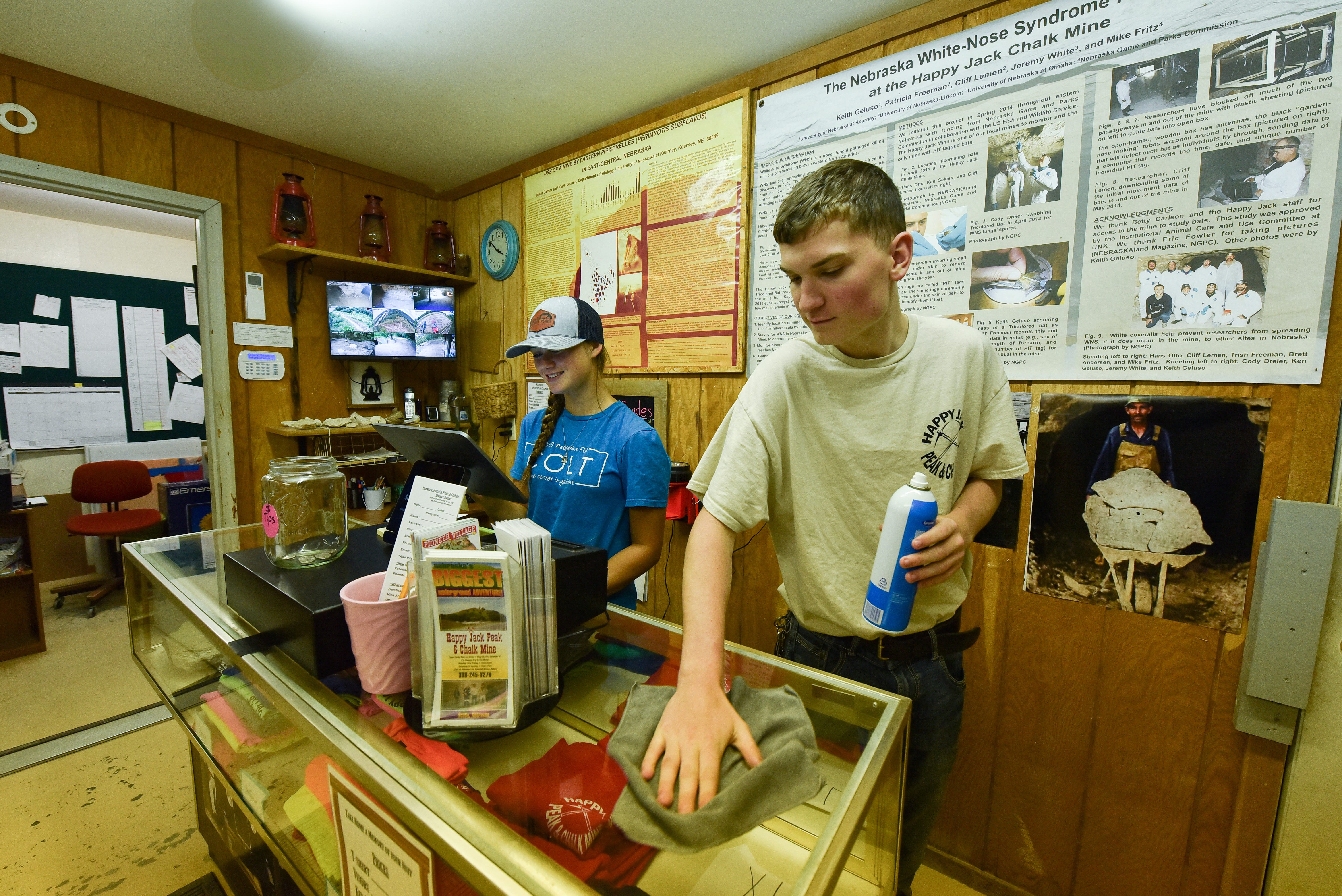
(During slow times at Happy Jack Peak and Chalk Mine, tour guides Josh Stoural and Emalee Leth busy themselves by cleaning and organizing. When they work up a sweat, they can cool off quickly by stepping into the mine. The manmade cavern maintains a temperature of about 56 degrees.)
Western brown bats commonly roost in the cave, hanging from the ceiling in true bat fashion. An interesting thing about the western brown bats in the mine is that they are all males. The mine’s near constant year round temperature of about 56 degrees is too cold for female western brown bats to raise young. To qualify for a Nebraska Environmental Trust grant, the association ensured that the mine would remain as a bat habitat. Openings were left at the entrances so the winged mammals can enter and exit the mine freely. Several bat species have been documented using the mine.
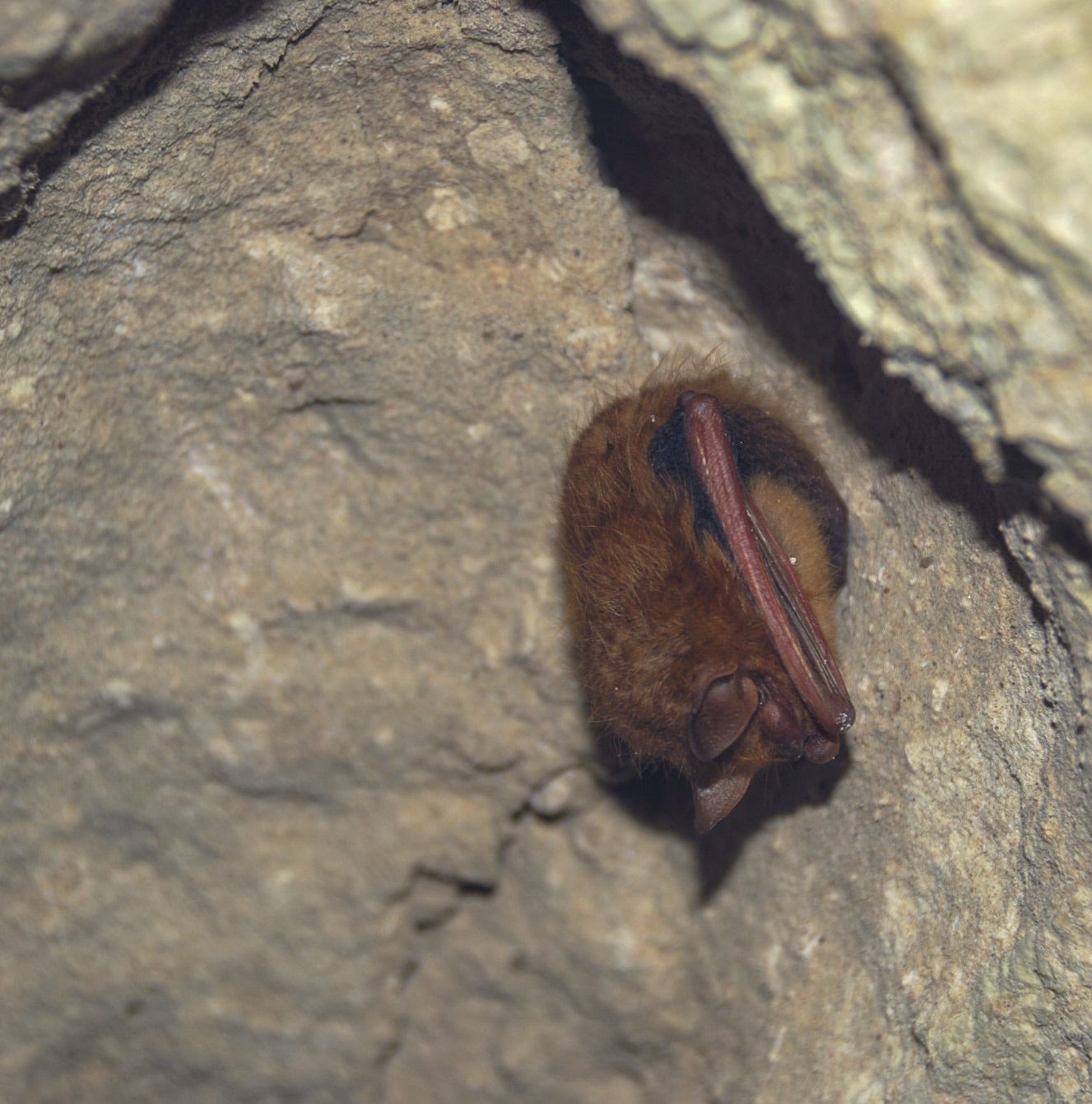
(Although they roost only inches from visitors’ heads as they walk through, the small bats inhabiting the caverns at Happy Jack Peak and Chalk Mine are no threat. Visitors are asked to not disturb the animals. The mine serves as important habitat for the small mammals.)
The guides eagerly share the history of the area. “Happy Jack” Swearengen was a trapper who lived on the peak. He worked as a scout for a time, watching for hostiles from the peak, and even though his first name was John, Happy Jack sounded better and the nickname stuck.
Residents share folklore about the man still today. His skill as a marksman is legendary. One tale had Swearengen observing a pair of Lakota men stalking a bull elk across the river from the peak. When the animal began running, Happy Jack shot it from a distance of a quarter mile and gave a friendly wave to the Native American pair. The next morning Jack found a large quantity of dried elk meat and a fine wolf skin left outside of his dugout. The favor didn’t prevent him from later being captured by the Sioux. They eventually released him, taking him at his word when he promised to leave the area and never return. Some accounts say he willingly lived with his captors, gaining their trust and forming lifelong friendships.
Even though Happy Jack did not perish at the peak, some attribute the occasional reports of paranormal activity in and around the mine to the presence of Happy Jack’s ghost.
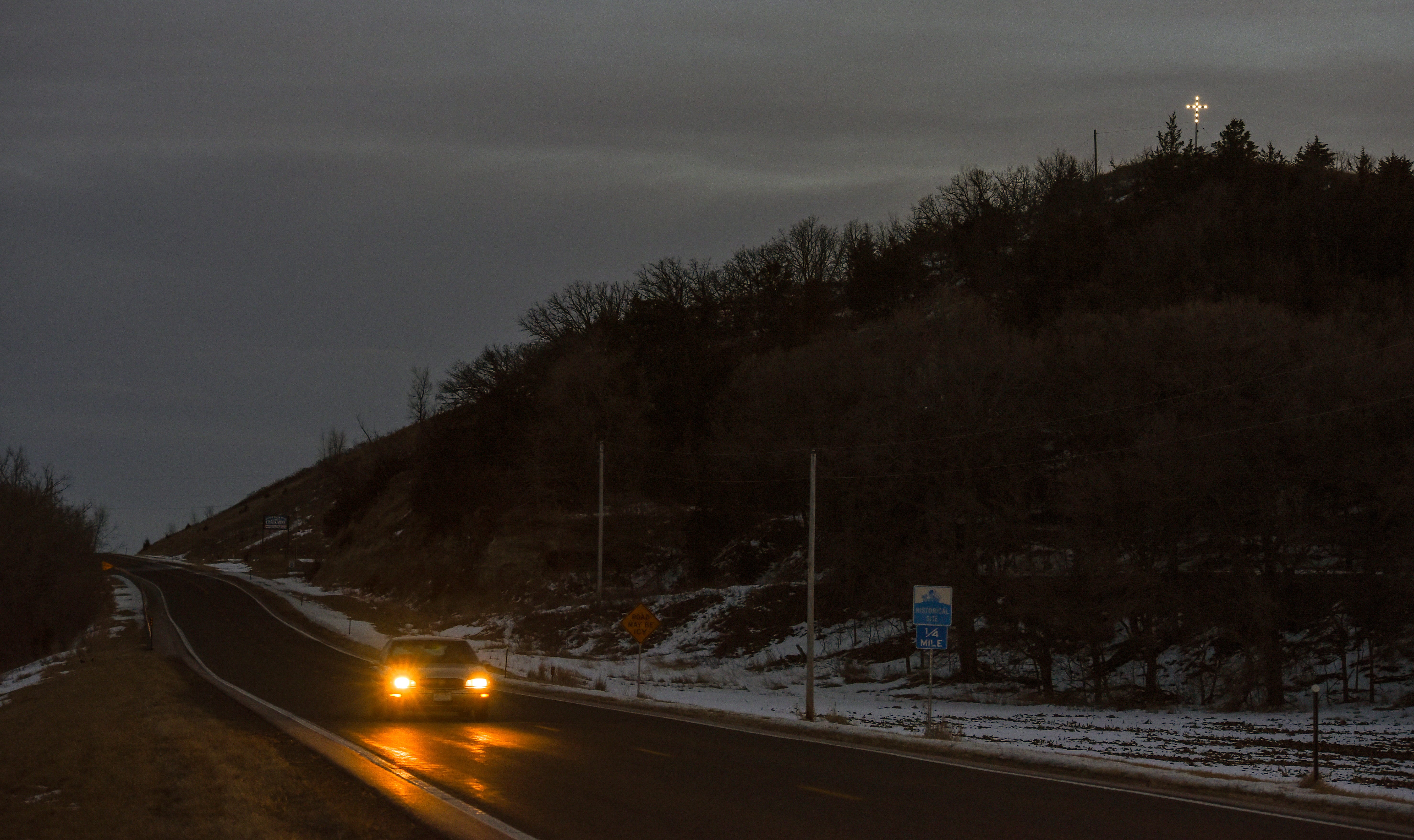
(A lighted cross atop Happy Jack Peak.)
Local residents happily share memories of sneaking into the mine before it was a public attraction. There are stories of playing hide and seek by candlelight, and of young boys racing motorcycles through the tunnels. One persistent tale is of residents who owned Volkswagen Beetles. Their drivers would motor deep into the mine and shut off their lights, get out, and wait for their friends to try and find them.
Former North Loup resident Tim Capps told me how he would often park at the chalk mine early in the morning on his way home from his night job. “I’d sit there and unwind before going home,” Capps said. “It was always a great start to the day to watch the sun rise over the river and see bald eagles in the cottonwoods.”
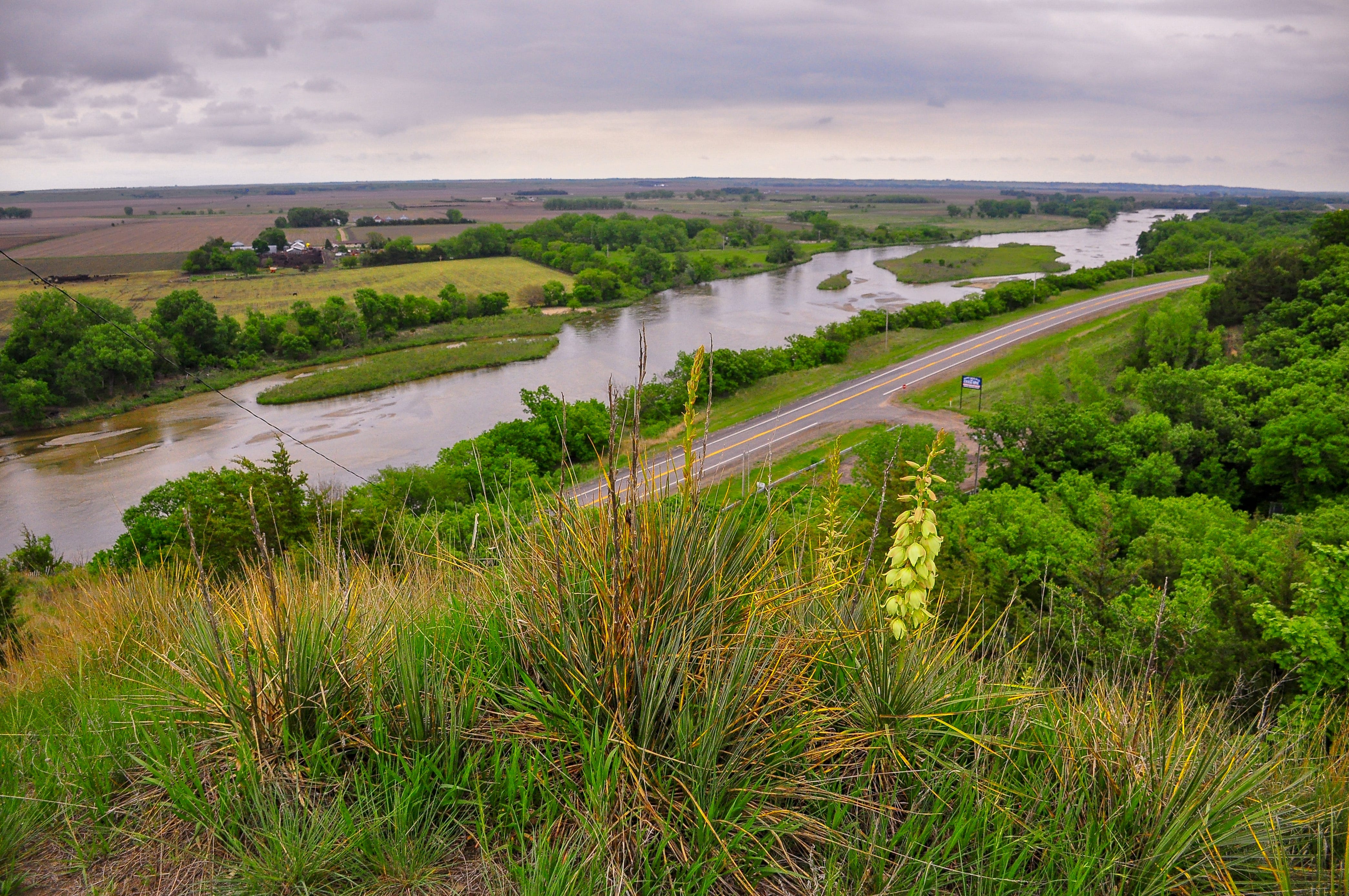
(A beautiful view of the North Loup River Valley is the reward that visitors receive by climbing to the top of Happy Jack Peak.)
The largest room in the mine is called the ballroom because dances and parties were held in there long ago. Lighting was provided by an automobile or two.
Slightly darker areas are easily visible among the white chalk walls. These are the remains of ancient mammal burrows, which were constructed by rodents after the lakebed silted in and was covered with grasslands.
Visitors are allowed to climb to the top of Happy Jack Peak and take in the panoramic view of the North Loup River Valley. In the late winter and early spring, the echoes of thawing ice can sometimes be heard from the peak as it roars through the river valley. Rustic stairwells of half-buried railroad ties form multiple trails to the peak. There is a more modern stairwell toward the west end of the attraction. Its stairs are engraved with the names of individuals who have sponsored projects at the Happy Jack Peak and Chalk Mine.
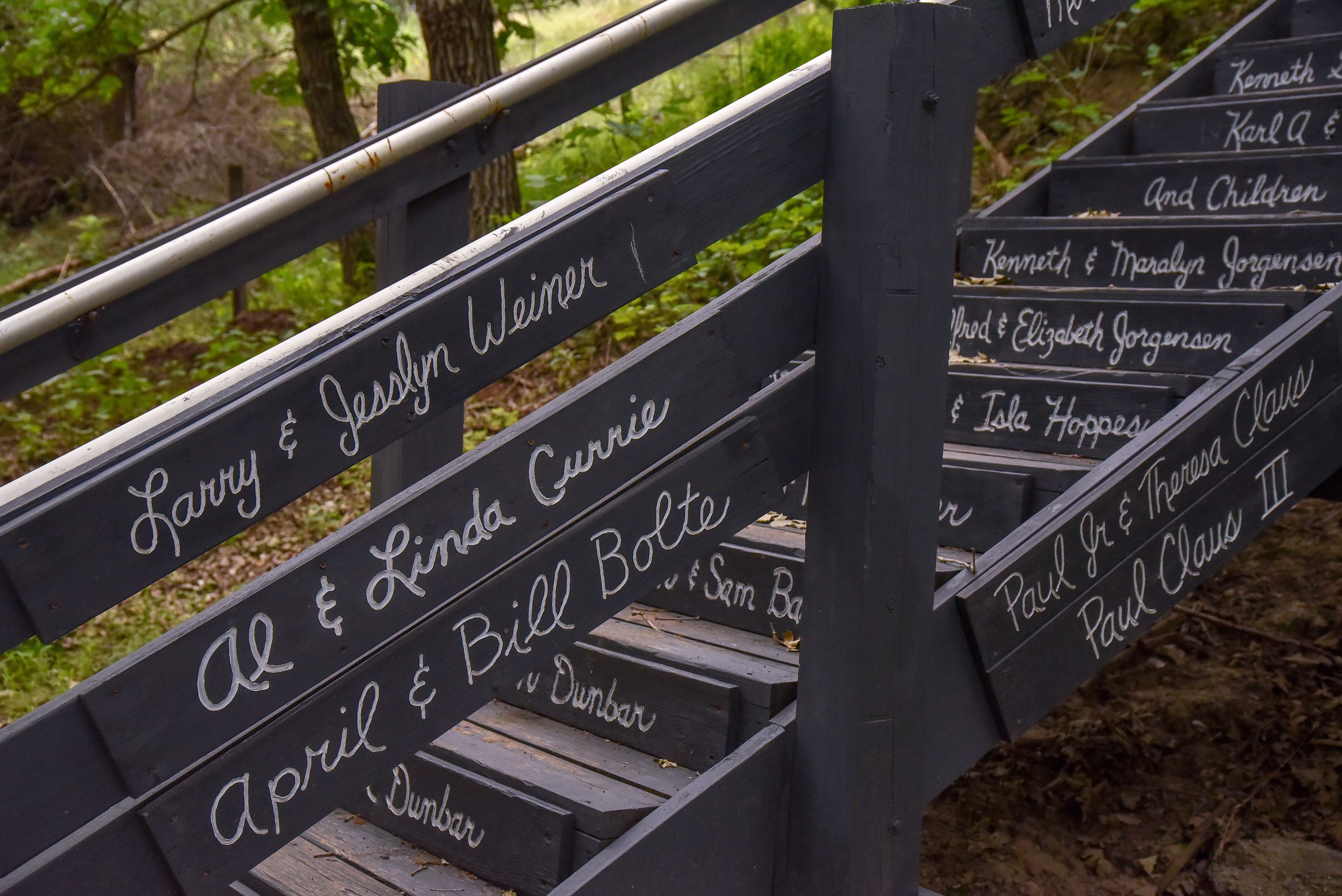
(The names of people who have supported tourism efforts at Happy Jack Peak and Chalk Mine are memorialized on the staircase leading toward the top of the peak.)
Wildflowers accentuate the scenery in the warmer months, bathing the area in black-eyed Susans, purple and yellow coneflowers, and flowering yuccas – to name only a few of the more than one hundred fifty species of plants native to the region. The base of the peak is shaded with a mix of various hardwood trees that draw a large number of birds to the secluded canyon.
Visitor Susan Elmore found herself fascinated by the terrain. The West Virginia native had relatives who homesteaded near North Loup. “It’s kind of cool to think that a hundred years ago my ancestors looked up at the same peak I am looking at now, they probably climbed it, too.”
The attraction has struggled over the years both financially and in terms of attracting staff and volunteers. But as of May 2025, Happy Jack Peak and Chalk Mine is back. It is a 501©(3) nonprofit now under the leadership of Manager Katie Davis.
“There aren’t many places where history, geology, paleontology, ecology, and adventure all come together in one experience,” Davis said. “You can literally walk through millions of years of Earth’s history while standing inside a working piece of Nebraska’s past. Happy Jack Peak and Chalk Mine are two of Nebraska’s most distinctive attractions because our tours combine the underground chalk mine with the stories of the people who lived and worked here, all set against the beauty of the North Loup River Valley.”
Dozens of volunteers help keep the attraction running from Memorial Day weekend through Labor Day weekend. Community support has been huge, and visitors from near and far just keep on coming. A ton of recent work has changed the appearance of the once rustic attraction, and the improvements and upgrades continue.
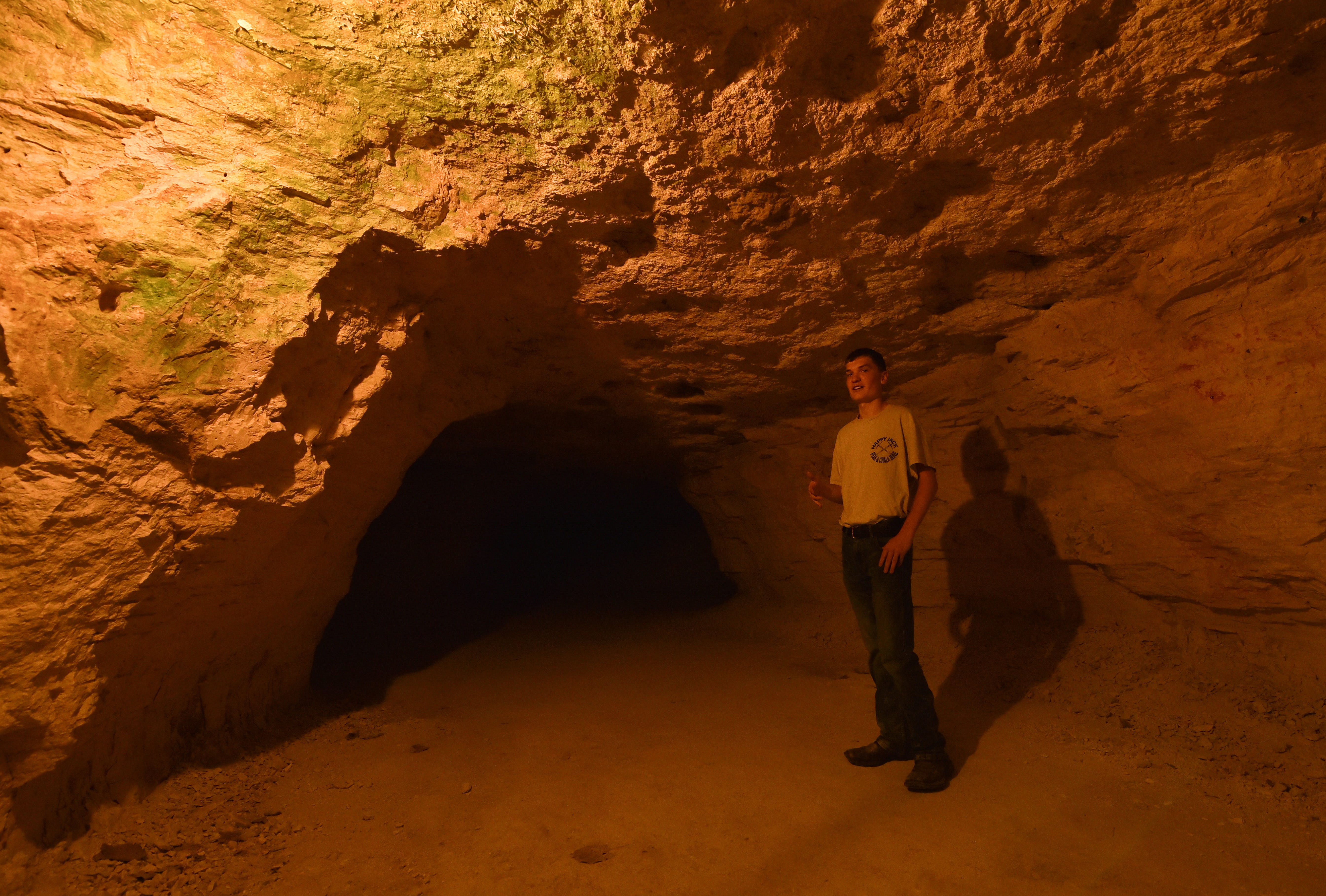
(Tour guide Josh Stoural, in his second year of working at Happy Jack Peak and Chalk Mine, has memorized the long and colorful history of the mine. Visitors from across the country and around the world are likely to stop by on a daily basis.)
This attraction is all about family fun in a unique natural setting. The fun flies sky high during Putting Off the Peak. In this zany event, contestants hit golf balls from the peak, over the highway, and as close as possible to a golf hole on a sandbar in the North Loup River. The grand prize is $10,000 for a hole-in-one. The 2026 fundraiser event is scheduled for July 18 and 19.
“Our goal is simple: to help people discover something they never expected to find right here in the heart of Nebraska,” Davis said. “Once you’ve experienced Happy Jack Peak and Chalk Mine, you’ll understand why so many people say it’s one of the state’s best-kept secrets.”
Through the hard work and passion of staff and dedicated volunteers, and the support of area residents and adventurous visitors, the cool, dark history of Happy Jack Chalk Mine is again seeing the light of day.
Editor’s Note: The Happy Jack Peak and Chalk Mine is 5 miles south of North Loup along Nebraska Highway 11. The address is 80131 North Highway 11, Scotia. Putting Off the Peak will take place July 18 and 19, from 10a.m. to 6 p.m. both days. (308) 245-3276 www.happyjackpeakandchalkmine.org
Alan J. Bartels is a US Army veteran who served with the 2nd Armored Division during Desert Shield/Desert Storm. His latest book, Secret Nebraska Sandhills: A Guide to the Weird, Wonderful, and Obscure, was released in March 2026. alanjbartels.com
They have a website at https://happyjackpeakandchalkmine.org/
Wonderful article. Thanks Alan for visiting and writing about our treasure in the beautiful North Loup Valley. Everyday I work there I fall for the beauty of the Peak and Mine and continue to be amazed every time I learn something new about it.