

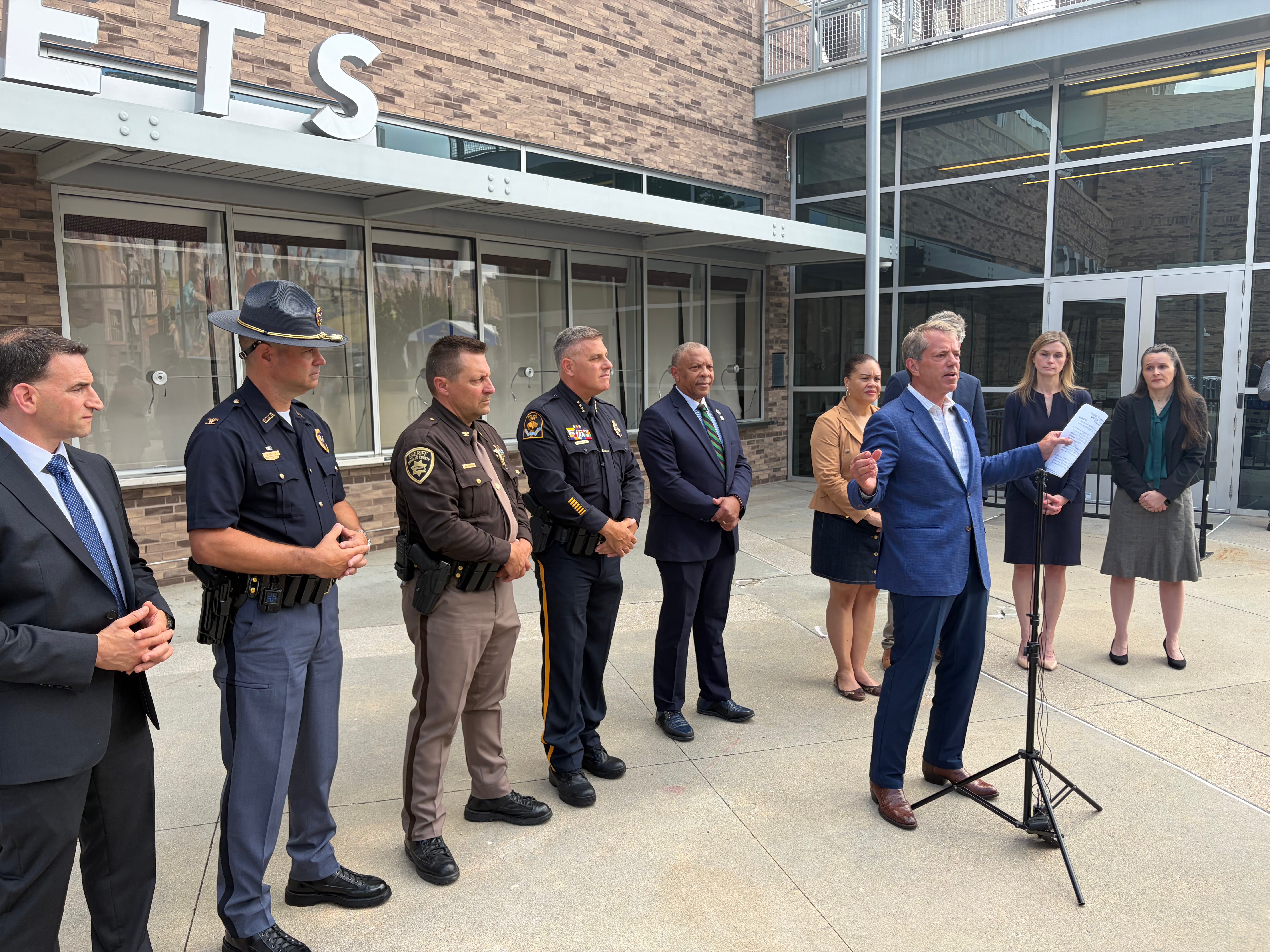
On Monday, Nebraska’s governor, lieutenant governor, attorney general, and the head of the state police joined local prosecutors, the U.S. Attorney, the head of the local FBI office, and Omaha’s mayor and police chief to talk about the “scourge” of sex trafficking. You only assemble that kind of political firepower for a big problem.
“The hard truth is human trafficking is a real problem,” Gov. Jim Pillen told a gaggle of reporters. “Its a problem everywhere, but it really can intensify when so many people come from out of state.”
And the Nebraska press dutifully warned their viewers in a score of articles and television reports. Many featured dire statistics from the assembled politicians and law enforcement leaders.
The FBI Omaha field office told the World-Herald that it made 58 arrests last year “related to ‘violent crimes against children and human trafficking.” Sentences for those crimes, the paper reported, included two life sentences without parole and totaled more than 1,000 years.
Col. Bryan Waugh, superintendent of the Nebraska State Patrol, told the crowd and The Nebraska Examiner reported that “the Nebraska Information Analysis Center today fields about 30,000 human trafficking-related tips a year, compared to a few thousand annually decades ago.”
Pillen warned Nebraskans far from the greatest show on dirt that sex trafficking was in their communities, too. “It is not just a big city issue, it can be everywhere in all 93 counties. It’s complex, a predatory crime and it operates in the shadows.”
Omaha Police Chief Todd R. Schmaderer promised a questioner that he would make public the grave statistics from last year’s CWS.
Criminologists and other academics who have studied human trafficking at big sporting events, most notably the Super Bowl, say that it is all hokum.
“I don’t think there is good evidence to suggest that sporting events cause or increase trafficking for sexual exploitation,” Associate Professor Lauren Martin, affiliated with the University of Minnesota’s Humphrey School of Public Affairs, told The Plains Sentinel in an email.
She’d know because she is the one who examined 55 peer-reviewed and academic studies of trafficking at Super Bowls finding “no direct link exists between the Super Bowl and an increase in sex trafficking.”
Perhaps that is why the police chief hasn’t produced those statistics. It’s possible they didn’t collect them last year. A police spokesman tells me he will have them by later this week once officers gather them.
Pillen’s statistic was wrong, too. Since records began to be kept in 2013, 85 of Nebraska’s 93 counties have never had a sex trafficking conviction, according to the 2025 report of the Nebraska Human Trafficking Task Force. Indeed, in all the time since 2013, there have been 33 convictions under state law, a bit over twice a year, although there was a spike to six last year.
When The Plains Sentinel contacted Nebraska’s state police about Waugh’s claim of 30,000 annual trafficking tips, a spokesman quickly admitted the colonel was mistaken. In fact, there were only 88 such calls in 2025 according to that same Nebraska task force report.
What about the FBI’s claim of putting traffickers in jail for 1,000 years? A criminal attorney in Omaha who wants to remain anonymous to avoid retaliation by prosecutors suggests that the FBI’s statement should be read carefully. The FBI said, “related to ‘violent crimes against children and human trafficking.”
“What does ‘related’ mean?,” the attorney asked, “Are they counting violent crimes against children that aren’t human trafficking?” The Sentinel contacted the FBI about their stat, but a spokesman did not reply.
A review of US Attorney and FBI press releases for 2025, did not find anything close to 1,000 years of sentences for human trafficking in Nebraska. At least some of the crimes the FBI is counting and one of the life sentences were in Iowa, not Nebraska.
Criminologists and other experts, say the solution to the real problem of human trafficking is not glitzy press conferences and dire statistics, but something far more mundane. “Trafficking happens every day, not just at sporting events,” Martin wrote. “I would emphasize the need to build a local response that is durable and provides good support (housing, health care, food access, job training supports, etc.) to people experiencing trafficking or anyone who needs it to prevent trafficking before it happens.”
David Mastio is a Papillion resident and a former National Columnist for The Kansas City Star and Deputy Editorial Page Editor of USA TODAY.
Thank you Dave for this report. I confess that I've reacted with shock as I've read reports about human trafficking in the US, including when I read reports of the so called "scourge" of sex trafficking. What efforts at exaggeration from Pillen's statement "it can be everywhere in all 93 counties. It’s complex, a predatory crime and it operates in the shadows” (when it is only documented in eight) to Waugh’s claim of 30,000 annual trafficking tips when "there were only 88 such calls in 2025 according to that same Nebraska task force report" (wow, what a doozy).
What is the endgame here? Are they just jumping on the bandwagon to look good at the expense of misleading us or is there something else going on?