
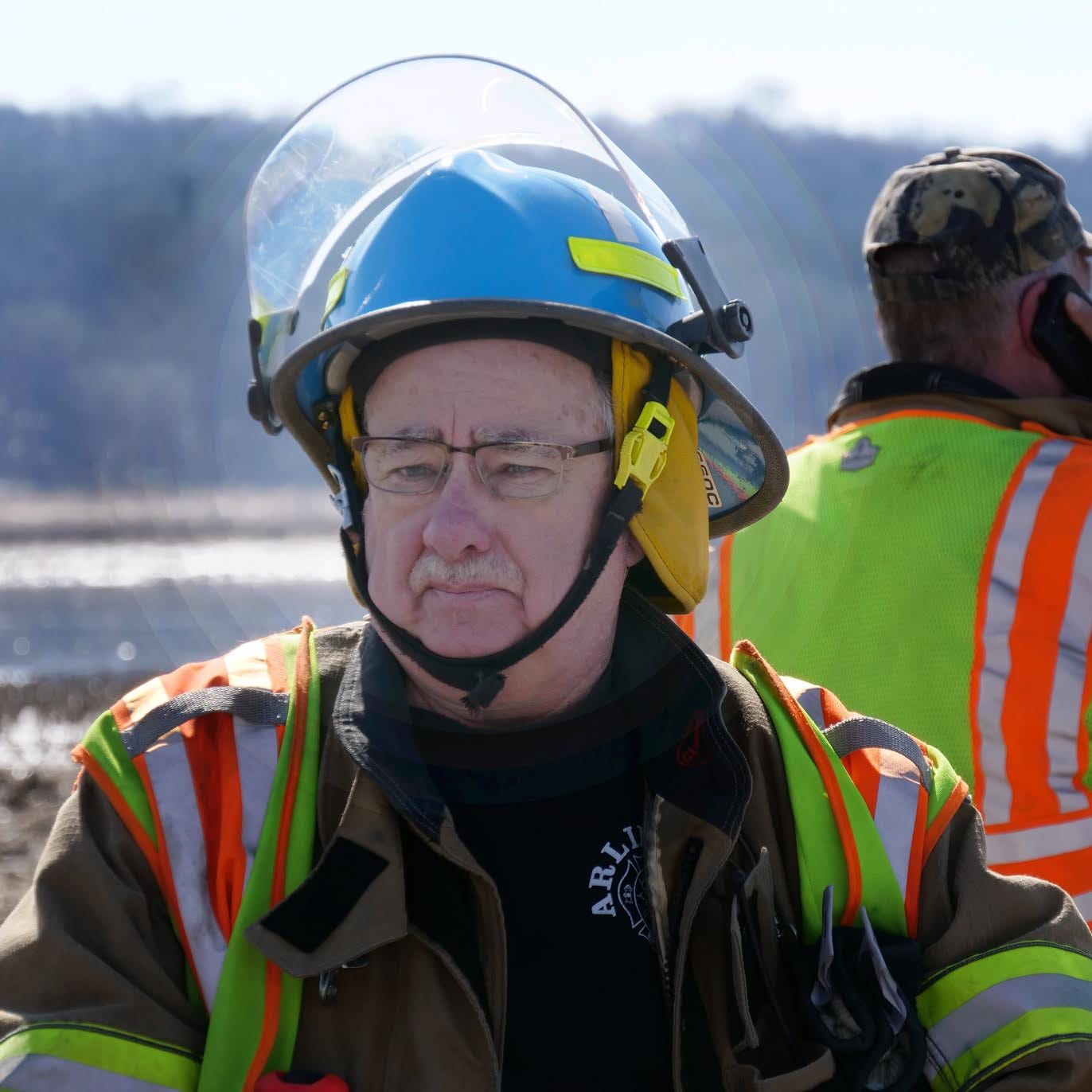
(Headshot courtesy of Michael Dwyer)
Now in it’s 52nd year, National Emergency Medical Services (EMS) Week is an opportunity to celebrate the essential role that our Emergency Medical Responders (EMRs), Emergency Medical Technicians (EMTs), and Paramedics play in Nebraska’s communities and in the healthcare and public safety systems - daily. But what does “essential” actually mean?
Nebraska statute 38-1203 says “emergency medical care is a primary and essential health care service and that the presence of an adequately equipped ambulance and trained emergency care providers may be the difference between life and death”. In addition, EMS is required to respond by regulation and the assumption that when any citizen calls 911 and asks for medical assistance, EMS must respond.
In Nebraska, approximately every two minutes, someone calls 911 to ask for help with a medical emergency. For over half a century, an exceptional network of local Emergency Medical Service (EMS) providers has admirably ensured that residents and visitors of Nebraska have access to high-quality, low-cost pre-hospital emergency medical care. In rural Nebraska, virtually all of those providers are volunteers.
Common sense, the public pulse, and 60 plus years of the 911 system would certainly say that if you, your family, or your friends have an injury, pain in your chest, difficulty getting your breath, or a change in cognition — you assume someone is coming to help – and in the vast majority of Nebraska that’s true!
However, from citizens to policy makers, most Nebraskans just don’t think about EMS until they really need it - in an emergency, when seconds matter, and lives hang in the balance. But what if you called 911 – and nobody showed up?
Everyone inside the EMS system, from doctors and nurses to paramedics, to flight services, to volunteer EMTs and EMRs in the smallest Nebraska towns, knows that EMS in Nebraska and around the nation is struggling with two fundamental issues: staffing and funding.
The health of EMS is more critical in rural and “frontier” areas because these areas lack the tax base to create their own funding and the breadth of population to draw recruits - paid or volunteer - into EMS. While Nebraskans understand EMS is essential, they have been much less willing to show that they will support it. The buzzword for this support is sustainability.
Until Nebraska embraces the significance, the value, and the cost of emergency medical services in rural Nebraska, every effort to put band-aids on this essential service will frustrate Nebraska responders, devalue rural Nebraska communities and continue to risk the lives of rural Nebraskans.
While there are no easy answers, there is a plan to support rural volunteers with a regional support framework that includes a broad range of clinicians, training, leadership, and technology – the current issue is funding.
Loosely defined, sustainability hopes to create a “transformational” system and find the funding to support it. The Nebraska Department of EMS, along with the Nebraska EMS Task Force, has recommended a regional, advanced life support system that would include 911 response to assist existing agencies, community paramedicine, and regional medical direction.
The hope is that with funding from the new Rural Health Transformation Program, the state will be able to provide “seed money” and leadership that will support and hopefully transform EMS. The challenge is that in order to receive any of that money, we must have a plan to sustain it!
The work to provide and sustain any EMS system is a process of convincing enough policymakers in Nebraska that EMS is essential and worthy of financial support.
The word for this is advocacy. Local EMS teams and I need the help of ordinary Nebraskans in helping advocate for a sustainable EMS system so we can continue to help serve Nebraskans now and into the future.
Micheal Dwyer is the retired President of Nebraska’s MDP Inc, served as a volunteer firefighter and EMT for 42 years, and is the Co-Chair of the Nebraska EMS Task Force.