

Not many Nebraska towns can boast of having their very own variety of tree. Taylor, Nebraska can. The community in Loup County is known as the birthplace of the Taylor juniper, a superstar conifer in the landscaping and nursery universe.
Evan Wilke grew up believing that his father, the late Allen Wilke, discovered the Taylor juniper in 1978 near Taylor. After all, that is the version of the story that has been reported elsewhere in numerous newspaper, magazine, and online accounts and has been shared within the nation’s greenhouse community for many years. But while this reporter was interviewing Evan Wilke and his mother, Verna Wilke, before her death in 2023, she dropped a botanical bombshell – Allen knew of this tree’s existence decades earlier – he’d first seen the unusual tree while on his way to a Sandhills fishing trip in 1945!
“He always enjoyed traveling the Sandhills, canoeing, and exploring,” said Evan Wilke, whose parents founded Wilke Landscape Center in Columbus in 1957. “And along the way, he was always looking out the windows for interesting plants to photograph.” During his lifetime, which ended with his passing in 1992, the elder Wilke amassed a treasure trove of native Nebraska wildflower photographs.
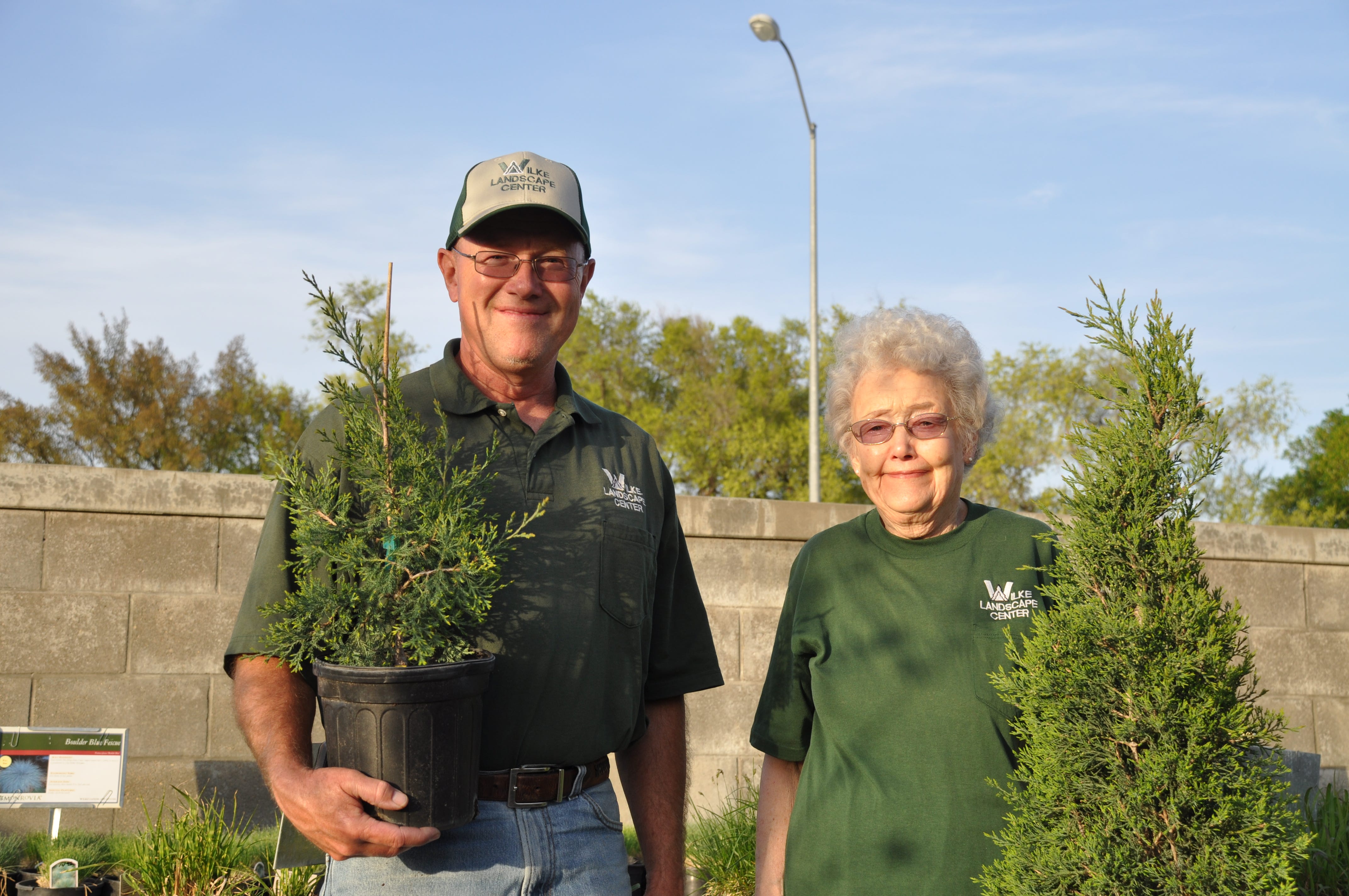
(Photo credits Alan J. Bartels / Evan Wilke and his mother, Verna, posed with Taylor junipers at their family’s Wilke Landscape Center)
“During our trips to the Sandhills, he didn’t watch the road, I had to do it for him,” Evan said. “Dad would see something he wanted to photograph and he’d just slam on the brakes. We would just have to be ready. Stuff would go flying in the back of the car, we would go flying.”
Just west of Taylor along Nebraska Highway 91, a conical-shaped tree caught Allen Wilke’s eye at 55 miles per hour. Verna Wilke couldn’t say why her husband waited so long to investigate the tree. But when he finally did, landowner Marlin Britton generously granted Allen’s somewhat odd request to take a few cuttings from the odd tree.
From the road, it looked manicured. Closer inspection revealed that it was not the case. Everything except its conical shape was cedar-like. Indeed, it was a cedar tree, a rare variant of the common, invasive, detested, disrespected, but Nebraska native eastern red cedar.
“I like trees because they seem more resigned to the way they have to live than other things do.” ~Willa Cather – 1913
Allen realized the tree’s potential importance after those cuttings were grafted onto rootstock and began growing. Following further evaluation, Wilke informed the Nebraska State Arboretum (known now as PlantNebraska) of his discovery. A hardy, conical cedar tree that could endure Nebraska’s harsh winters and brutally hot summers, that was naturally drought resistant and grew into a tight cone shape requiring no trimming, was a botanical rarity at the time in the nursery industry.
Clones of the original mother tree are now sold nationwide. In fact, Wilke Landscape Center in Columbus sells several hundred Taylor junipers each year. “Because it stays so narrow, this tree really fills a unique niche,” Evan Wilke said of the tree that often towers 25 feet tall but only grows to about three feet wide. In nursery circles the tree is known as (Juniperus virginiana ‘Taylor’).
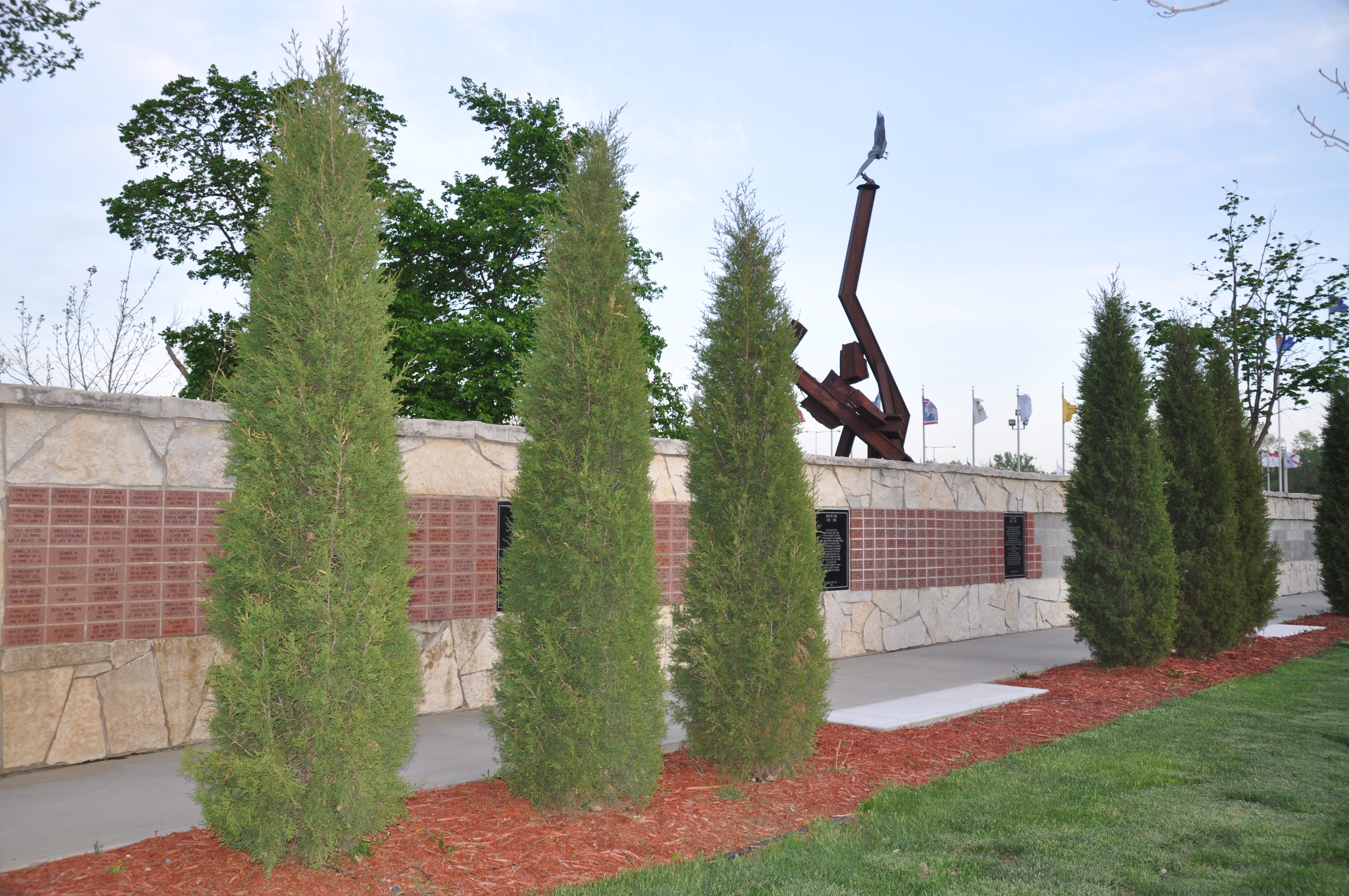
(Taylor juniper trees are an integral part of the landscaping at the Andrew Jackson Higgins National Memorial at Pawnee Park in Columbus, Nebraska.)
How these strange variants originated is anyone’s guess. Evan Wilke told me that there are some other plants in the Taylor area that exhibit strange qualities when compared to the same species growing elsewhere. “One theory is that a meteor crashed near here long ago, causing plants to mutate,” he said. “I don’t know if its radiation or what. It’s just a theory, it’s not mine.”
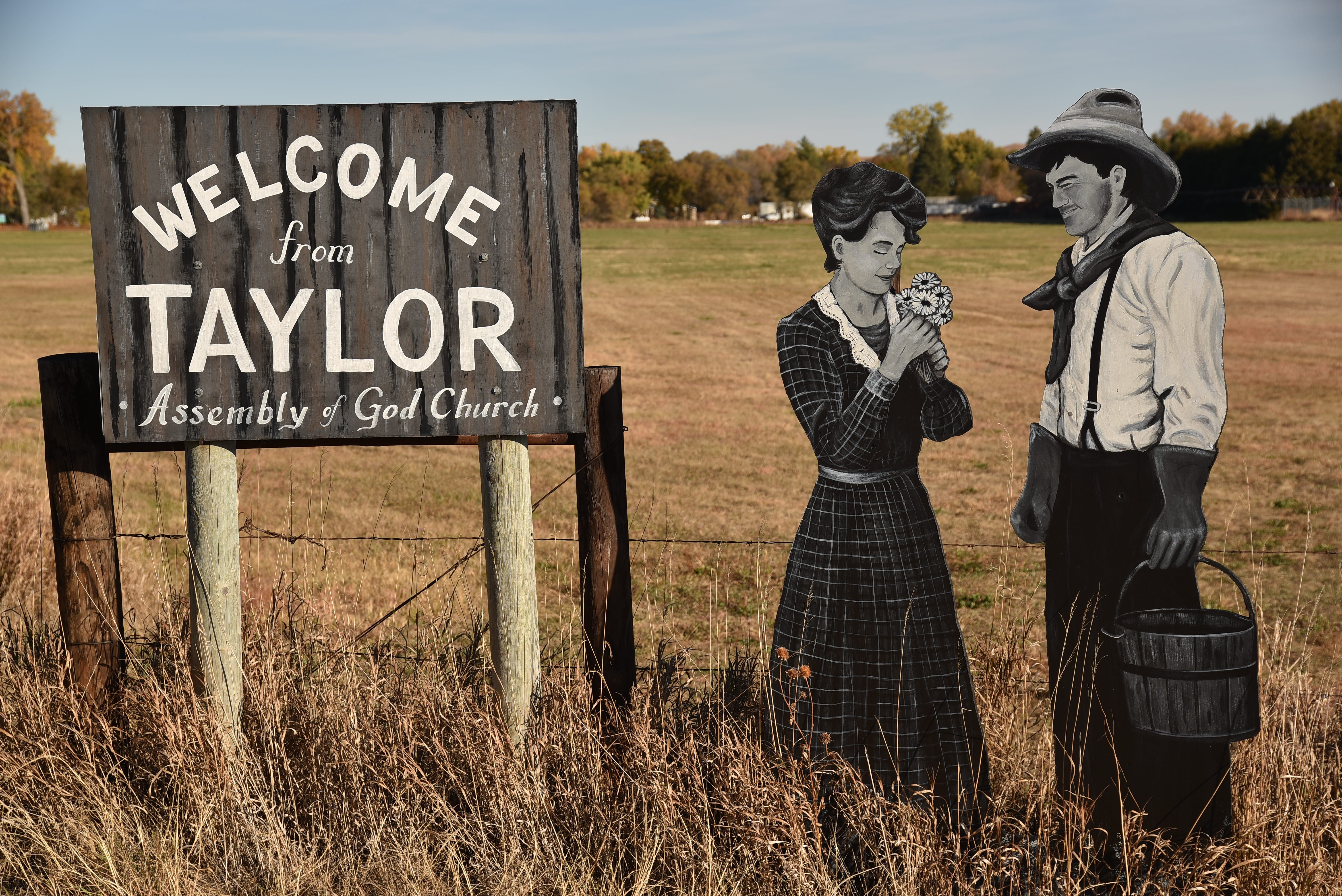
(The “Taylor Villagers” are crafted by Taylor area artisan Marah Sandoz. More than 100 appear in Loup County. This one overlooks the Loup-Rock county line north of Taylor. Others appear in residential yards, in front of businesses, and along roadsides at the Loup County line. The Villagers rival Taylor junipers at the village’s most well-known claim to fame.)
When I first visited the original Taylor juniper mother tree in 2010, she was still hanging on. For years, just like Allen Wilke before he finally investigated the tree, I would stare over at her as I passed by. That matriarch has since perished, but in many ways she still survives. In addition to the nursery-grown Taylor junipers sold across the nation – and those planted at public places like the grounds of the Nebraska State Capitol in Lincoln, the Lower Loup NRD Arboretum in Ord, and the Andrew Jackson Higgins National Memorial in Columbus – many grow under the Sandhills sky in and around Taylor.
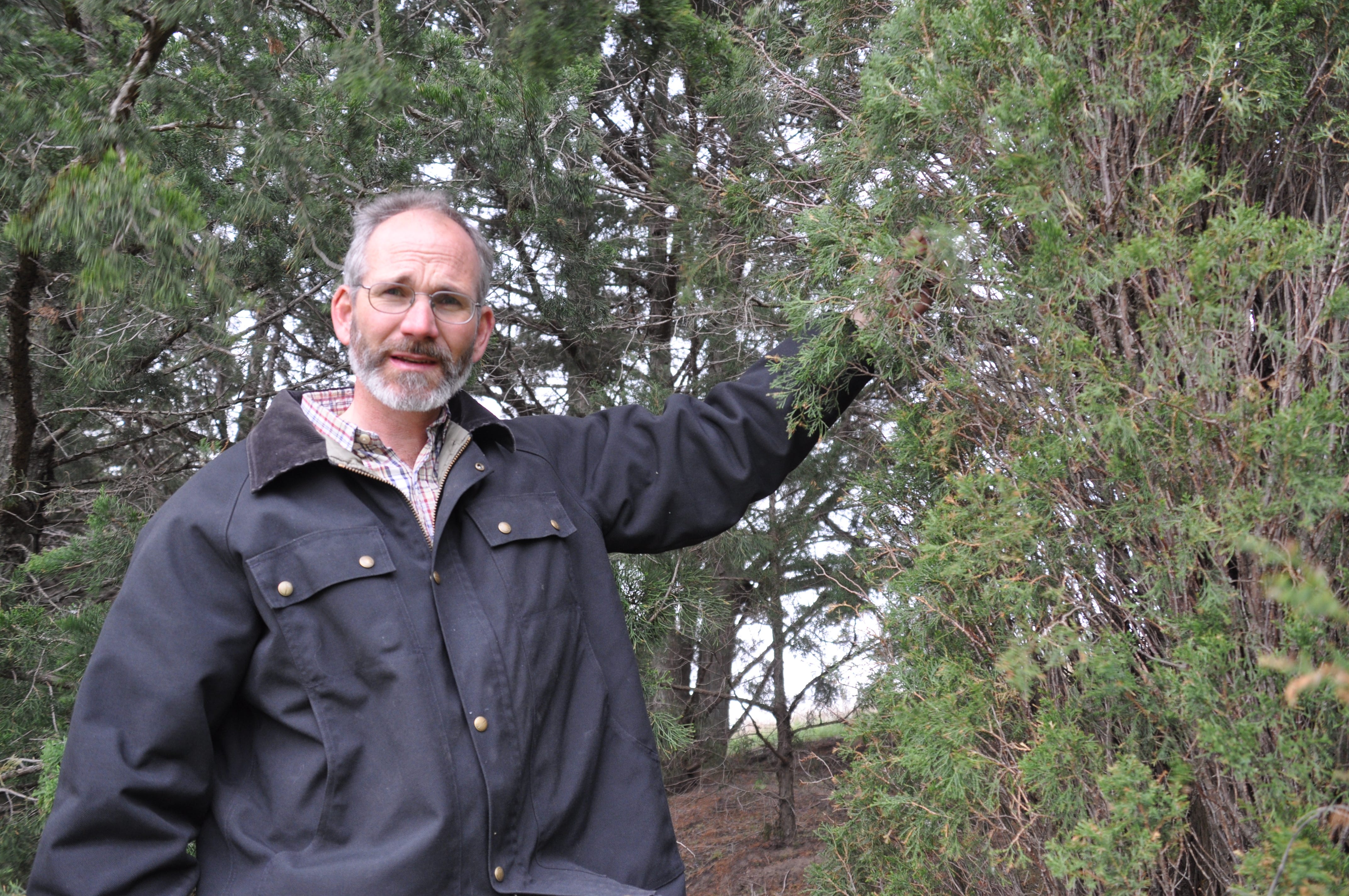
(Loren Sandoz, the former Environmental Sciences teacher at Loup County High School, posed with the original Taylor juniper “mother tree.” All Taylor junipers sold through the nursery industry can be traced to this tree. They are all clones.)
For several years, while under the tutelage of then teacher Loren Sandoz, Environmental Sciences students from Loup County High School in Taylor propagated the rare trees while unintentionally helping to control its regular eastern red cedar relatives.
One morning, I tagged along as Sandoz and his students ventured into the sand hills west of Taylor. The students collected Taylor juniper cuttings much like Allen Wilke did long before those children were born. Back in the classroom, volunteer eastern red cedars dug up from nearby hills and planted in homemade pop bottle planters were removed from a makeshift greenhouse – a small black tub with a piece of plastic sheeting over the top. Rubber bands and a special grafting knife were placed on a table and the kids went to work. The process involves cutting a slit on the regular red cedar trunk and then inserting the Taylor cutting (scion) into it. The area where the two are joined is then wrapped tightly with a rubber band.

(Loup County High School Environmental Sciences teacher Loren Sandoz (retired) examines a Taylor juniper tree west of Taylor, not far from where Allen Wilke first discovered the variety.)
Sandoz told me that the lack of a proper greenhouse limited the experiment’s success to between two and 10 percent each school year. The Taylor junipers that took off were sold locally for a whopping $5 a piece (nursery-grown Taylor junipers sell for hundreds). In regard to those that didn’t make it, student Trey Cauldwell told me, “In that case, at least we killed some cedar trees.”
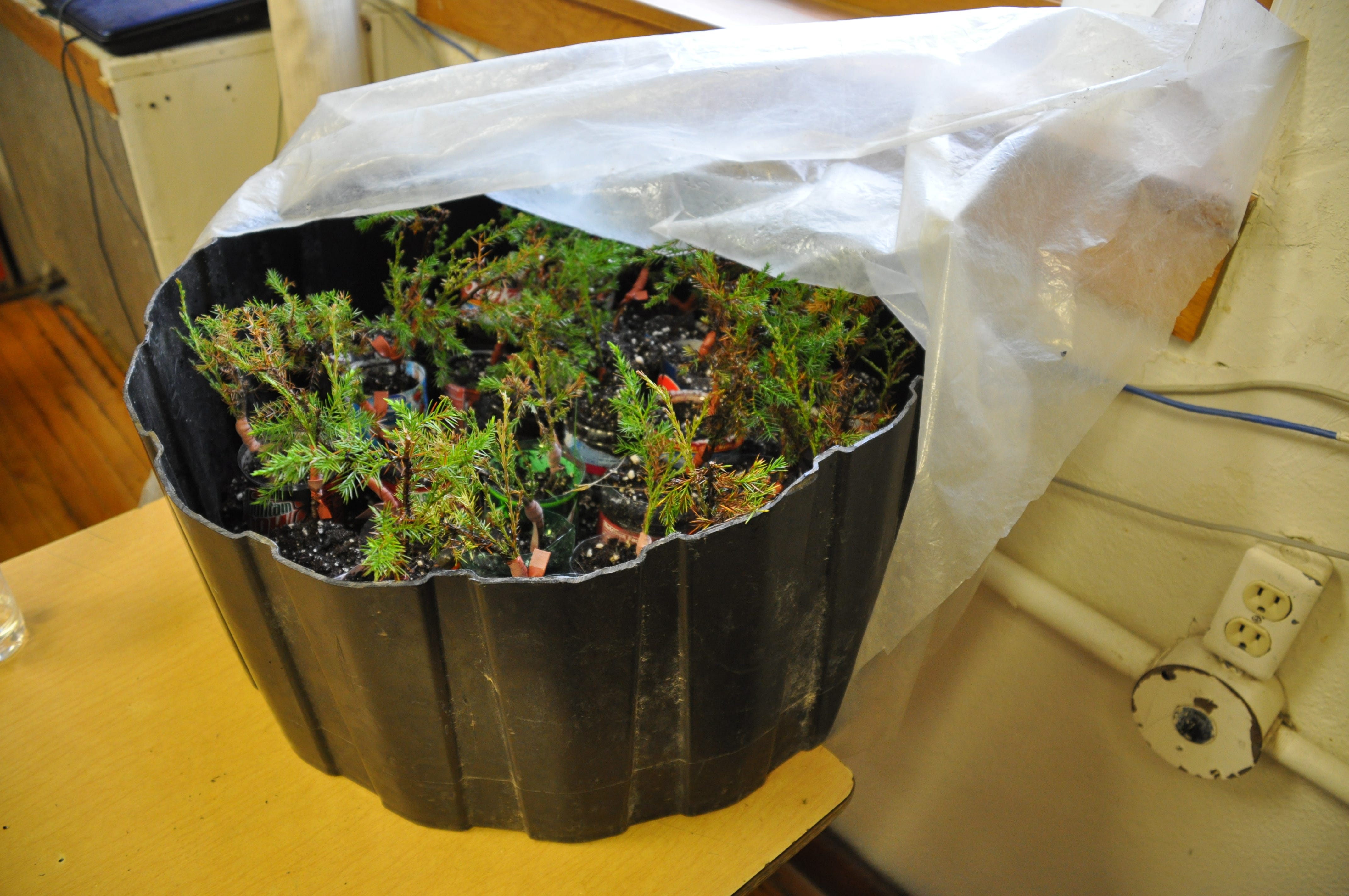
(The Loup County High School’s makeshift “greenhouse” for propagating Taylor junipers. The class sold surviving trees for $5.)
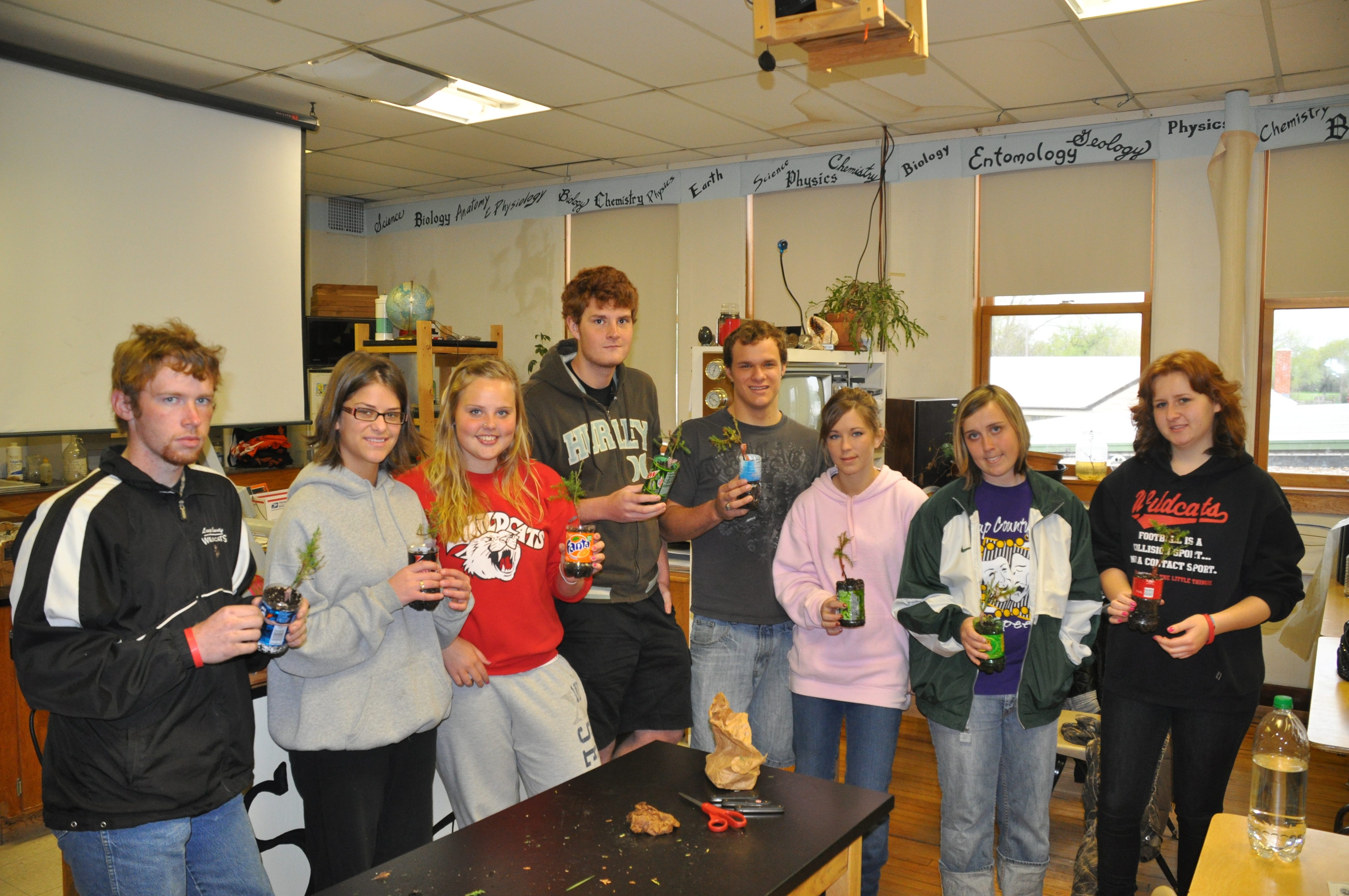
(Loren Sandoz’s Environmental Sciences class at Loup County High School. Pop bottles serve as planters for the experimental plantings.)
Taylor Junipers sold through the nursery industry can all be traced back to the tree that Wilke discovered. They are clones. Some of the berry-like seeds harvested from the mother tree by Sandoz’s students and subsequently planted, developed into young trees that exhibited the conical Taylor trait, proving that it can be passed genetically to subsequent generations. Perhaps this explains the occurrence of Taylor junipers in an area roughly from Taylor to Sargent long before they had been “discovered.” Some of those mature trees persist on the landscape. A drive through Taylor and the surrounding area reveals many planted by the hand of man – they are hard to miss.
The Taylor juniper’s hardiness reminds me a lot of the tough Sandhillers of the Taylor area who have embraced their hometown tree. Within Taylor Village Park, at the Taylor Community Arboretum, a sign catches passersby’s eyes with the proud proclamation that Taylor is the Home of the Taylor Juniper. Visible from Highways 91 and 183, Allen Wilke would approve.
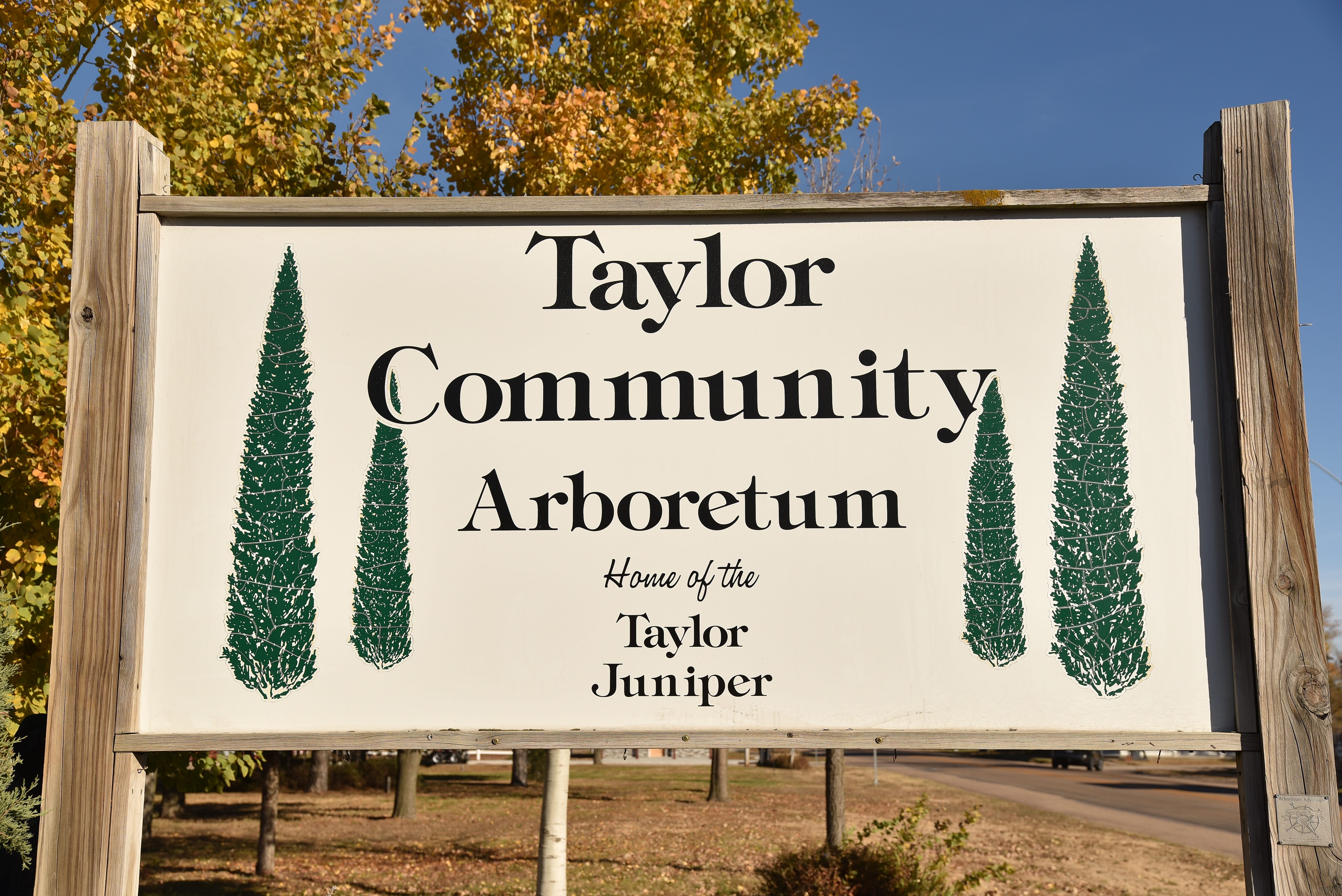
(Taylor juniper trees are the highlight of the Taylor Community Arboretum in Taylor, Nebraska. The community in Loup County is known as the Home of the Taylor juniper.)
“Through careful observation and reading, Dad became a true, self-taught plantsman. He loved plants in general but was always particularly interested in Nebraska plants,” Evan Wilke said. “I’m glad he was able to expose this tree to the world.”
Alan J. Bartels is a US Army veteran who served with the 2nd Armored Division during Desert Shield/Desert Storm. He is also the former editor of Nebraska Life magazine where he still writes a column for each issue. His latest book, Secret Nebraska Sandhills: A Guide to the Weird, Wonderful, and Obscure, was released in March 2026.
Editor’s Note: Taylor Community Arboretum is located at the intersection of highways 91 and 183 in Taylor.
This article very much pleases me! I am a born and raised Nebraskan although it has been many decades since I lived in my home state, I still love Nebraska dearly. The long proud history of Nebraska's arborist leadership is nowhere better displayed than by the fine tradition shown in this article. Thank you.