

SANDHILLS – Nebraska ranchers say that drought conditions are threatening their livelihoods as many are still trying to recover from the damage done by major wildfires earlier this spring.
The drought, which has lasted around a year, has helped fuel the historic devastation from wildfires across the state.
Fifteen miles north of the unincorporated town of Whitman, population ~200, lies the Phipps Ranch. Brett Phipps is a fifth-generation rancher, and on April 22, his ranchland started up in flames after lightning struck his property.
Phipps, who has gone through firefighting training, said he knew there were going to be fires the day they occurred because lightning was expected in the area, but he was caught off guard by how early the fires started.
“I was going to take a pickup and trailer to town, well, this is like 1 o’clock, and my lightning detector starts going off,” he said, noting that he hurried back to the ranch as fast as possible. “I forgot to shut the door on the pickup. That’s how much of a hurry I was in.”
The Phipps Fire, which Phipps said will likely get officially named the “Calf Creek Fire” when the government documentation is finished, burned up an estimated 1,700 acres of his land as well as parts of neighboring properties.
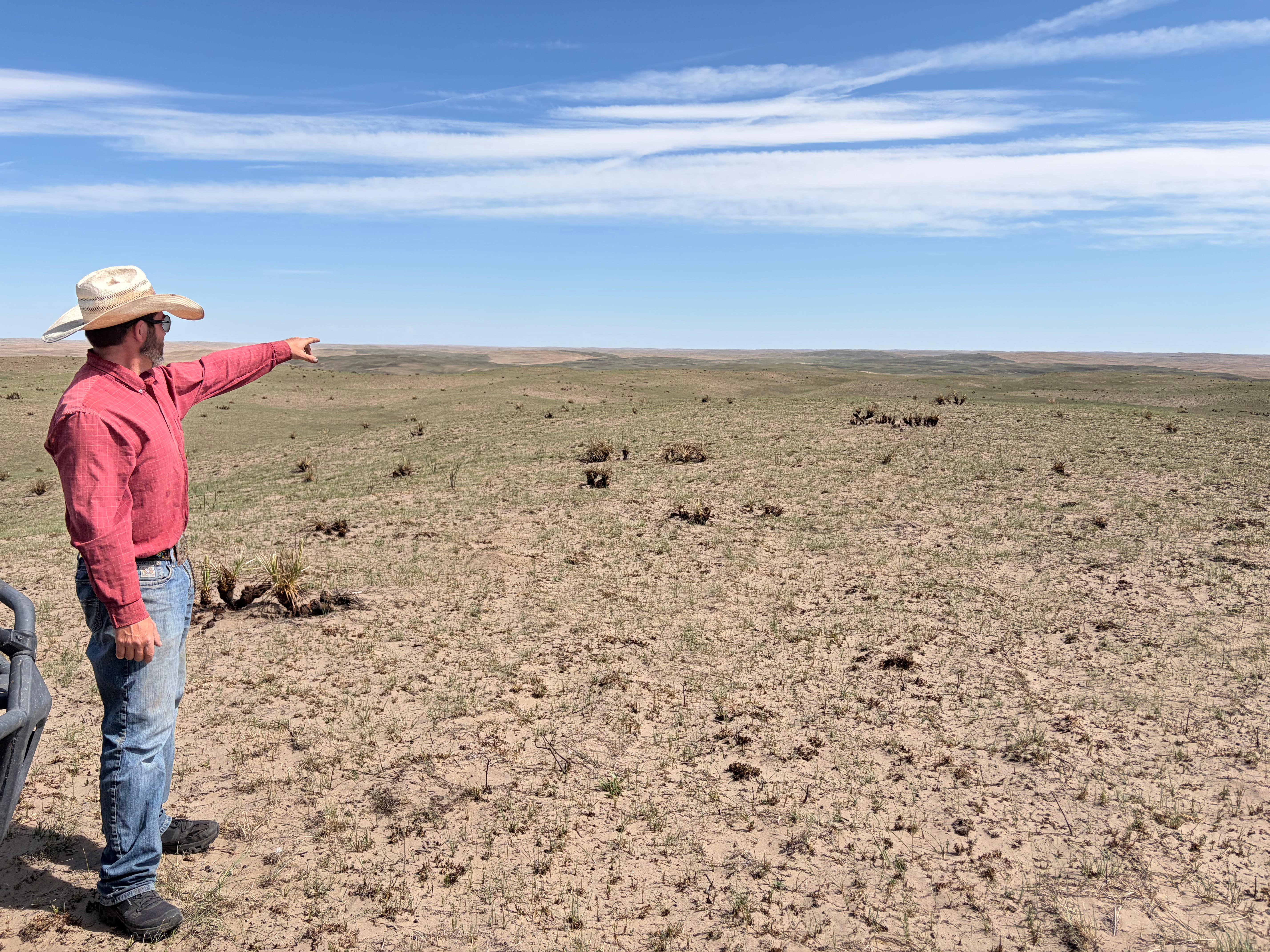
(Brett Phipps points towards the edge of his property where the fire damaged his land/Picture credits John Gage unless otherwise noted.)
Phipps has more professional gear to help battle wildfires than many of his neighbors, with a dedicated pickup for the job. Ranchers have what they call “rigs,” which are small mobile units with water tanks and hoses that can be put in the back of a pickup or an ATV.
Rigs get refilled at water tanks scattered throughout the ranch, where windmills continuously pump water up from the Ogallala Aquifer.
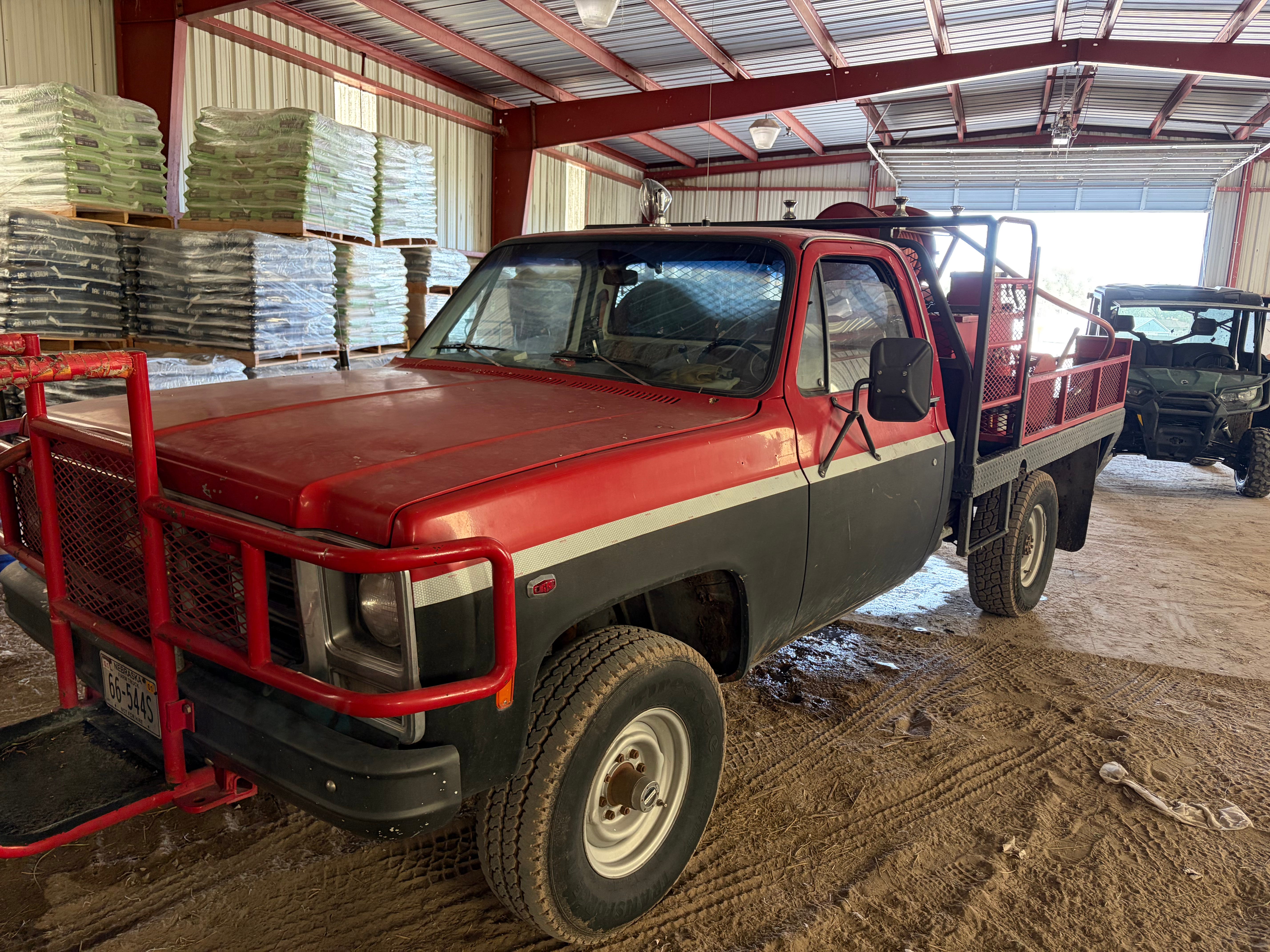
(Phipps’ pickup, which he uses to fight fires with. The pickup is optimally manned with three people — one driver, another in the back operating the rig, and a third up front making sure they don’t fall off a hill through the smoke.)
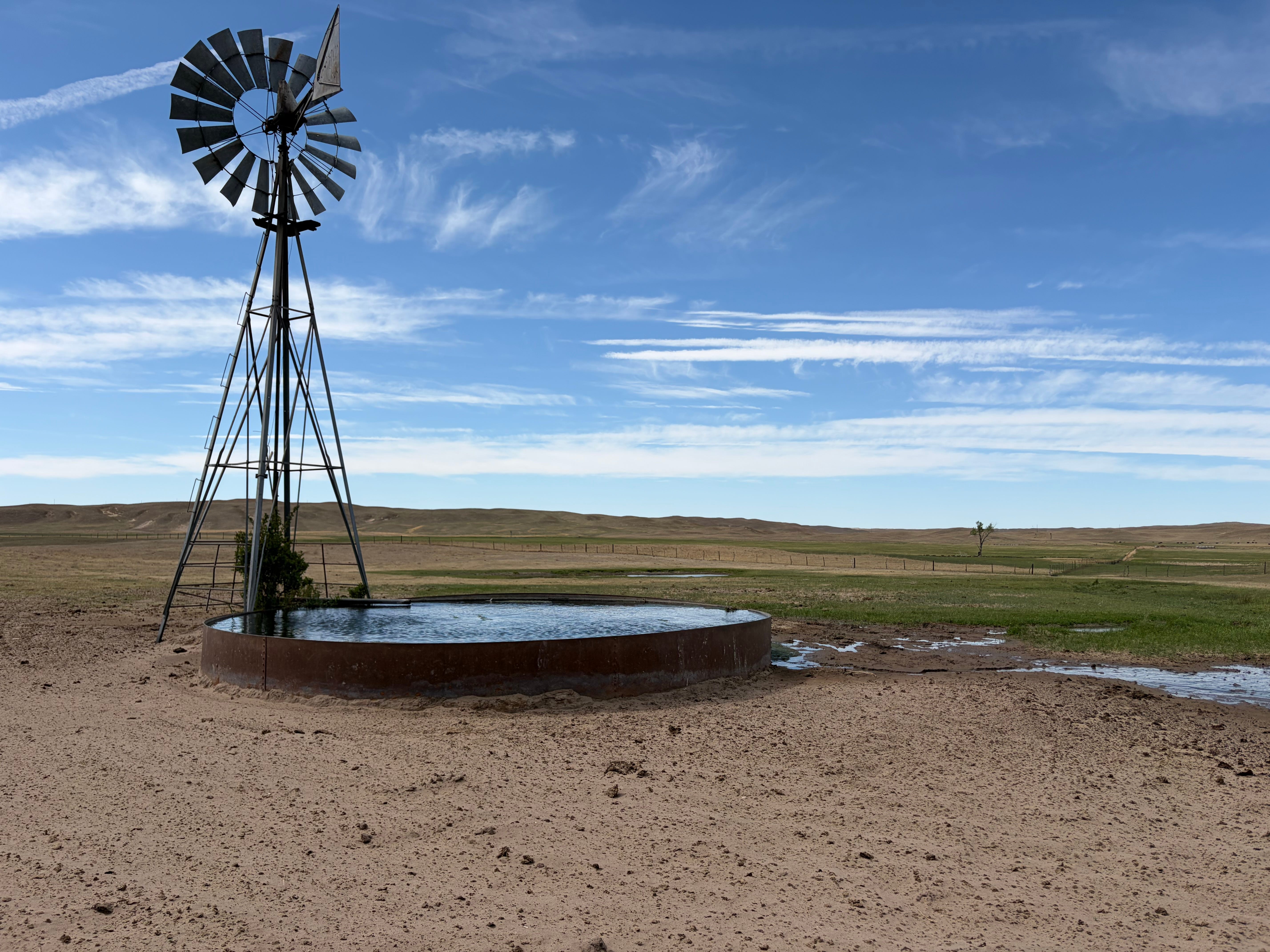
(Water tank refilled with water from the Ogallala Aquifer)
Phipps credits the help of his neighbors in keeping what was, relatively speaking for this year, a small fire from destroying his home and more of the surrounding community.
Whenever a fire occurs in the community, ranchers call the fire department, but they rely on quick responses from surrounding neighbors even more. Phipps said it takes the fire department at least an hour to reach his ranch.
When lightning is expected in an area, ranchers will perch themselves on top of a hill to observe the surrounding land. When the lightning strikes and smoke is observed, the first call goes to the fire department, but Phipps said each rancher has a list of neighbors they call through to have them join and help put out the fire.
Phipps said the urgency of the fire at his place meant he didn’t have much time to make calls. Instead, as he was pulling into his property, he pressed talk to text on his phone and hit send on a Facebook post with a call for help.
‘Dust Bowl’ Conditions Threaten Ranchers
The ongoing drought means that wildfire recovery is, for many ranchers, not even their top concern.
“We are two weeks away from many ranchers having to make some really tough decisions,” Matt Cover, a sixth-generation rancher and a first-generation landowner in Grant County, told The Plains Sentinel during a recent visit to his ranch.
Cover said the drought conditions in western Nebraska were causing ranchers to sell off some of their livestock, and if it continued, it could likely cause many ranchers to close their operations permanently.
“This year has really changed a lot of things,” he said. “Some of it’s from the fires, but the drought has caused way more [issues].”
“Until we get some relief, hopefully this weekend, guys will continue to liquidate cows, and if we don’t get anything here in the next two weeks, a lot of places in Nebraska are just kind of done for,” he added.
The drought conditions have put additional pressure on ranchers who are still trying to recover from the wildfires that ripped through their properties. Part of the Cover Ranch was hit by the Ashby fire that burned 36,000 acres starting on March 25 and was not contained until April 2.
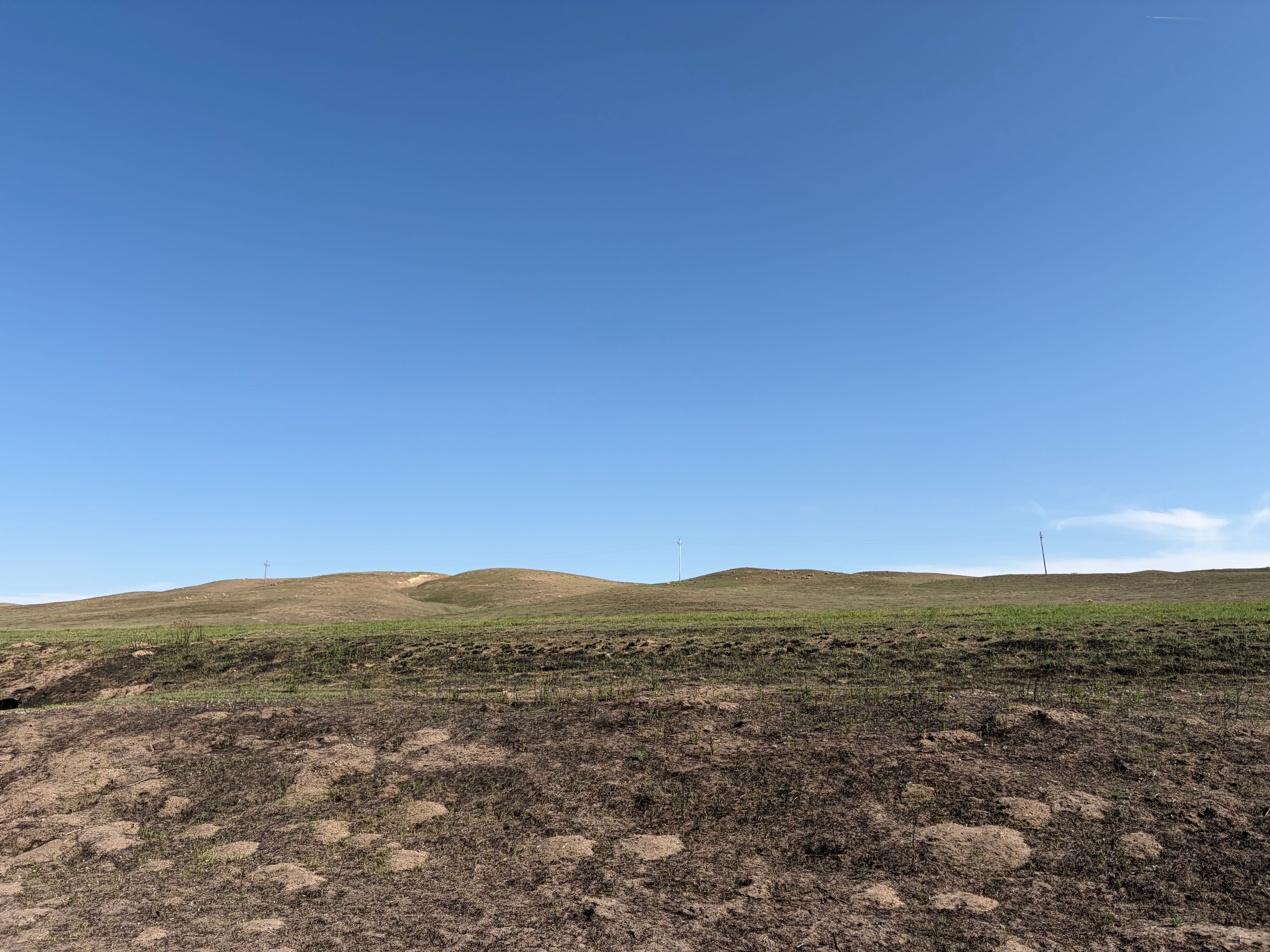
(Part of the Cover Ranch where the wildfires ripped through)
The Ashby Fire was the third-largest fire in the state this year after the Morrill and Cottonwood Fires, which burned over a combined 750,000 acres. The Ashby Fire was only extinguished after circling back and eventually meeting at the same area where the Morrill Fire had already burned through days earlier.
“You pull into town, and it’s just this orange, red glow. And you are hearing cars explode,” Cover said, describing the Ashby Fire. “It was like a doomsday war zone, and you are wanting to slap yourself and say ‘Is this a nightmare?’”
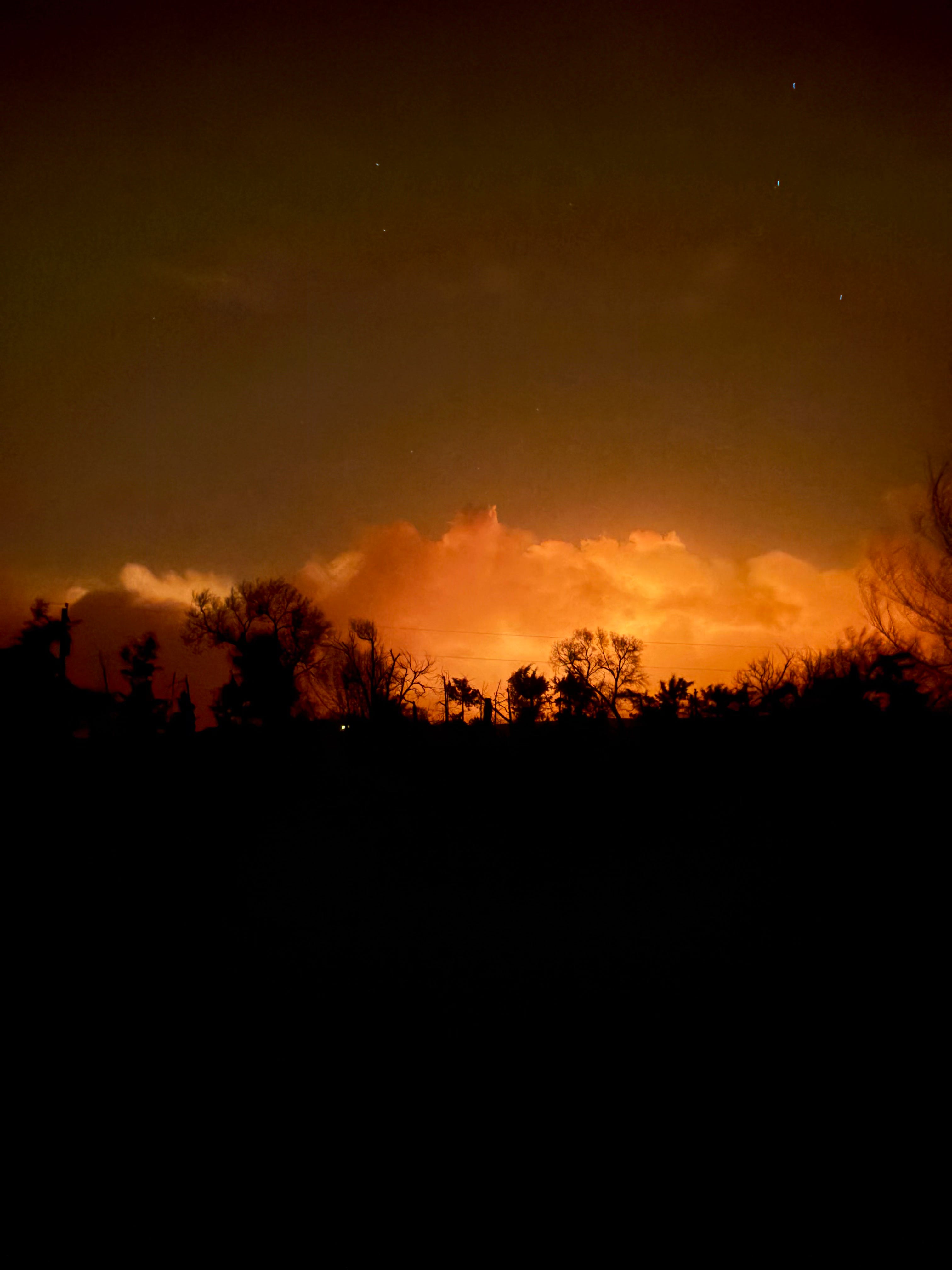
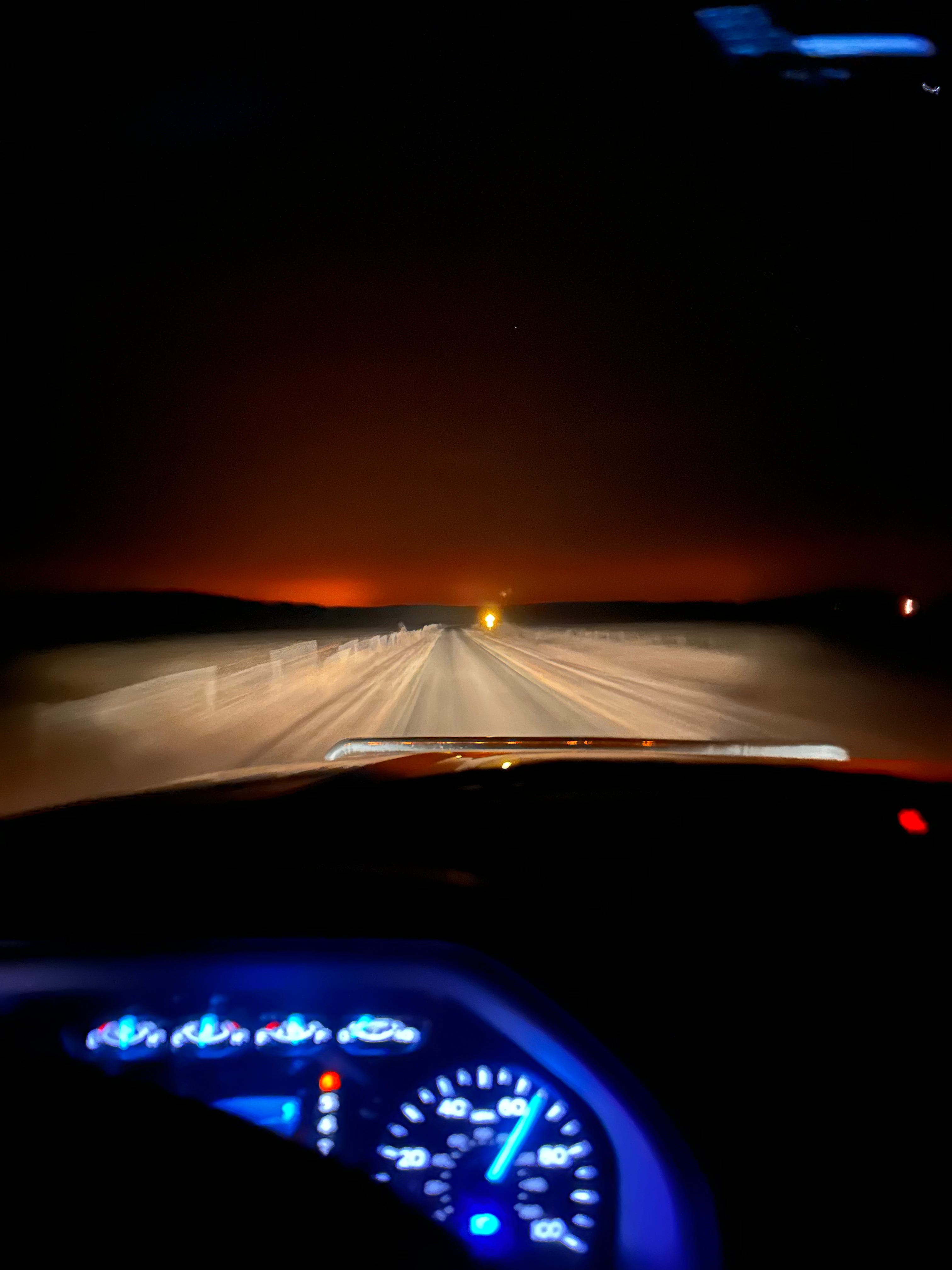
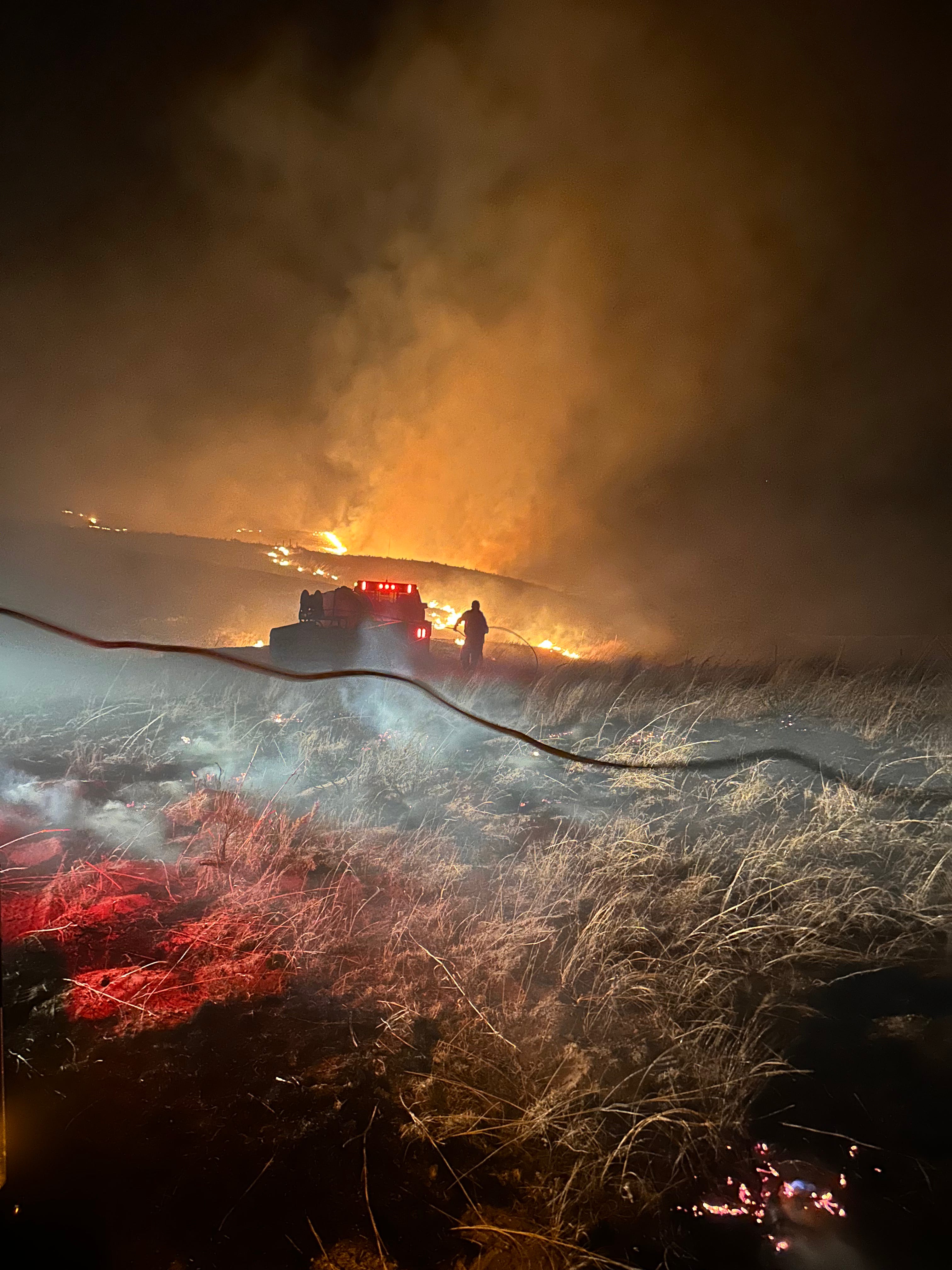
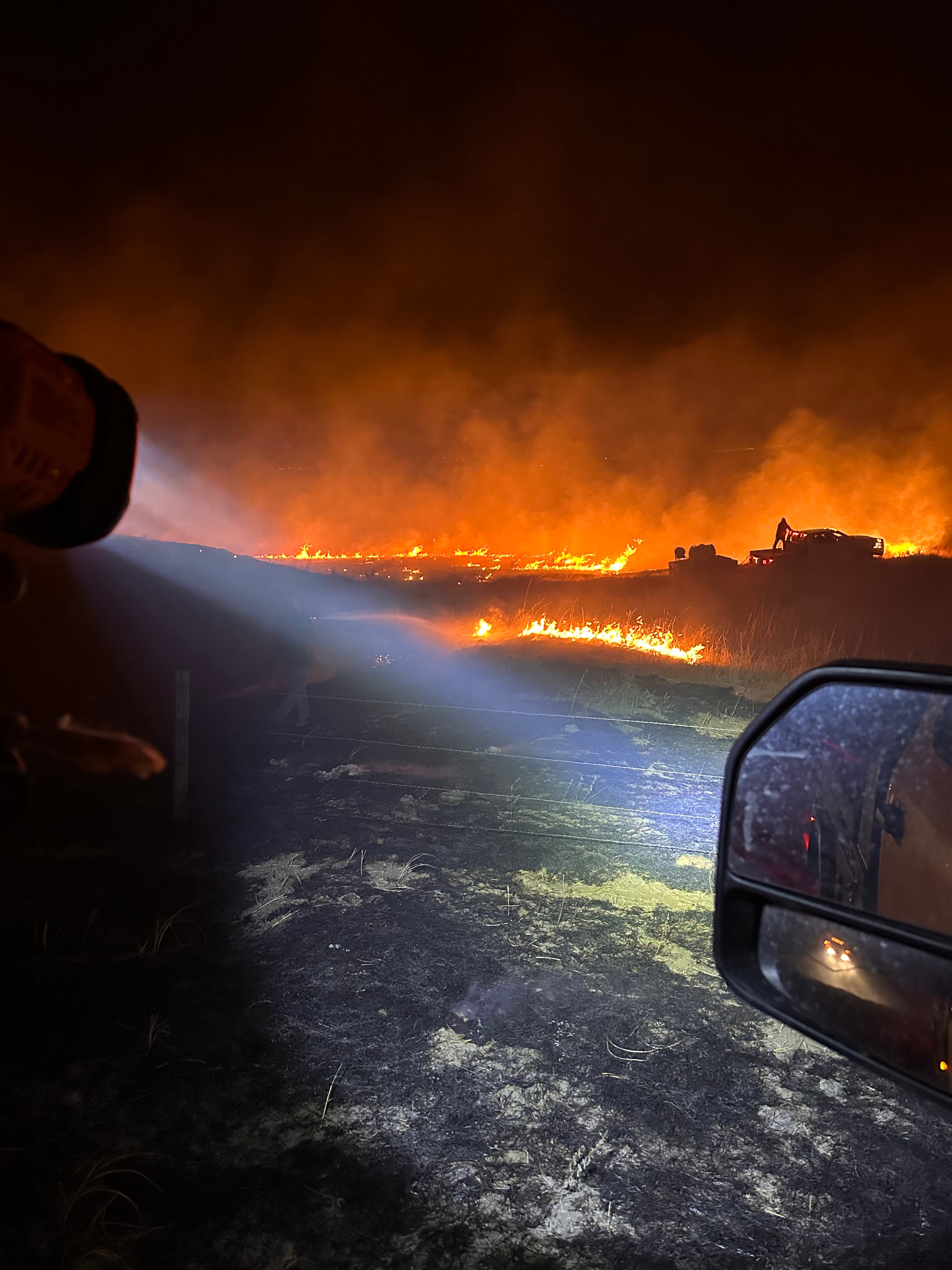
(Pictures of the Morrill Fire courtesy of Sara Cover)
Off a road just south of the town, one can see where the Ashby Fire met up with the remains of the Morrill Fire. Counterintuitively, much of the area burned up looks green in the distance as grass sprouts up following the fire, whereas the grass that did not get burned remains brown with a deadened look from drought conditions.
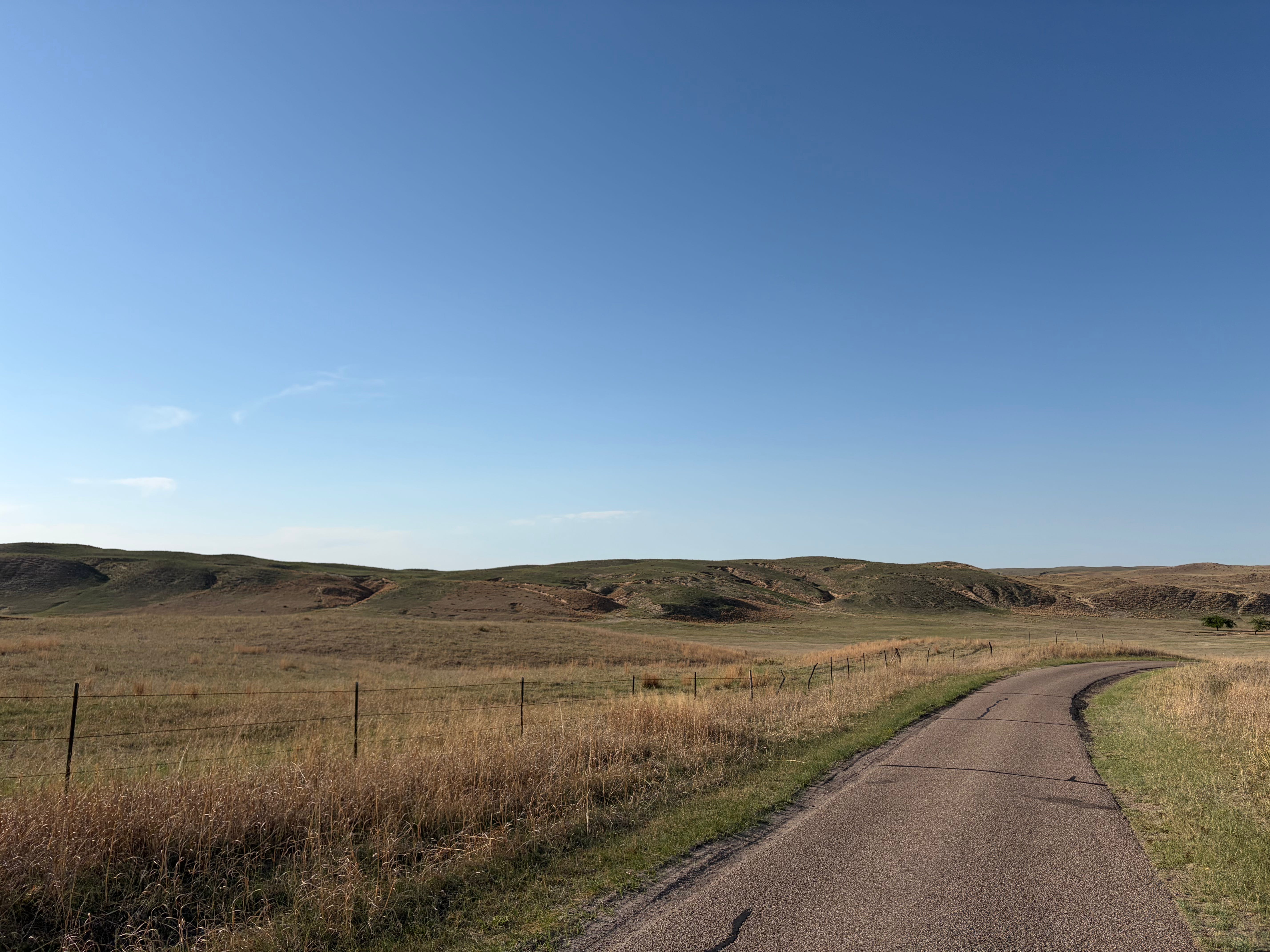
(On a road south of the town of Ashby, where the Ashby Fire met up with the Morrill fire. The green hills in the distance are the new growth of grass following the fire.)
Cover said his family was luckier than many during the fire. In places where the fires burned hottest, ranchers’ grasslands have been reduced to looking like a desert. “The root systems are still there and in place, but the problem is when you open up these sand dunes to the wind that we’ve had this winter, and that sand gets blown out on top of these root systems and covers it up. It is impossible for those roots to grow grass through 2, 3 feet of sand,” he said.
Cover said the only solution was “time and moisture.” “We are at the mercy of God sending us moisture,” he added.
Cover’s wife, Sara, chimed in, saying it was the driest winter in the Sandhills in generations. She said even older ranchers have “never seen anything like this,” and that many ranchers were “still in shock” over the drought conditions and did not fully have a plan to deal with it.
“It feels like 1930,” Sara Cover said. “It feels like we are in the Dust Bowl.”
The lack of moisture means there’s very little for cattle to eat on many of the hills where they typically graze — Matt said many ranchers will need to move parts of their herd out of state if they want to keep them, or they will be forced to sell.
“It looks very bleak. There is little to no green grass,” he said. Later on a tour of his ranch, most of the hills were covered in brown grass except in the spots where the fire had ripped through. There, small green blades were just starting to poke through the sand.
Cover said that he won’t graze cattle on the burned-over parts of his land for a year, and for some ranchers, it might be at least two years.
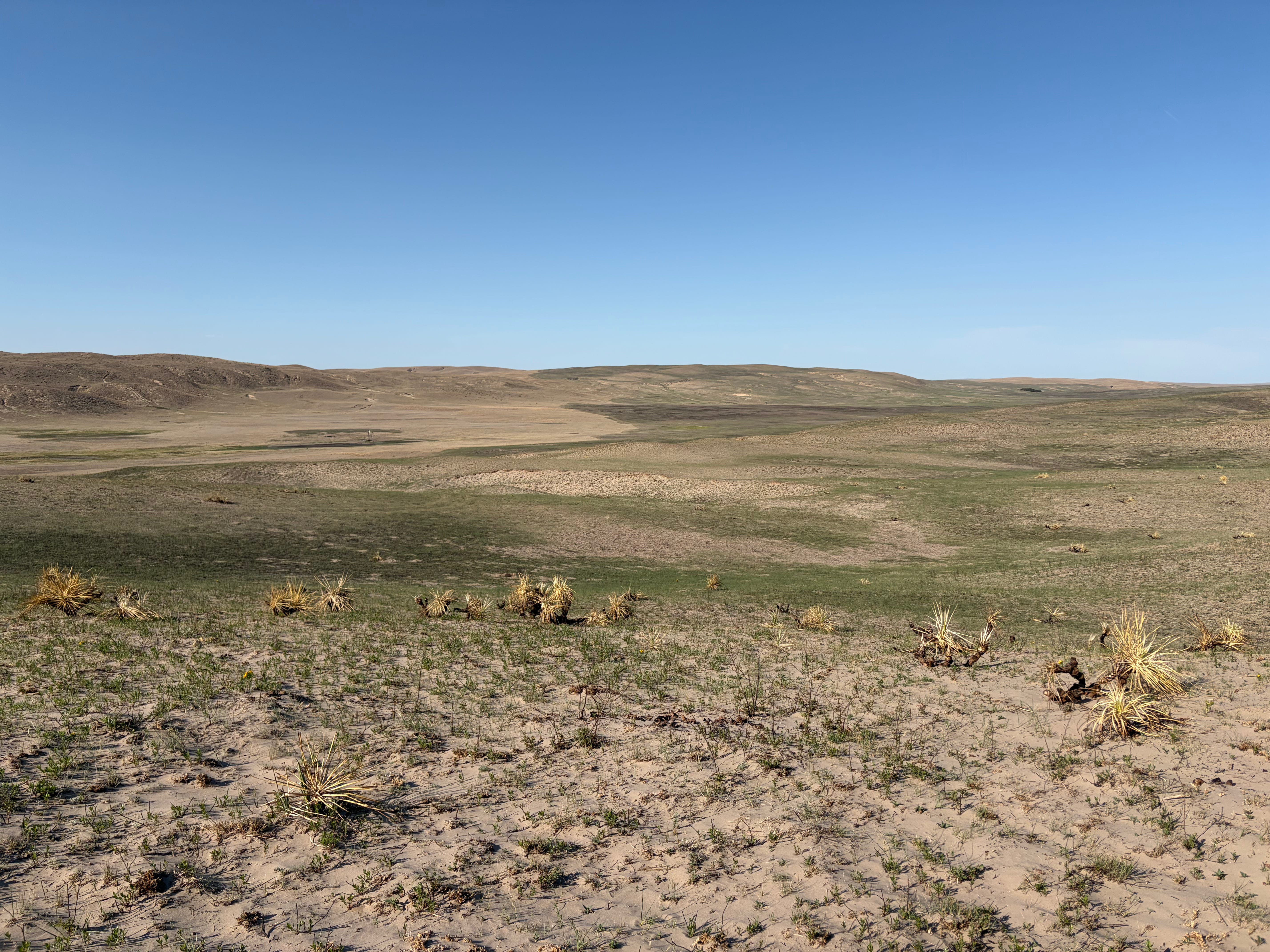
(The hills brown in the background on the Cover Ranch are grass untouched by fire but dead-looking from lack of moisture, while the green is grass sprouting back in where the fire raged)
Fires Could Come Back at Any Moment
In the Sandhills, fire season is year-round, and vigilance is always necessary. “It’s anytime,” Phipps said, mentioning a fire last January that had occurred on Turner’s ranch despite there being snow on the ground.
The spring is usually the season when the Sandhills get the most rain. “It should be the time we are least worried about fires,” Matt Cover said, but because of the drought, fires could crop up at any time.
“Nobody has seen anything like this,” he said. “On the fire side for sure, let alone on the drought aspect as well.”
Matt recalled how the fires had made his family “paranoid” for a month as they were “constantly watching the horizon” to see if another fire started on their property.
“You’d wake up thinking you were smelling smoke,” Sara said, noting that one of their neighbors slept in his jeans for a month straight so he would be ready in case a new fire started.
As the drought lingers on, the Covers and ranchers across Nebraska are praying for rain so they don’t find themselves dealing with more fires this summer.
“If something started right now,” Matt said. “We could be in somewhat of the same situation.”
— John Gage is the executive editor of The Plains Sentinel.
Western Nebrasa needs beavers: https://youtu.be/XxfD7DzStYY?si=xn6jefCVV4Ov1BqH