

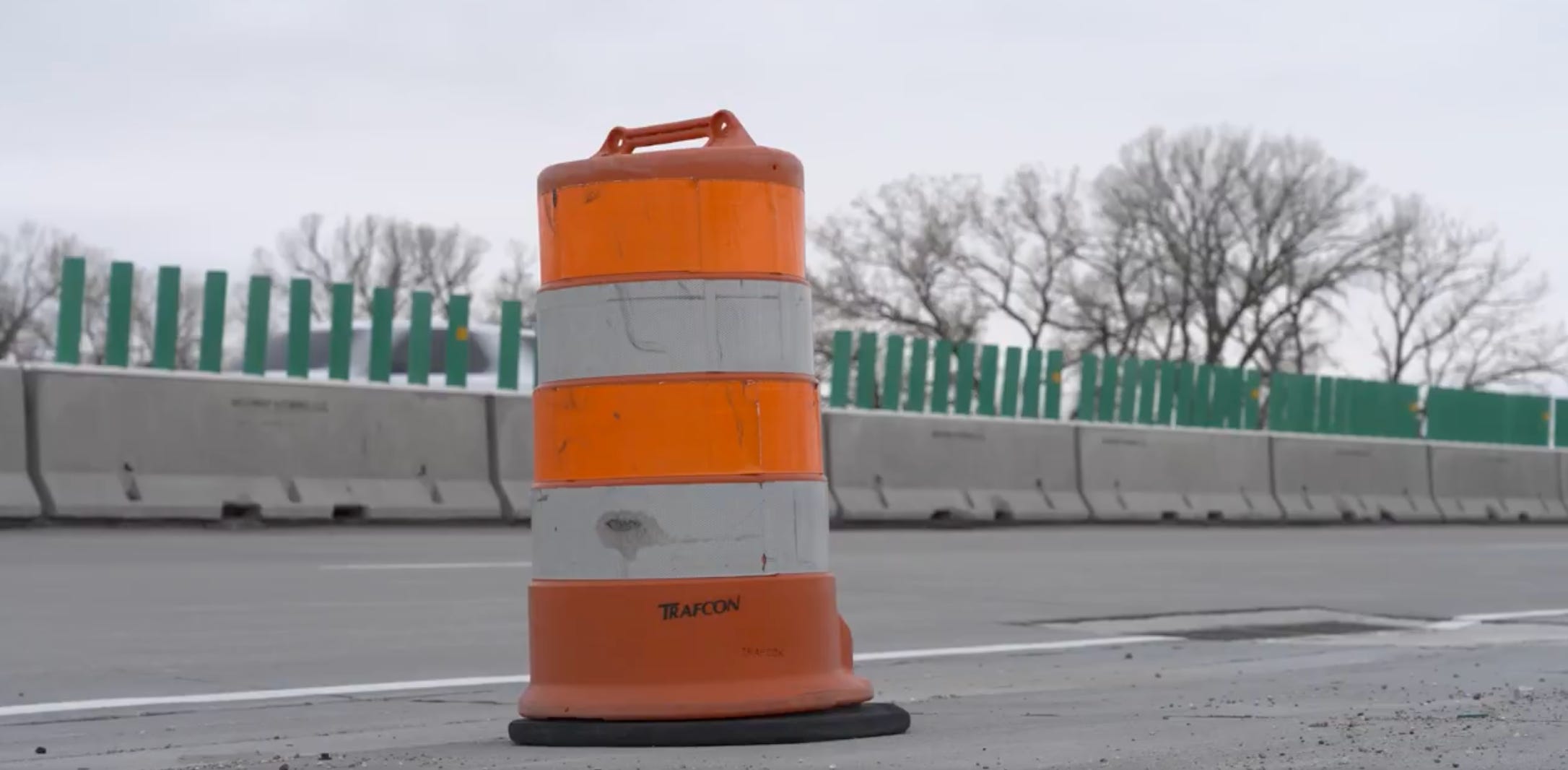
(Picture credit Nebraska Department of Transportation)
Lancaster County could see no new road and bridge construction in 2027 after a budget meeting last week between County Engineer Pam Dingman, Budget and Fiscal Officer Dennis Meyer, and the Lancaster County Board of Commissioners.
As part of the county’s ongoing 2026-2027 budget process, the board considered Dingman’s requested budget increase of 3.27% against Meyer’s recommended cuts to that request, a potential difference of $6.1 million total across the three funds that compose the County Engineer’s budget, according to Dingman.
The recommended figure, she said, would mean little to no margin for new projects. Fund 21, the engineers’ Bridge and Special Road Fund, would bear the brunt of the reduction, taking a step back from its 2025-26 levels.
“Fund 21 should really be referred to as our capital improvement program, so that’s new bridges and new paving projects,” Dingman told The Plains Sentinel. “I had requested $4.1 million for that fund. A million dollars of that is money that was re-encumbered from a previous year for construction projects that are already underway. The proposed cut to that budget was about $3.1 million.”
What remains would consist entirely of finishing those re-encumbered projects from the previous year.
“What that means is that Lancaster County will have no capital improvement program over the next budget year. It means no new construction,” Dingman said. “In last year’s budget, I had one capital improvement project — one large bridge. In this year’s proposed budget, I have zero capital improvement projects. So no new pavement, no new bridges.”
Pavement a Concern
No new developments is a particular concern for Dingman as she told The Plains Sentinel that she estimates a growing Lancaster County will need at least 25 miles of new pavement in the coming years.
“I know that there’s no way that we could replace all the bridges that we need to replace and pave 25 miles of pavement in one year, but it becomes devastating to me when we’re not at least trying to pave one to two miles a year and replace a bridge a year,” she said.
Dingman says a lack of ability to pave new roads will ultimately drive up costs.
“We know from our study of maintenance on gravel roads that once you get up over 300 or 400 cars a day on a gravel road, for the cost of maintaining that road, we could pave it every three or four years.”
A modest but less-than-desired increase in Fund 22, the Highway Fund, could also mean a dip in certain road maintenance. Unless the engineers opt to access the fund’s cash reserves, they’ll be forced to delay or postpone asphalt maintenance projects and the acquisition of a few new maintenance trucks.
“Long term, I may be able to recover from the trucks being removed from the budget, because delivery on trucks now is more than a year, so we could still order the trucks and pay for them in a future budget,” she said.
Culvert Failures Expected
Additional help in the Highway Fund would have also gone to replacing deteriorating pipe culverts, an increasingly prevalent problem she attributes to the 2019 bomb cyclone.
“I have a 1400 mile system, approximately 300 bridges, approximately 7000 pipe culverts, and 1000 box culverts. We need 1000 pipe culverts replaced around the county in order to stabilize our infrastructure,” she said. “We have 10 to 12 culvert failures a year, which means an unexpected road closure.”
She worries the funds simply won’t be there to match the expected culvert failures this year, let alone to achieve her target number of 17 replacements a year.
“If we don’t have the money to design and install the new pipe, we may have to wait a year.”
A diminished 2026-27 budget also means the office’s smallest of the three funds, the general fund which covers labor and health, would see $100,000 less than initially requested.
“A lot of our personnel is in the general fund,” Dingman said. “We have union contracts that have been previously approved, giving the union employees a 4% raise September 1. I have contractual obligations to give people step increases on their anniversary dates.”
‘All Budgets Will Be Looked At’
While no official decision was reached on the matter, the prevailing attitude seems to be that the engineering department will have to make do with less than expected in what may prove to be a tight budgetary year for Lancaster County.
“Over my 15 year tenure of requesting budgets, there’s been some pretty contentious budget meetings. My concern remains for all 15 of those years that when the budget gets tight, they come to the engineers’ budget and cut projects rather than do reductions across the entire system,” Dingman said.
Dennis Meyer, the county’s budget and fiscal officer, told The Plains Sentinel that the cuts to roads were just part of the county trying to balance its budget.
“We are in the process of balancing the county budget and this process takes place every year,” Budget and Fiscal Officer Dennis Meyer told The Plains Sentinel. “All budgets will be looked at as we try to live within the statutory lids and limits that have been placed on counties.”
In response to an inquiry from The Plains Sentinel, District 5 commissioner Rick Vest projected a slight increase from last year’s budget, but underscored the importance of reducing the requests.
“This is done to many county department requests to create a cohesive budget to present the taxpayers,” he said. “Across the county budget requests are being reduced by $1.5M. This is not a budget ‘cut’ but merely a reduction in the amount requested.”
Nonetheless, in light of Tuesday’s meeting, Lancaster roads will likely see minimal improvements in the coming year.
“Infrastructure is the one thing that every citizen uses every day,” Dingman said. “There’s some really clear needs for infrastructure and infrastructure repair in Lancaster County that are going to go completely unmet this year.”
— Lewis Thune is a writing fellow with The Plains Sentinel.