

The eastern cottonwood tree’s importance to Nebraskans long predates its designation as the Nebraska State Tree in 1972.
Pioneers burned cottonwood limbs and logs for heat and for cooking, and the tree’s soft wood made it useful as building material. A fast-growing and prolific species (Populus deltoides), Nebraska’s early homesteaders and Kinkaiders uprooted spindly cottonwood saplings growing on sandbars and transplanted them to homesteads in the hopes of someday enjoying shade. Those settlers also planted them with visions of windbreaks and wildlife habitat – and simply because the stately trees with heart-shaped leaves that glow golden each autumn are just plain beautiful.
The Nebraska Legislature got it right when they designated Nebraska as the Tree Planters’ State in 1895. Nebraska officially became the Cornhusker State in 1945, and there’s nothing wrong with that, but Nebraskans have never lost their appreciation for trees. By now, it is a part of our culture, if not genetic.
Many of Nebraska’s indigenous tribes have held cottonwoods as sacred for uncountable millennia. The Pawnee were known to carve canoes out of cottonwood trunks, and many Native American tribes believe to this day that cottonwood trees are a direct link between the earth and the heavens. This is not simply an old story that has been passed down. Breaking a small cottonwood limb in just the right spot (a knuckle-like node on the limb) reveals a hidden five-point star. Do it right – or get lucky – and there can be two (a mini constellation).
Finding the stars takes practice. By seeing the mysterious shapes, people of today can immediately relate to how ancient cultures could have believed that when earthly cottonwoods died, their stars were released into the night sky.
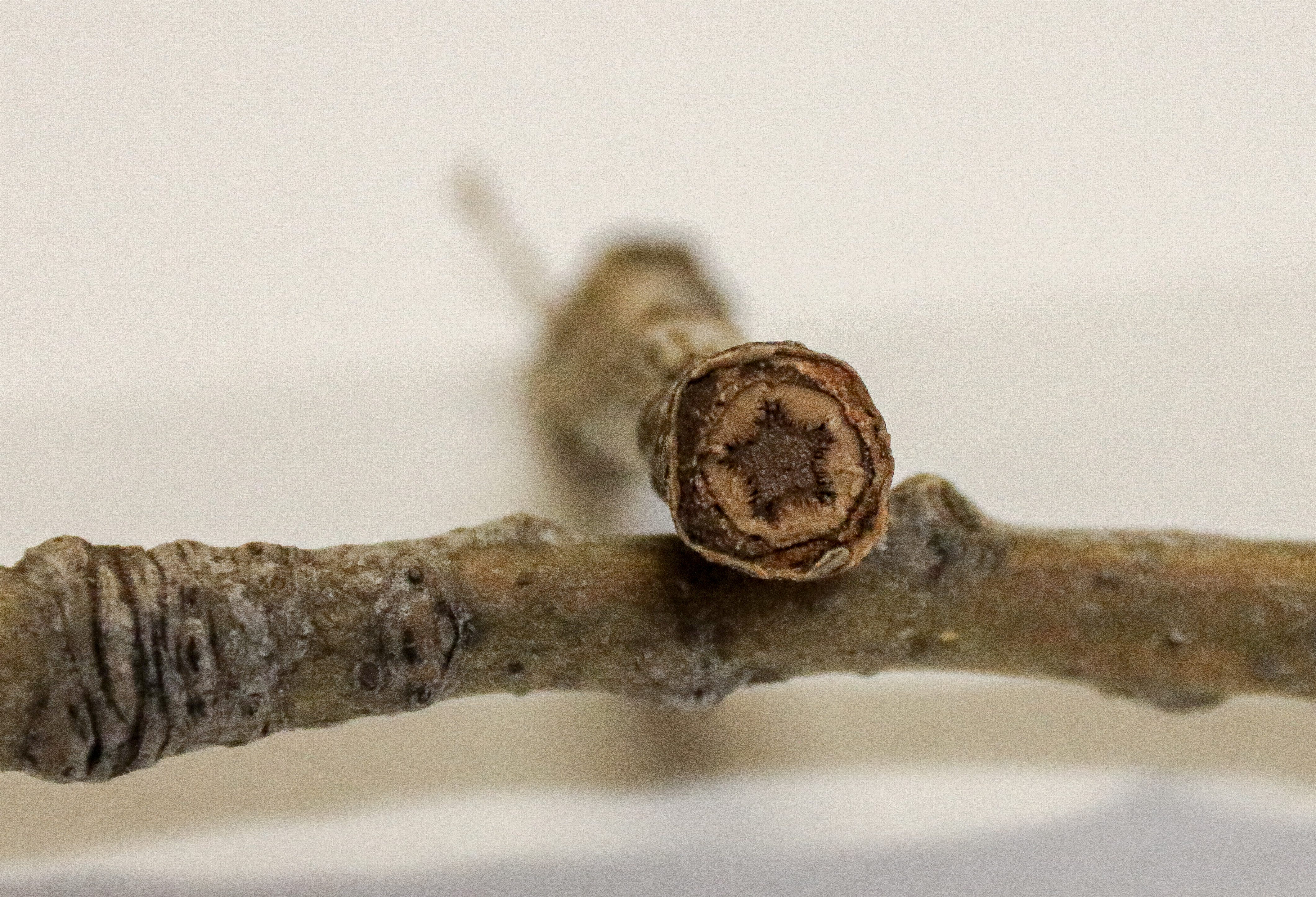
(The hidden stars inside of small cottonwood limbs can be revealed by carefully breaking the limbs at the node, which resembles a knuckle. Some Native Americans consider cottonwood trees as sacred.)
“Showing students of all ages how to find the cottonwood tree star is an incredible way to introduce people to the hidden natural treasures that are just outside their door,” said outdoor educator Keanna Leonard. “But finding those little stars are just the beginning of what this tree can teach about Nebraska’s history and culture and the tree’s impact on its surroundings. The eastern cottonwood is one powerful tree.”
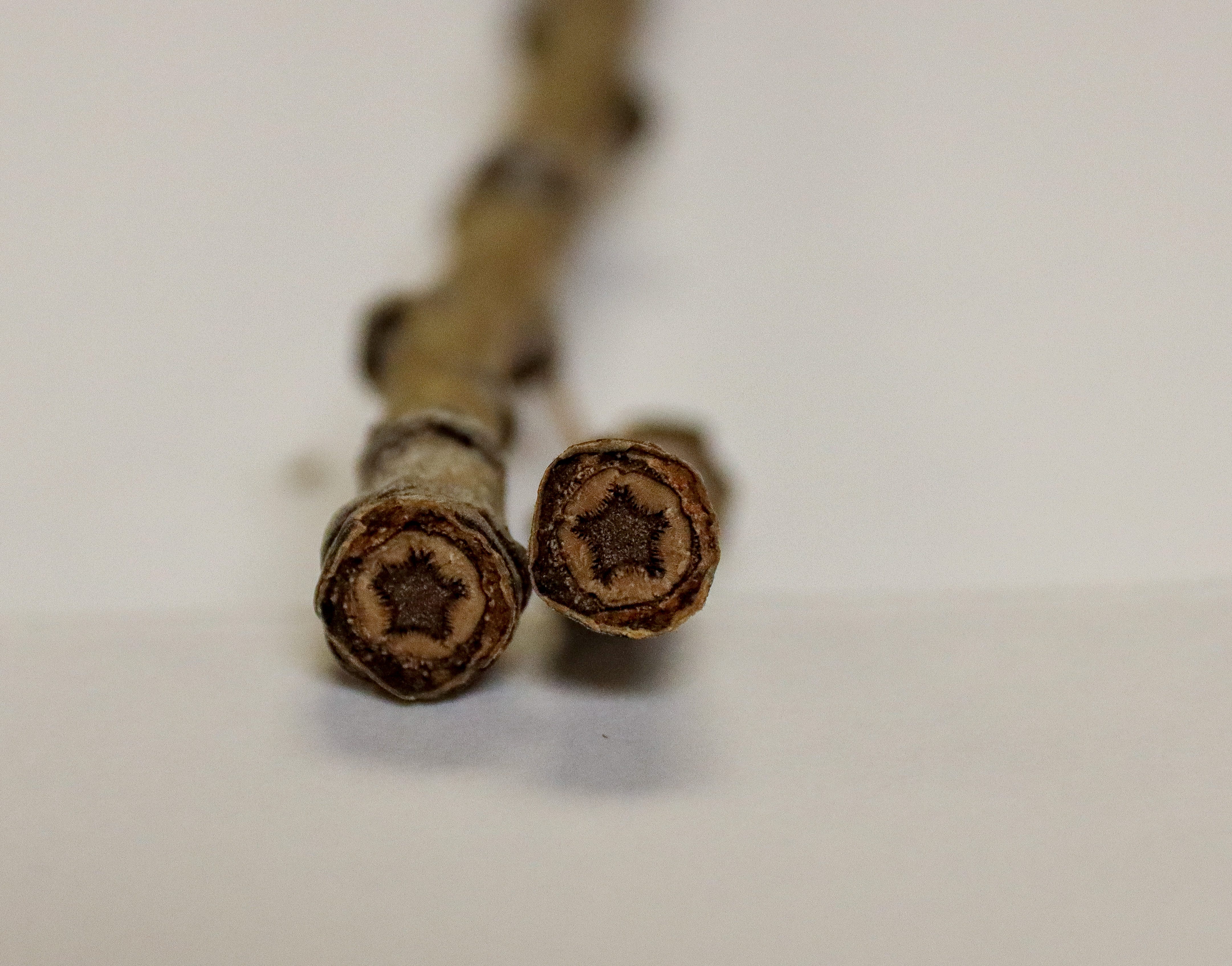
(With practice and a little luck, breaking a small cottonwood limb can reveal two five-pointed stars.)
The Nebraska Champion Tree Register tracks the most magnificent superstar specimens of 86 native and common introduced tree species growing in the state of Nebraska. In the summer of 2024, a survey crew working at Pibel Lake Recreation Area noticed a very large cottonwood. While hovering in the shade of the tree’s shady canopy, the workers stretched a tape measure around its gnarled trunk. Astounded by the girth, the crew informed the Nebraska Forest Service, who soon dispatched their own experts to take official measurements. Seventy-two acre Pibel Lake Recreation Area is located in southern Wheeler County and is owned and managed by the Lower Loup Natural Resources District. The 24-acre lake has been a recreational gem since the late 1800s.
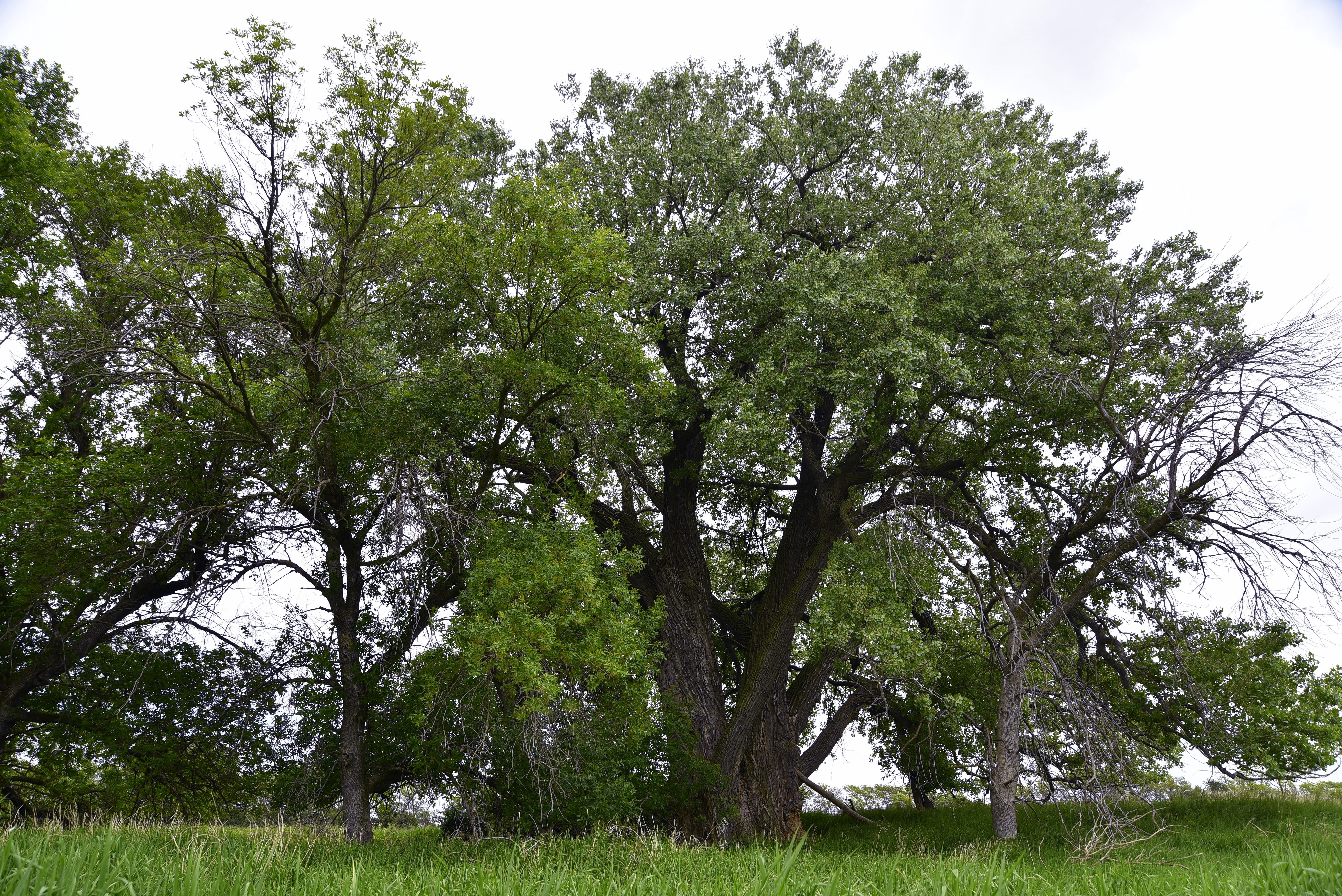
(The Nebraska Champion eastern cottonwood growing at Pibel Lake Recreation Area can be reached by way of a mowed trail that begins at the northwest corner of the lake. The recreation area is owned and operated by the Lower Loup Natural Resources District and is located in southern Wheeler County.)
The Nebraska Champion Tree program awards points based on height, canopy spread, and trunk circumference. The measurements recorded for the Pibel Lake giant – 85 feet tall, a canopy spread spanning 120 feet across, and a trunk circumference of 37.2 feet – are truly tree-mendous in every way. The tree scores extra points for being a single trunk cottonwood. When the Nebraska Forest Service tallied the scores it appeared that Nebraska would have a new champion eastern cottonwood tree. But as a matter of fairness and respect, before the Pibel Lake tree could assume the leafy crown, the reigning champ – a multi-trunked behemoth growing near Beatrice that had held the tree title since 2013 – would need to be re-measured.
The tale of the tape proved that the giant eastern cottonwood tree growing at the northeast corner of Pibel Lake is indeed Nebraska’s champion tree for that species. The announcement was made in February 2025, but there is more to the story. Much more.
Nebraskans can be proud that the largest known example of our official state tree is also the National Champion eastern cottonwood tree! Of 546 title holders in the National Champion Tree Program, the colossal eastern cottonwood at Pibel Lake is the only representative of any tree species, from Nebraska.
It is worth noting that eastern cottonwood trees are only native to the United States and Canada. Our neighbors to the north do not operate a national champion tree program, but there are several provincial registers. The circumference of the Pibel Lake tree bests the girth of the largest eastern cottonwood tree known in Canada by more than 12 feet. To this writer, that means that Nebraska’s champion is the largest known eastern cottonwood tree on earth.
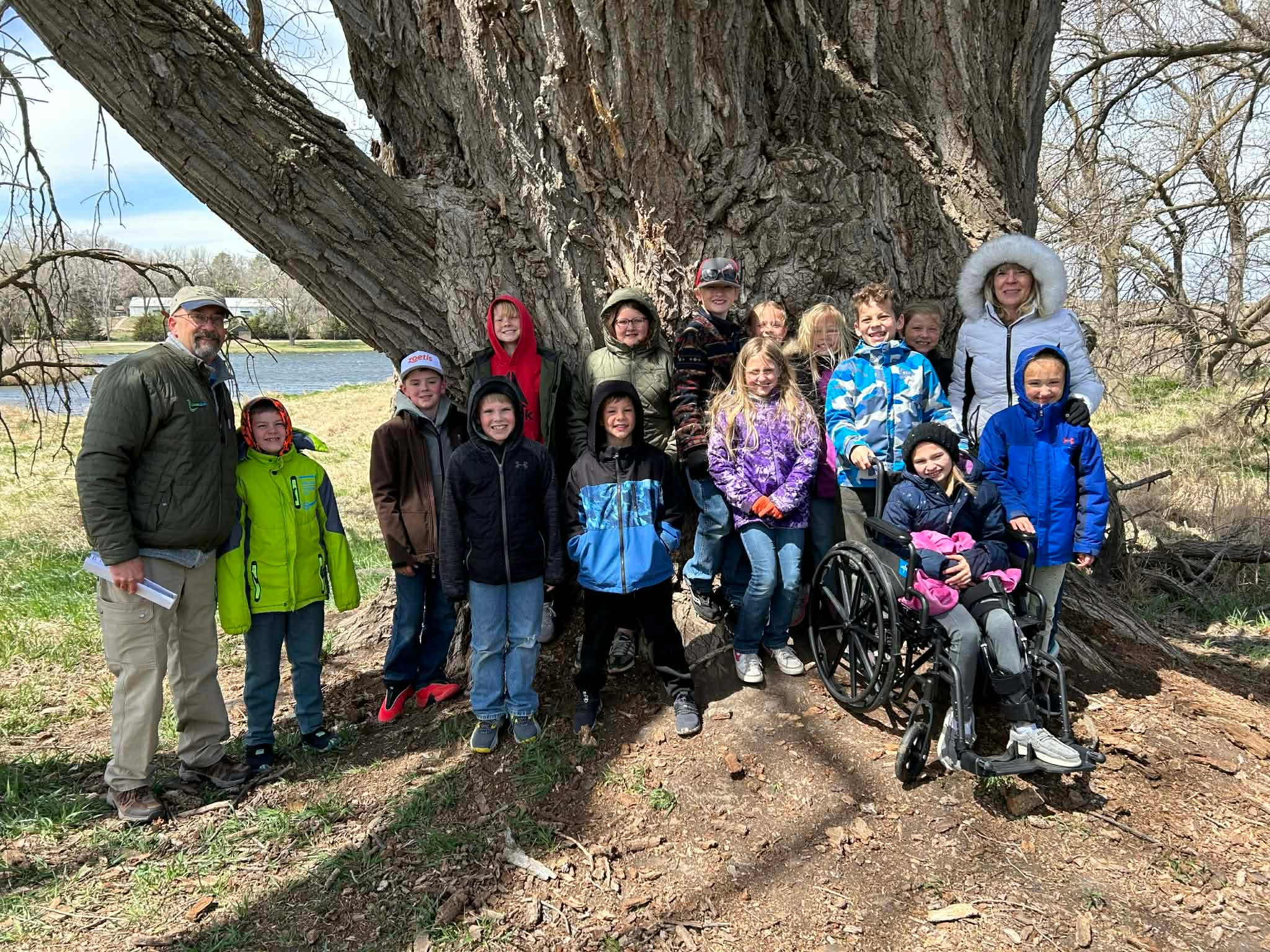
(Staff members from the Lower Loup Natural Resources regularly lead field trips at Pibel Lake Recreation Area. The highlight of the visit, like for these students from Wheeler Central Elementary in Bartlett, is meeting the Nebraska Champion astern cottonwood tree. The barked behemoth is also the National Champion tree for that species.)
Most of the members of the Nebraska Champion Tree program reside on private land. But Nebraska’s monarch eastern cottonwood is rooted on public property in the eastern Sandhills. Pibel Lake Recreation Area is located 9 miles south of Bartlett, Nebraska on Nebraska Highway 281, and then one mile east on 823 Road (also known as Pibel Lake Road). To get to the tree, go north along the road on the west side of the lake. Work your way north and east until the road dead ends (less than a mile on a good gravel road). Then walk across the pedestrian bridge and follow the mowed trail. It’s barely a 10-minute walk on mostly level ground. The tree is marked with a sign, and since there are other trees nearby, the true enormity of this cottonwood is not apparent until people walk right up to it. Visitors are advised to take selfies, leave only footprints, and maybe pick up a small limb and shoot for the stars.
— Alan J. Bartels is a US Army veteran who served with the 2nd Armored Division during Desert Shield/Desert Storm. He is also the former editor of Nebraska Life magazine where he still pens a column. His latest book, Secret Nebraska Sandhills: A Guide to the Weird, Wonderful, and Obscure, was released in March 2026.