
OMAHA – Nebraska was added to an ongoing congressional investigation into Medicaid fraud following a spike in reports of fraud in other states. Last week, the Committee on Energy and Commerce sent Governor Jim Pillen and Steve Corsi, the CEO of the Nebraska Department of Health and Human Services, a letter requesting information on the program’s integrity as well as asking for any reported waste, fraud, and abuse (FWA).
“Recent reports and law enforcement actions have exposed unprecedented levels of Medicaid fraud in the State of Minnesota and other states. The magnitude of the fraud demands states proactively address FWA in Medicaid programs,” the letter stated. “The Committee is concerned that your state’s Medicaid programs may be similarly vulnerable to FWA that harms Medicaid enrollees, legitimate providers, and taxpayers.”
“To inform the Committee’s oversight and potential legislative reforms, we are examining Medicaid program integrity and actions your state has taken, and is taking, to proactively identify and root out FWA,” the letter added.
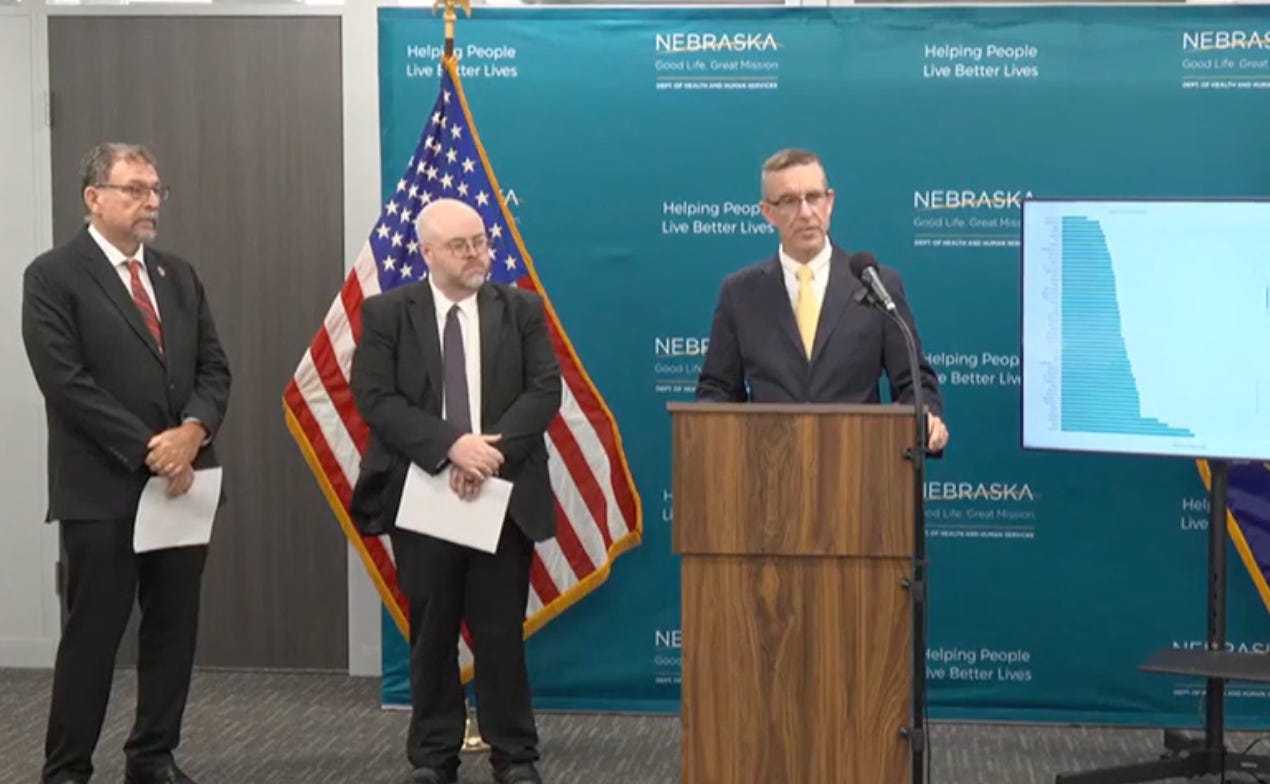
The committee specifically noted that the amount of money Nebraska spent on ABA services, which is therapy typically used for children with autism, has skyrocketed nearly 2000% since 2020.
In 2020, the state paid $4.6 million in ABA services, and in 2024, the state paid $85.6 million for ABA services. During that same time period, the number of youths being served in the ABA program jumped from 169 to 1,150.
Last year, the Nebraska State Auditor Mike Foley examined the ABA program and issued a report saying his office had found inconsistencies in the program.
In 2024, DHHS began tightening requirements in the program as costs rose in order to keep it sustainable. In July of 2025, DHHS further responded to the increased costs by adjusting provider rates down, explaining that the state had previously been paying the highest reimbursement rates in the nation.
The agency did not say there was fraud or abuse, but that they wanted to institute “guardrails” to make sure the program was not being taken advantage of.
“I want to be exceedingly clear, DHHS is fully committed to continuing ABA services to Nebraska families receiving Medicaid,” Corsi said in a statement. “We will continue to operate in the best interest of children and families.”
Nine other states were included in the expanded congressional committee probe, including California, Colorado, Massachusetts, Maine, New York, Pennsylvania, Vermont, and Washington. In a statement, Congressman Brett Guthrie, the chairman of the Energy and Commerce Committee, said that “fraud shouldn’t be a partisan issue.”
“It’s our most vulnerable Americans who are most at risk from fraudsters diverting precious resources intended for critical, needed care,” he said. “We owe it to our fellow Americans to preserve the Medicaid program for those that need it most, and states have an important role to play in ensuring that Medicaid programs operate with integrity. The Committee will continue to combat rampant waste, fraud, and abuse across the entire country.”
In response to the congressional letter, Governor Jim Pillen said he has ordered DHHS to do an internal review to look for potential fraud.
“When the widespread fraud under the Walz administration came to light, I immediately ordered my DHHS team to conduct an internal review to confirm that similar fraud is not happening here in Nebraska, and they did so,” Pillen said. “We have the safeguards in place to protect Nebraska taxpayers from the fraud that occurred under the Walz administration.”
John Gage is the executive editor of The Plains Sentinel.
The increase in autism is partly due to recognition of more subtle signs over the last 25 years. It's also what happens whenever all the sudden there's money available to treat somebody who may present a challenge in the classroom. The problem isn't the ABA therapy. The problem is the abusers of the system. It's sad and it affects kids who truly need a different approach. Thank you for this article.