


(Picture credits Alan J. Bartels/An ornate box turtle on a Nebraska road. Even on less-traveled roads, these slow-moving reptiles are at risk of being struck by vehicles. Others are picked up and taken far from their home range. Due to a natural diet that is impossible to replicate, ornate box turtles subjected to captivity often develop health issues. They do not make good pets.)
Along with chorus frogs and wild turkeys calling, yuccas erupting with showy stalks of blooms, and battalions of nightcrawlers squirming in the streets after a good soaker of a rain, it is the time of year again when drivers are seeing turtles on Nebraska roads.
What causes a turtle to hit the road? They may be looking for mates, migrating between food sources, or in the case of juveniles – establishing their own territories. But many of the turtles crossing roads in late spring and early summer are females plodding toward nest sites.
Nine species of turtle are native to Nebraska. Eight of those varieties spend most of their lives in streams, wetlands, lakes, water-filled ditches – and in the case of common snapping turtles and western painted turtles – even in the local sewer pond. When conditions are just right, adult female turtles leave the safety of their aquatic world and strike out on an overland trek led by only instinct and the natural urge to reproduce. If a turtle’s natural migration route leads it across a road, tragedy can strike. Some portions of Nebraska’s busiest roadways are littered with the fragmented remains of road-killed turtles.
The ornate box turtle is Nebraska’s only native terrestrial species of chelonian (turtles and tortoises). They once thrived statewide across Nebraska with the exception of our state’s extreme northwest corner. Unable to adapt to living alongside the plow; or where cities, roads, and other developments have sprung up, the ornate box turtle’s range in Nebraska has been significantly reduced, and now they are most common in the Sandhills. Adult male box turtles have red eyes. Females have greenish-brown eyes. In late spring, those girls deposit 2-8 oval eggs in the ground. If not discovered by raccoons and other nest raiders, healthy eggs hatch about two months later. Being Nebraska’s official state reptile does not prevent some drivers from intentionally striking these helpless animals on roadways – I have seen it happen on more than one occasion.
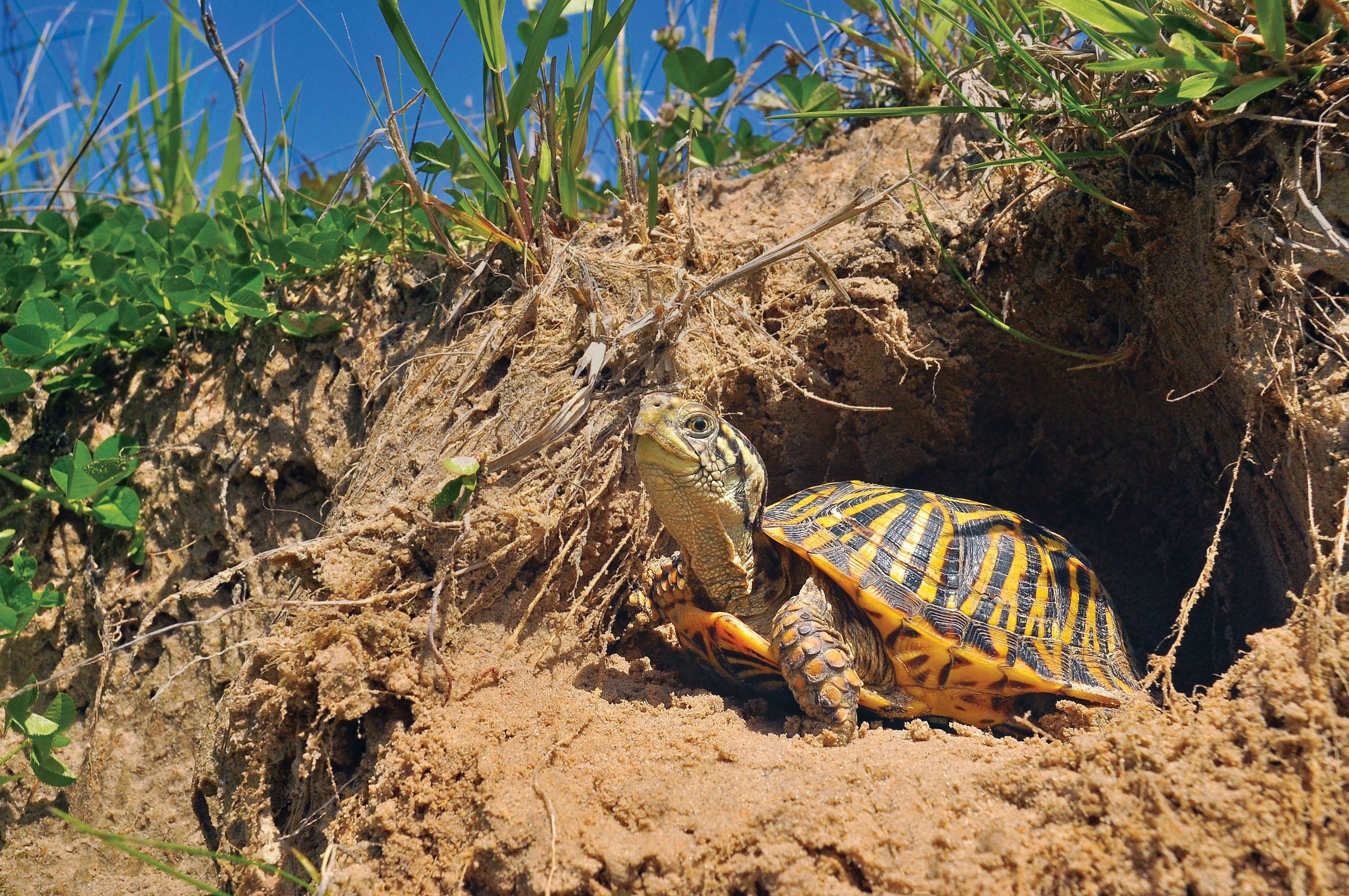
(An ornate box turtle in its natural habitat in Loup County, Nebraska.)
As their common name implies, ornate box turtles are beautiful animals. Unfortunately, some travelers cannot resist the urge to stop their vehicle and take one or more of these beauties home. Usually, this is a death sentence for the animal. Box turtles have a varied diet that is impossible to completely replicate in captivity. Even when they feed vigorously on table scraps offered by their captors, the health of these turtles will slowly decline. At that point, the sick animals are often released in a backyard or on the edge of town.
That unethical action poses the risk of introducing disease to wild turtle populations. And if the turtle is released (or when a turtle escapes), it will follow its instincts, trying to return to its home range. In the case of a box turtle picked up and then moved, for example, by a visiting fisherman from Omaha who picks one up for his child on his way home – hundreds of miles from the turtle’s natural home, that turtle – in its lifetime – cannot possibly make it back to where it came from. And it will face a litany of predators, traffic, and other hazards as it tries in desperation to do so. A similar fate awaits turtles of other species that are haphazardly relocated from their small home range. Some studies show that box turtles live their entire lives within a home range of only a few acres, even less.
There are legal limits and permit requirements to possess some of Nebraska’s turtle species. And it is illegal to release any native Nebraska reptile more than 100 yards from where it was captured.
Several dozen communities in Nebraska host turtle races in the spring, summer, or fall. Unfortunately, some of these animals are picked up on roads, or caught while fishing, and cruelly kept for weeks or months until the local turtle race. By that time their health can be suffering. On top of that is the stress of being handled, placed on hot pavement (in many cases) for the race, and put in close quarters with many other turtles – many of which could also be sick. After one race I saw a losing turtles simply released in a village park. At another, after the race was over and the local baseball diamond where the race was held emptied of people entirely, a cardboard box with a Blandings turtle in it was abandoned in the extreme summer heat of a July 4th afternoon – which could mean quick death for a cold blooded reptile.
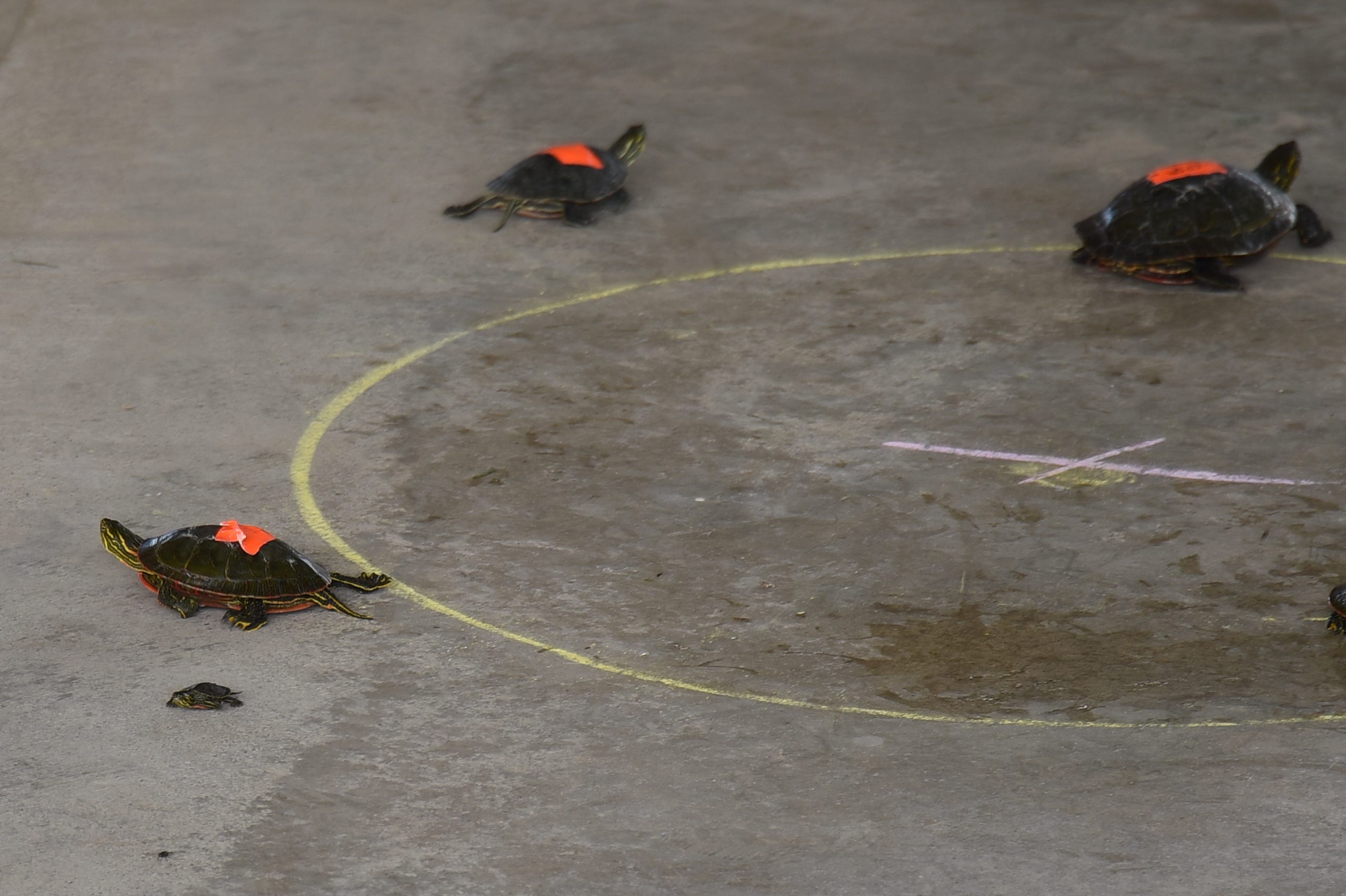
(Many Nebraska communities host turtle races as part of annual celebrations. Unfortunately, this can lead to health declines in the animals and the spread of disease to wild populations. Nebraska's legal protections and possession requirements are almost never enforced at these events. The animals in the photo are western painted turtles.)
The common snapping turtle is the largest and heaviest of Nebraska’s native turtles. Commonly growing to 30 pounds or even larger, hitting this behemoth could do serious damage to a vehicle or even cause it to leave the roadway.
Snapping turtles are not aggressive. But with a natural fear of humans, they lash out with an impressive display of clashing jaws and slashing claws in self-defense when approached. I’ve personally encountered several common snappers in excess of 70 pounds. And turtle lovers everywhere were saddened in April 2026 when the Nebraska Game and Parks Commission announced that Big Snap Daddy, a giant common snapping turtle living at Schramm Education Center Aquarium near Gretna, was euthanized due to illness. Weighing in at an impressive 102 pounds the month before his death, the behemoth, estimated to be 100 years old, had long held the record as the largest known common snapping turtle in the world.
Not all of Nebraska’s turtles put on such a defensive display. The total opposite of those scratching and biting snappers, the Blanding’s turtle prefers pulling into its protective shell box turtle-style with a loud hiss rather than biting. The range of this semi-aquatic species extends from Nebraska to Canada and eastern states and also includes wetlands, rivers, and associated uplands. Because of the mosaic of streams, wetlands, and associated uplands, and the fact that the area is mostly intact due to the relatively low impact of cattle ranching, the Nebraska Sandhills is the strongest of strongholds for this protected species.
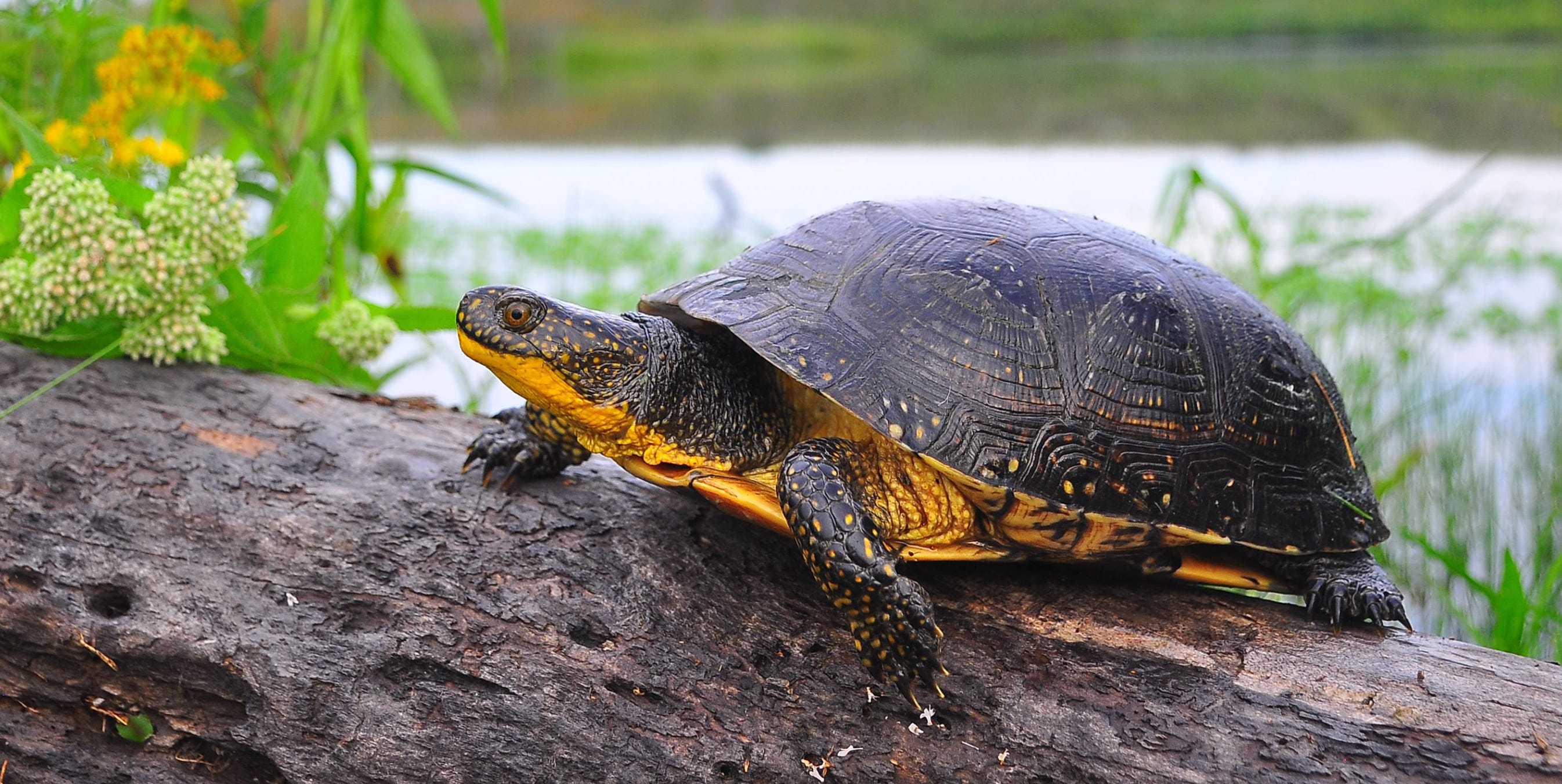
(The Blanding’s turtle is a semi-aquatic turtle that is legally protected throughout its range. The Nebraska Sandhills is a stronghold for the species. Blanding’s turtles can live well past the century mark.)
These are long-lived animals. One Blanding’s turtle that was captured as an adult in Minnesota, and then marked and released, was recaptured 77 years later! Since that animal was an adult when first captured, it’s a safe bet that Blandings turtles can live well over 100 years. And possibly older than the oldest humpback whales, Nile crocodiles, or Galapagos tortoises. Humankind hasn’t been studying them long enough yet to know for sure.
I once saw a man driving an extended cab Ford pickup on US Highway 83 south of Valentine intentionally steer onto the shoulder to strike one of these animals.
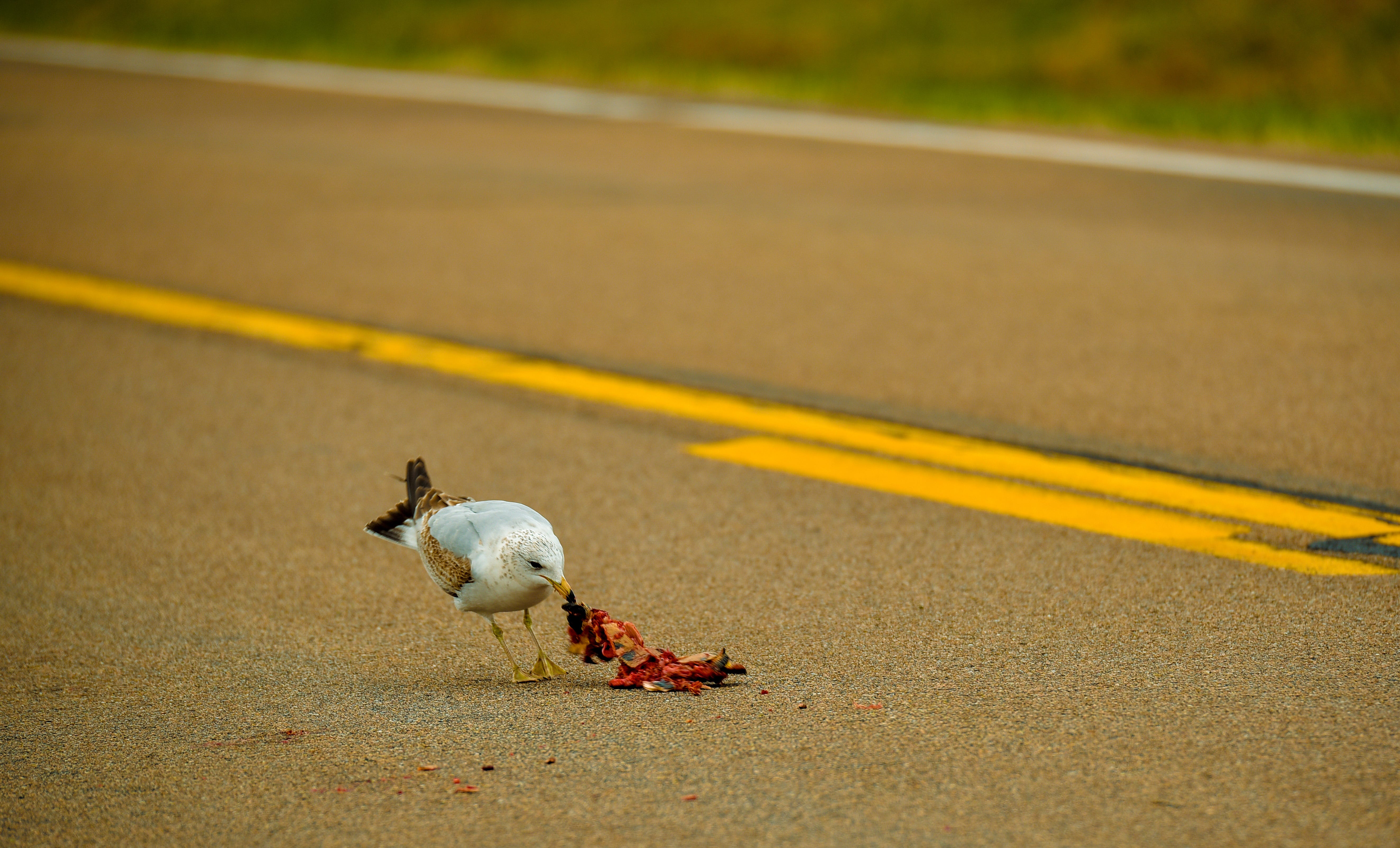
(A gull feeds on a roadkill Blanding's turtle in Rock County.)
In addition to ornate box turtles, common snapping turtles, and Blanding’s turtles, late spring is also nesting season for the remainder of Nebraska’s native turtles species. These include red-eared sliders in the extreme southeast part of Nebraska, map turtles in the Missouri and lower Platte Basins, spiny and also smooth soft-shelled turtles in streams across most of the state, yellow mud turtles in parts of the Sandhills and the Republican River Valley, and the western painted turtle, which can occur statewide in Nebraska wherever there is water.
Experts say when it is safe to do so, and only then, to always move a turtle off the road in the direction it was headed. Otherwise, instinct will lead them right back into harm’s way. Remember, these animals are not wandering aimlessly. Also, these are unpredictable wild animals capable of biting and scratching. And as an additional defense, most will pee on good Samaritans – so rescuers may want to hold them at arm’s length. But seriously, people should never risk their own safety attempting to move a turtle, or any animal, from the road.
Fossils discovered around the world indicate that turtles have existed since long before the time of the dinosaurs. Some turtle species have become extinct in recent decades, and habitat destruction is a challenge to turtles worldwide. One thing for sure is, none of these amazing animals deserves to meet an untimely end on the asphalt. When you are fortunate to see one of these ancient survivors plodding along slowly through our fast-paced world, please give turtles a brake!
— Alan J. Bartels is a US Army veteran who served with the 2nd Armored Division during Desert Shield/Desert Storm. He is also the former editor of Nebraska Life magazine where he still pens a column. His latest book, Secret Nebraska Sandhills: A Guide to the Weird, Wonderful, and Obscure, was released in March 2026.
Nice!