

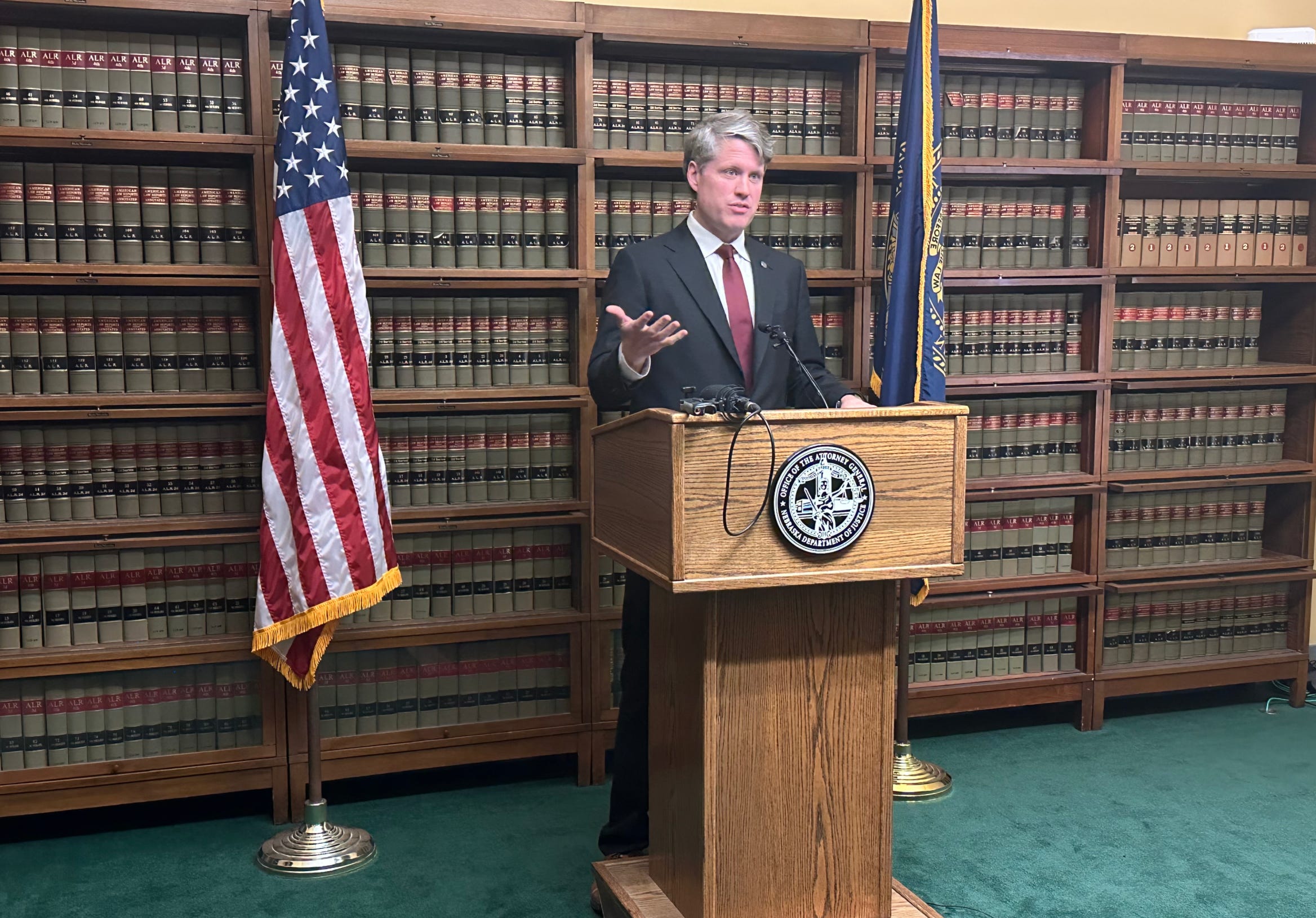
(Picture credit Attorney General’s Office)
OMAHA — Attorney General Mike Hilgers announced he had filed a lawsuit to stop the city of Omaha’s minimum wage ordinance from going into effect, saying it violates state law. Hilgers had previously sued Lincoln over its minimum wage ordinance.
“Our Constitution does not permit the City of Omaha to repeal any portion of a statewide law passed by the Legislature. A court already has enjoined the City of Lincoln from modifying this same state law, and it is unfortunate that we are forced to sue Omaha on a materially similar ordinance,” Hilgers said in a statement on Tuesday.
The Omaha City Council voted 4-3 last month to pass a minimum wage increase that overrides the state Legislature’s modification of a ballot initiative passed in 2022.
Nebraska voters approved a measure that would gradually increase the state's minimum wage year-on-year until it reached $15 and then raise it each year based on the consumer price index. The state legislature has since modified provisions to install a youth minimum wage below the $15 threshold as well as a slower cost of living adjustment.
“The Legislature said the minimum-wage growth rate ‘shall’ be 1.75%; the City’s ordinance would modify that statute to say, ‘shall not’ and sets the growth rate at a different level. Similarly, the Legislature said that employers ‘may’ pay youth employees a minimum wage of $13.50 per hour; the City’s ordinance effectively rewrites that law to say, ‘may not’ and instead requires employers to pay youth employees $15 per hour,” the Attorney General’s Office said.
Omaha Mayor John Ewing had initially hesitated in signing onto the minimum wage ordinance over legal concerns, but eventually gave it his consent, saying he was “confident” in the city’s ability to successfully argue its case in court.
During debate on the ordinance, Republicans on the Omaha city council argued against the measure, saying the city should first see how legal proceedings would turn out in the attorney general’s case against the city of Lincoln.
“[The] vote isn’t about whether we support minimum wage or not, it’s whether we have the legal authority to do it,” Omaha Councilwoman Aimee Melton said. “The City of Omaha operates under a home charter rule. Charter cities may act with real independence on matters of strictly local concern, but on matters of statewide concern, state law controls.”
Democratic proponents of the minimum wage increase argued they were fulfilling the will of the voters by passing the minimum wage increase. “I’m not willing to guess on what a judge may or may not do, what I am willing to do is give my constituents their day in court,” Councilman Ron Hug said in response to Republican objections.
Danny Begley, the president of the city council and the introducer of the ordinance, responded to Hilgers suit on Tuesday.
“While I am disappointed, I am not surprised at the Attorney General’s big-government, overreaching lawsuit against the 70% of voters who supported the minimum wage in the city of Omaha with a landslide mandate,” Begley said. “We are fully prepared to fight vigorously in a court of law. The AG is trying to crush the voice of the people. I am standing with them!”
Lincoln Battling Attorney General
The legal battle over the minimum wage in the state began earlier this spring when Lincoln passed its measure to circumvent the state-set minimum wage. In June, Hilgers announced he was suing the city to prevent the ordinance from going into effect.
Hilgers said the city was acting as a “super-legislature” by attempting to override state law.
In July, a judge ruled in favor of the attorney general and enjoined Lincoln’s ordinance from taking effect.
“At this point, the Court has not made any decisions,” Lancaster County District Court Judge Lori Maret said. “But the Plaintiff’s preemption arguments are strong enough that the Ordinance should be enjoined until the merits are fully litigated.”
— John Gage is the executive editor of The Plains Sentinel.
It's the big government that makes the laws. It's incumbent on the little governments to obey them. If you took a poll asking people if they wanted $2 gasoline, I'm fairly certain over 70% of the people would vote for it, but polls don't make laws. The legislature does. Omaha city council, you're a lawyer's dream and a Nebraska taxpayer's nightmare.
Its a shame that the voters of Nebraska couldn't see through the problems that raising the minimum wage causes in terms of inflation. Apparently, this holds true not only for Nebraska voters, but also city councils as well. Mandatory wage increases are a component of wage and price controls and whether or not they are implemented by voters or by local and state governments, they are inflationary.