

(Picture credit 10/11 News)
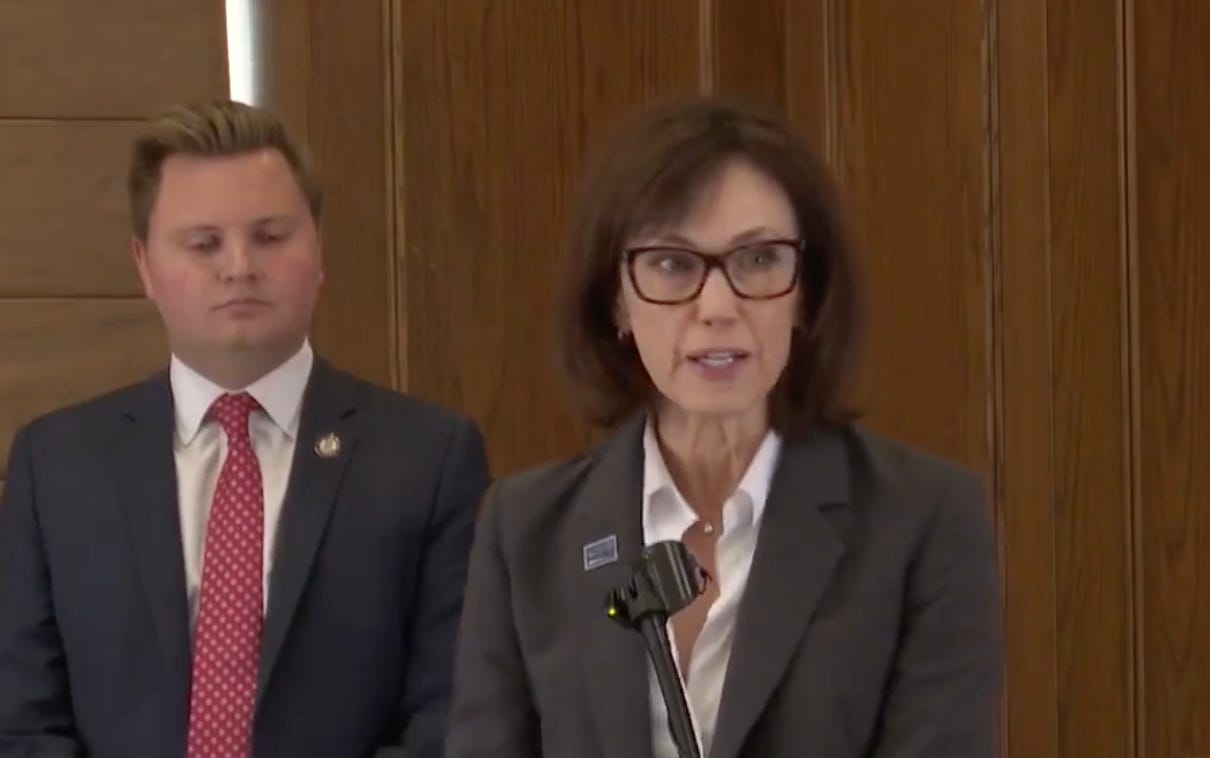
Lincoln Mayor Leirion Gaylor Baird and City Council Chair Brodey Weber announced on Monday that the city was introducing alternative charter amendments following the Nebraska Supreme Court announcement that the city was required to include three charter amendments on the November ballot.
“The city council and I recognize that people might be interested in moving elections to November and enacting term limits for city council,” Gaylor Baird said. “We are proposing fair and honest, alternative ways of doing both.”
The city proposed moving elections to even-numbered years, but would push out the election date until 2030, allowing the mayor to serve a three-and-a-half-year term instead of one-and-a-half years under Good Government Lincoln’s proposal, which would make the next mayoral election in 2028.
The city also pushed to allow council members three terms instead of Good Government Lincoln’s two-term limit proposal. Gaylor Baird argued that city council term limits should be consistent with the number of term limits for mayoral office at three terms.
Gaylor Baird framed the city’s alternative amendments as “reasonable, consistent, and non-partisan,” adding they were without the “sneaky parts.”
Weber urged Lincoln residents to vote against Good Government Lincoln’s third amendment, which would allow residents in the city’s three-mile extraterritorial zoning jurisdiction to vote in city elections. Weber called the amendment a “crazy plan.”
“I need to be clear, though,” Weber stated. “This is not about red versus blue. This is not about everyday Democrats and everyday Republicans. This proposal is offered by Not So Good Government Lincoln, which is tied to a concerted effort by those who will stop at nothing in their pursuit of political power.”
Mayor Laments Charter Process
Gaylor Baird said the city council presenting alternative amendments was important to provide a counterbalancing force in the petitioning process.
“It’s part of our system of checks and balances. If you recall, the threshold for petitions to be placed on the ballot for a charter amendment is very low. Just about anyone can get 5,000 signatures to put something on the ballot,” she said. “The city council has been elected by thousands of people, many more so than have to sign a petition to put on the ballot.”
“So they act as a balancing force. If they see something goofy, or that’s not good for the future of Lincoln — they can offer an alternative. It’s meant to have some balance in the force, if you will,” she added. “It’s really about protecting the people of Lincoln from people who would misuse the process.”
The mayor’s comments on charter amendments contrast with how the Democratic led city has responded to the Unicameral’s efforts to modify statewide ballot initiative efforts.
Lincoln City Council passed, and the mayor approved, an ordinance to override the Unicameral’s modifications to a statewide ballot initiative to raise the minimum wage to $15 an hour. State lawmakers have said they have modified measures to help balance the will of the voters with what is practicable, while the city claimed they were ignoring the will of the people.
Lincoln Voters Get Five Choices
The city’s decision to introduce two alternative amendments means Lincoln voters will have the choice between five different charter amendments on the November ballot. The Nebraska Supreme Court ruled last week that the city was required to put all three of Good Government Lincoln’s amendments on the 2026 ballot.
The decision followed an attempt by the city council and the mayor to push placement of the amendments on the ballot until the 2027 city elections.
Former State Senator Tony Fulton, who heads Good Government Lincoln, previously stated that he believes the amendments will “give residents of Lincoln a stronger voice in city government, prevent the pitfalls of career politicians and ensure more voters are engaged with our city elections.”
Good Government Lincoln did not immediately respond for comment on the city’s alternative amendments.
— John Gage is the executive editor of The Plains Sentinel.