

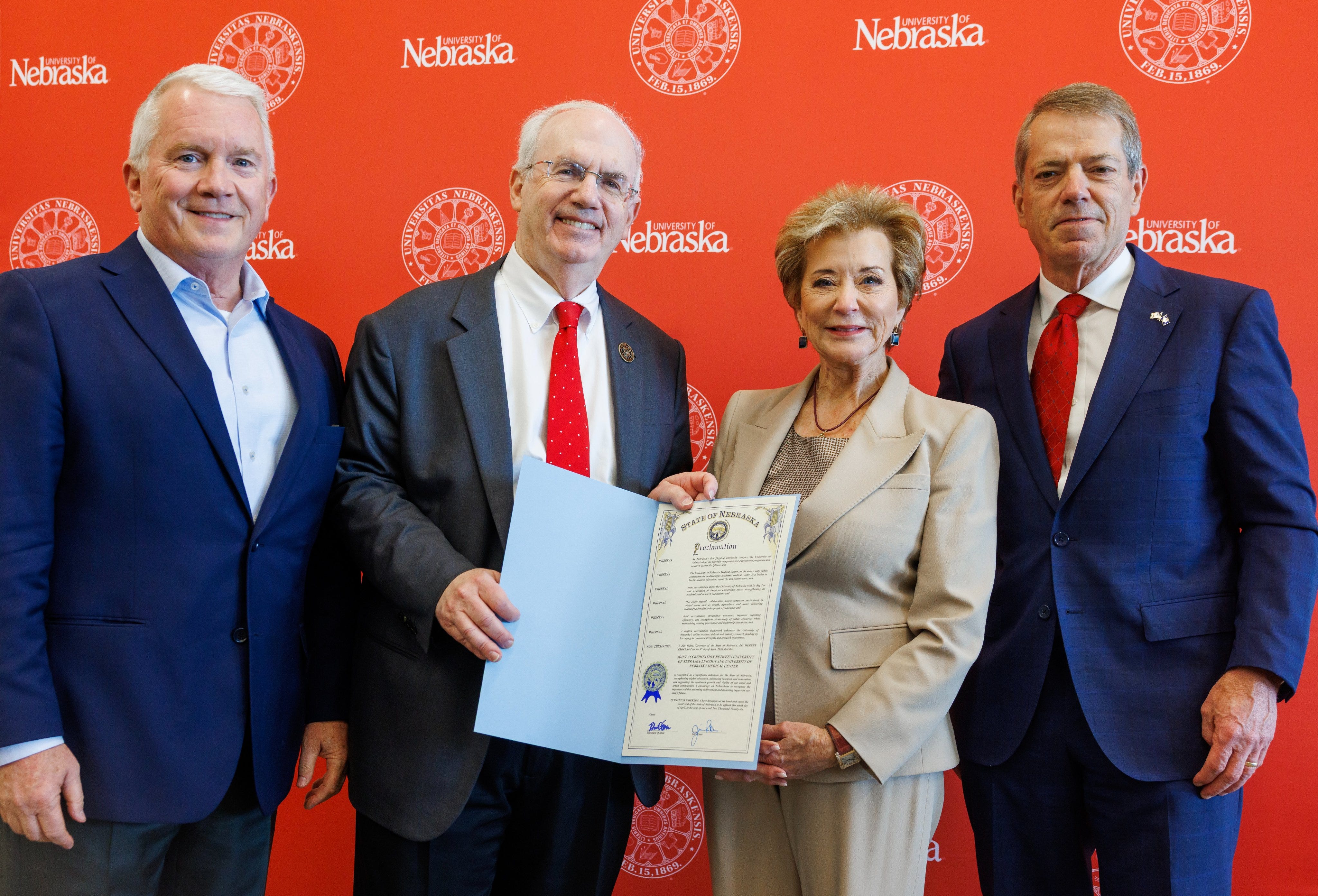
(Picture credit Jeff Gold)
The University of Nebraska is currently in the throes of re-drafting its 2026-2027 budget after Governor Jim Pillen’s recent call for the university and other state agencies to reduce spending by 5%. While some have questioned whether Pillen could actually impose his request if turned down, University of Nebraska President Jeff Gold said the university intended to work with the governor but expressed frustration with having to make more cuts.
“The University is currently working with the governor’s office regarding expectations for our institution in fulfilling these measures,” he said in a public letter to faculty and staff. “At the same time, I believe it is important to acknowledge that there are limits to what can be achieved through continued reductions. We cannot cut our way to extraordinary.”
“This new requirement comes a little over two months since the legislature adjourned and just weeks after our Board of Regents approved the final 2026-27 state-aided budget, which already includes an $8 million annual reduction in spending,” Gold added.
During that June Board of Regents meeting, the University passed its proposal to raise tuition 4.25%. Repeatedly stressed throughout the meeting was the University’s ongoing struggles with receiving adequate state funding.
President Gold noted while introducing the budget that the University was only receiving a 0.62% bump in funding this year, which was “significantly lower than the inflation-based 3.5% request that was submitted for operations during the last budget cycle.”
District 8 Regent Barbara Weitz also expressed her frustration with the unicameral’s passage of unfunded mandates, which require the university to find extra-budgetary funds to comply.
“We don’t want our curriculum and our university driven by gifts that have to plug holes,” she said.
Laura Strimple, communications director for Governor Pillen, told the The Plains Sentinel that the University system is not immune from doing its part to deliver cost savings.
“The current proposal is only 1% of the University’s total budget and only a third of last year’s total $108 million budget increase,” she said.
University Approved Large Internal Expense
Consternation over the cuts comes amid the university's finalization of plans for a massive renovation on the University of Nebraska–Lincoln campus. The other significant item approved in that June meeting was the program statement for the project, which is titled the Selleck Student Housing Redevelopment Project.
According to Gold, the proposed redevelopment would level the Selleck Quadrangle, including Selleck, Seaton, Benton, and Fairfield Halls as well as the Old Health Center, which were erected in 1953-54. Constructed in their place by 2032 would be 522,000 square feet of modern student housing, dining, and support services.
In doing so, the University would eliminate an estimated $85 million in deferred maintenance costs by spending an estimated $386 million in reserves, internal bonds, and the next 35 years of rental rates for the eventual student residents.
“We know that living on campus is crucial to student success. It means higher retention rates, it means stronger academic performance, and graduation rates are also increased,” Interim Chancellor Katherine Ankerson told the board. “The older buildings really have lower satisfaction levels.”
Associate Vice Chancellor of Student Life Josh Overocker confirmed in an interview with KOLN that the need for additional student housing is not the driving force behind the renovation, saying the goal was to “revitalize” campus.
The Board of Regents cited student recruitment as the major concern.
“It will definitely make a difference in our recruiting,” said Weitz. “So even though times are tight and it’s very difficult, I think this use of resources that we have that doesn’t tax taxpayers more is critical.”
Student Regent Kurt Schneider agreed.
“The recruitment piece being the biggest thing, I think that students are really going to enjoy this, and it’ll be a huge draw for campus” he said, “I think it’ll change the atmosphere on game days for students, for fans walking on campus.”
State Reckons With Growing Deficit
The university’s budget crunch comes as the state faces a similarly tight budget. As Gold told the University of Nebraska staff:
“This measure is to offset Nebraska income tax refunds that significantly exceeded projections and totaled $307 million more than anticipated in the 2026 fiscal year.”
The statement is faithful to the governor’s memo. Nebraska’s budget deficit currently exceeds $220 million. While the number is down nearly $400 million from its prior peak, the legislature and governor still find themselves in a tight corner.
If the state cannot manage to balance the budget by the end of the year, it could further complicate the 2027-2029 budget process, which already carries its own estimated deficit of over $600 million.
“We must do better. We must run government like a business,” Pillen said, adding that “Bloated businesses don’t survive for long.”
With Pillen’s office expecting monthly reports as soon as July 31st from the university and other state agencies, the success and effects of these budgetary reductions to right the state’s ledger will soon be evident.
— Lewis Thune is a writing fellow with The Plains Sentinel.
Have you noticed UNL always deals with funding issues by cutting academic programs or raising tuition, never by cutting bloated administration?
The university views small increases in funding as cuts. You would think the highly paid intellectuals would be capable of finding ways to do more with less. That's the dilemma faced by taxpayers who fund the education system. Tighten that belt a notch, like so many taxpayers are forced to do. There's fat to be cut in every organization, education included.